Wednesday, December 31, 2025

In-Depth Review: Yaesu Original FT-65 / FT-65R Dual-Band Rugged & Compact Handheld Transceiver


The Yaesu FT-65 / FT-65R is a well-known handheld transceiver in the amateur radio community, designed for operators who want a dependable, no-nonsense dual-band radio that performs reliably in a wide range of conditions. Built with durability, portability, and simplicity in mind, this handheld covers the most commonly used amateur bands while maintaining the quality Yaesu is known for.

Overview and Build Quality

The FT-65 / FT-65R is a dual-band VHF/UHF FM handheld transceiver supporting the 144 MHz and 440 MHz amateur bands. It offers up to 5 watts of output power, giving it enough punch for both simplex communication and reliable repeater access. The radio is compact and lightweight, making it comfortable to carry for extended periods or clip onto a belt or pack.

Ruggedness is a major highlight. The radio meets military-style durability standards and offers resistance to dust and water splashes. This makes it well-suited for outdoor use, public service events, emergency communications, and general field operations. The front-facing speaker is capable of producing loud, clear audio, which is especially helpful in noisy environments.

Yaesu backs the FT-65 / FT-65R with a three-year manufacturer warranty, reinforcing confidence in the radio’s build quality and long-term reliability.

Transmit Power and Battery Performance

The FT-65 / FT-65R provides three selectable transmit power levels: high (5 W), medium (2.5 W), and low (0.5 W). This flexibility allows operators to conserve battery power when full output is not needed, while still having the option for maximum range when conditions require it.

The included lithium-ion battery offers solid endurance for a handheld of this size. Under normal operating conditions, users can expect a full day of casual operation without needing to recharge. For those who need longer runtime, a higher-capacity optional battery is available, making the radio suitable for extended events, emergency deployments, or outdoor excursions.

Charging is straightforward with the supplied charger, and the radio is ready to go again in a relatively short amount of time.

Audio and Receive Quality

Audio quality is one of the FT-65 / FT-65R’s strongest features. The front speaker delivers clear and loud sound, allowing incoming transmissions to be easily understood even in busy or noisy surroundings. This is particularly useful for outdoor operators, event volunteers, and emergency communicators.

Receive performance is generally strong for a compact handheld. The radio handles both VHF and UHF signals well and performs reliably on local repeaters and simplex frequencies. In areas with extremely strong nearby signals, the receiver may not be as resistant to overload as higher-end or larger radios, but for most everyday amateur radio use, performance is more than adequate.

As with many handhelds, the included stock antenna works reasonably well, but users often see improved performance when upgrading to an aftermarket antenna.

Features and Functionality

The FT-65 / FT-65R includes a practical set of features focused on real-world usability rather than unnecessary complexity. Scanning options include VFO scan, memory scan, priority channel scan, and weather alert scan. Weather channel monitoring with alert capability adds extra utility for outdoor activities and emergency awareness.

The radio supports memory channels for storing frequently used frequencies and repeaters. Quick Recall Keys allow fast access to favorite channels or functions, reducing the need to dig through menus during operation. Additional features include VOX capability, DTMF operation, automatic range transponder functionality, and FM broadcast radio reception.

Computer programming is supported, which many users find easier than manual programming through the keypad, especially when setting up a large number of memory channels.

Ease of Use and Ergonomics

The compact design makes the FT-65 / FT-65R easy to carry and operate with one hand. Controls are logically laid out, and the radio’s menu system is straightforward once familiar. The display is backlit and readable, though smaller than those found on larger handhelds.

The smaller size does mean the buttons can feel a bit stiff or small, especially for users with large hands or when wearing gloves. While this is a common trade-off for compact radios, it is something to keep in mind depending on how and where the radio will be used.

Limitations and Considerations

While the FT-65 / FT-65R offers excellent value and reliability, it is not a feature-heavy or advanced handheld. It does not include digital voice modes, GPS, or advanced display features found in more expensive models. Programming directly from the keypad may feel slow or unintuitive for some users, making computer programming the preferred option.

The receiver, while solid for typical amateur use, may not satisfy operators who regularly work in very dense RF environments or who demand top-tier receiver performance.

Ideal Users

The Yaesu FT-65 / FT-65R is well-suited for:

  • New amateur radio operators looking for a dependable first handheld

  • Operators who want a rugged, portable dual-band radio

  • Emergency communication volunteers and public service operators

  • Outdoor enthusiasts who need reliable communications in the field

It may be less appealing to operators seeking advanced digital features or premium receiver performance.

Final Thoughts

The Yaesu Original FT-65 / FT-65R Dual-Band Rugged & Compact Handheld Transceiver delivers exactly what it promises: solid dual-band performance, excellent audio, strong durability, and dependable operation in a compact package. It focuses on the fundamentals of amateur radio communication and executes them well.

For operators who value reliability, simplicity, and portability backed by a strong warranty and a trusted brand, the FT-65 / FT-65R remains a highly practical and dependable choice in the handheld transceiver market.

See The Yaesu FT-65 On Amazon!

Friday, December 26, 2025

Full In-Depth Review: BTECH UV-50PRO 50W Dual Band Mobile Ham Radio


The BTECH UV-50PRO 50W Dual Band Mobile Ham Radio is designed for amateur radio operators who want a modern, feature-packed mobile transceiver that goes far beyond basic voice communication. With integrated APRS, GPS, Bluetooth app programming, AI noise reduction, and satellite tracking, this radio aims to blend traditional ham radio operation with smart technology normally found in higher-end or specialized equipment.


Overview and Core Features

At its core, the UV-50PRO is a dual band VHF/UHF mobile transceiver built for vehicle or base station use. It operates on the 2 meter and 70 centimeter amateur bands and delivers up to 50 watts of output power, giving it the ability to reach repeaters and make solid simplex contacts over long distances compared to handheld radios.

What makes the UV-50PRO stand out is the amount of advanced functionality built directly into the radio:

  • Built-in APRS for position reporting and messaging

  • Integrated GPS for accurate location data

  • Bluetooth connectivity for wireless programming and audio

  • AI-based noise reduction for clearer transmit and receive audio

  • Satellite tracking with Doppler correction for amateur satellite operation

These features make the UV-50PRO feel less like a traditional mobile radio and more like a communications platform.


Design and Build Quality

The radio is compact for a mobile unit, making it easy to mount in a vehicle without taking up excessive space. The metal chassis feels solid and well constructed, designed to handle vibration, heat, and daily mobile use. The controls are logically laid out, with a clear front display that provides frequency, channel, GPS, and status information at a glance.

The included hand microphone is sturdy and comfortable to use, with responsive buttons and good audio pickup. Mounting hardware and power cabling are included, allowing most users to install the radio quickly without purchasing many extra accessories.


Transmit and Receive Performance

On the air, the UV-50PRO performs well as a dual band mobile transceiver. The transmitter provides strong, clean output on both VHF and UHF, making it reliable for local repeater work, emergency communication, and mobile operations.

The receiver is sensitive and capable, with support for more than just amateur bands. In addition to standard VHF and UHF ham frequencies, the radio can monitor:

This wide receive coverage makes the radio useful not only for amateur radio contacts but also for situational awareness while traveling or operating during severe weather events.

Audio quality is one of the highlights. The built-in speaker is loud and clear, and the AI noise reduction noticeably improves intelligibility in noisy environments such as moving vehicles. On transmit, reports generally indicate clean and natural-sounding audio.


APRS and GPS Functionality

The integrated GPS and APRS capabilities are major advantages of the UV-50PRO. With no external GPS receiver or TNC required, operators can beacon their location, send and receive APRS messages, and track other stations directly from the radio.

This is especially useful for emergency communications, public service events, off-road travel, and group coordination. The ability to automatically report position while mobile adds an extra layer of safety and convenience.

Configuration of APRS settings does require some learning, especially for operators new to packet radio, but once set up, the system works reliably and provides valuable real-time information.


Bluetooth and App Programming

Bluetooth connectivity is another area where the UV-50PRO shines. Using a smartphone app, operators can wirelessly program channels, adjust settings, manage zones, and update firmware without needing a programming cable or computer.

This approach makes programming far more convenient than traditional mobile radios, especially when changes need to be made on the road or in the field. Bluetooth headset support also allows for hands-free operation, which is a significant advantage for mobile users.

While the app is powerful, it may take some time to explore all available options and settings, particularly for users accustomed to simpler radios.


Satellite Tracking Capability

One of the most unique features of the UV-50PRO is its satellite tracking support. The radio can track amateur satellites and automatically adjust for Doppler shift, simplifying satellite communication for operators interested in space-based contacts.

This feature lowers the barrier to entry for amateur satellite work, making it possible to experiment with satellite communications using a single mobile radio rather than a complex multi-radio setup.


Strengths and Advantages

The UV-50PRO offers an impressive feature set at its price point. Having APRS, GPS, Bluetooth programming, AI noise reduction, and satellite tracking all built into one mobile radio provides excellent value. The strong transmit power and clear audio make it well suited for daily mobile use, emergency communication, and outdoor activities.

Its modern design and wireless programming capabilities appeal to operators who want flexibility and ease of use without sacrificing performance.


Potential Drawbacks

With so many features, the UV-50PRO does come with a learning curve. New operators or those unfamiliar with APRS and satellite operation may need time to understand the menus and settings.

Some users may find the interface and documentation less polished than those of more expensive brands, meaning that online tutorials and community discussions can be helpful when exploring advanced functions.


Final Thoughts

The BTECH UV-50PRO is a forward-looking mobile ham radio that blends traditional amateur radio performance with modern digital features. It is well suited for operators who want more than just basic voice communication and appreciate tools like APRS, GPS tracking, and wireless programming.

While it may require some time to fully master, the capabilities offered make it a strong choice for mobile operators, emergency communicators, and tech-savvy hams looking for a versatile and powerful dual band mobile transceiver.

Get The Btech UV-50PRO On Amazon!

Friday, December 19, 2025

Belfone Dual Band Digital Ham Radio Review – Reliable Communication for Outdoor, Hiking, and Emergency Use


The Belfone Dual Band Digital Ham Radio is a versatile and rugged handheld transceiver designed to meet the needs of amateur radio enthusiasts, outdoor adventurers, and emergency preparedness users. Boasting an extensive set of features including 4000 channels, GPS with APRS support, NOAA weather alerts, IP54 water and dust resistance, Bluetooth 5.5 connectivity, and a long-lasting 21-hour battery life, this radio positions itself as a capable all-around communicator. In this review, we will examine its design, performance, features, ease of use, and whether it delivers real value for its intended audience.

Design and Build Quality

Right from unboxing, the Belfone Dual Band radio feels substantial and thoughtfully engineered. Its housing is solid, with textured grips that make it easy to hold even with gloves on or in wet conditions. The IP54 rating means it is protected against limited dust ingress and splashing water, which suits typical outdoor scenarios like hiking or camping. The buttons and knobs are tactile and responsive, and the display is clear with adjustable backlighting for low light use.

Despite its robust feel, the radio remains comfortable to carry for extended periods. The belt clip is sturdy and well-integrated, though some users might prefer an optional wrist strap or harness for more active pursuits. Overall, this radio strikes a good balance between durability and portability.

Display and Interface

The interface on the Belfone radio is intuitive for anyone familiar with handheld transceivers, and reasonably accessible for newcomers with some basic instruction. The screen presents essential information in a readable layout, including frequency, channel, signal strength, battery status, and GPS data when enabled. Menu navigation is straightforward, with logical groupings for settings, scanning, memory channels, and alerts.

The inclusion of customizable function keys is a welcome touch, allowing frequent actions like toggling APRS, initiating a scan, or activating NOAA weather channels without diving deep into menus.

Performance and Reception

On the air, the Belfone Dual Band performs admirably. With support for both VHF and UHF bands, it covers the most commonly used amateur radio frequencies, giving users flexibility for local communication. The receiver is sensitive and clear, with good selectivity that helps reduce interference in crowded radio environments. Transmission power is adequate for typical line-of-sight communication, which is what most handheld users rely on during outdoor activities or local emergency nets.

The 4000 channel capacity provides ample storage for repeaters, simplex channels, weather frequencies, and personalized allocations. Channel programming can be done directly on the radio or via compatible software, a feature enthusiasts will appreciate for organizing and backing up their configurations.

GPS and APRS Capabilities

One of the standout features of this model is its integrated GPS with APRS (Automatic Packet Reporting System). This allows the radio to share real-time position data with other APRS users, which is particularly useful for group hikes, search and rescue operations, or community events. The GPS locks fairly quickly in open environments and maintains a stable fix, enabling reliable tracking and location reporting.

For APRS operation, the display shows relevant data such as coordinates and path settings, and the radio can be configured to send periodic position reports. While APRS implementation on handhelds is never as full-featured as dedicated systems, Belfone’s integration is solid and useful for users who want position awareness without extra devices.

NOAA Weather Alerts

Safety is a priority for outdoor users, and Belfone’s inclusion of NOAA weather alert reception is a valuable feature. The radio can monitor weather channels and automatically alert you to severe weather warnings or watches in your area. This function works quietly in the background and can be a lifesaver when conditions change unexpectedly on a trail or remote campsite.

The weather channel list is easy to update, and the alerts are loud and unambiguous, ensuring you won’t miss important notifications.

Bluetooth 5.5 Connectivity

Bluetooth 5.5 support is another modern touch that separates this radio from more basic models. While Bluetooth on handheld transceivers is still a developing area, this implementation allows for wireless audio accessories, making it easier to use headsets or earpieces without cables in active situations. Pairing is straightforward, and the connection remains stable within typical line-of-sight distances.

This feature enhances user convenience, especially for prolonged use where wired headsets can become cumbersome.

Battery Life and Power Management

Battery life is an area where the Belfone Dual Band really shines. With a 21-hour rated battery life under typical usage, it can comfortably last multiple days of intermittent use without needing a recharge. Even with GPS and Bluetooth enabled, the power management is efficient, and the device will easily carry you through long hikes or multi-day excursions.

Charging is handled via a standard USB port, which adds convenience since users can top up the battery with power banks, solar chargers, or vehicle adapters. Spare batteries are also an option for extended trips where charging opportunities are limited.

Ease of Use and Programming

For new ham operators, the learning curve for handheld radios can be moderate, but Belfone’s design makes it approachable. The manual is clear and helps users get on the air quickly. Menu labels are sensible, and most common actions require only a few button presses.

For more advanced users who want to program dozens or hundreds of channels, software programming via a computer becomes invaluable. The radio supports this, and once set up, it streamlines managing channel lists, setting tones, and labeling memories.

Who Is This Radio Best For

The Belfone Dual Band Digital Ham Radio is an excellent choice for a range of users. Outdoor enthusiasts and hikers will appreciate its rugged design, GPS tracking with APRS, long battery life, and weather alerts. Amateur radio hobbyists will find the dual band performance, extensive channel memory, and programming flexibility satisfying for local communications and nets. Emergency preparedness users will value having a dependable, feature-rich communication tool that works independently of cellular networks.

It may be more feature-rich than what a casual user strictly wants, but for anyone serious about reliable communication in varied environments, it delivers strong performance and versatility.

Conclusion

In a crowded field of handheld ham radios, the Belfone Dual Band Digital stands out by combining robust construction, thoughtful features, and modern connectivity in one package. Its comprehensive feature set makes it suitable for outdoor adventure, daily amateur radio use, and emergency preparedness. With solid performance across reception, GPS/APRS functionality, weather alerts, Bluetooth support, and battery life, it offers excellent value and reliability. Whether you are a seasoned operator or gearing up for your first off-grid excursion, this radio is a capable companion that won’t leave you wanting.

🎄See The Belfone On Amazon!🎄

Saturday, December 13, 2025

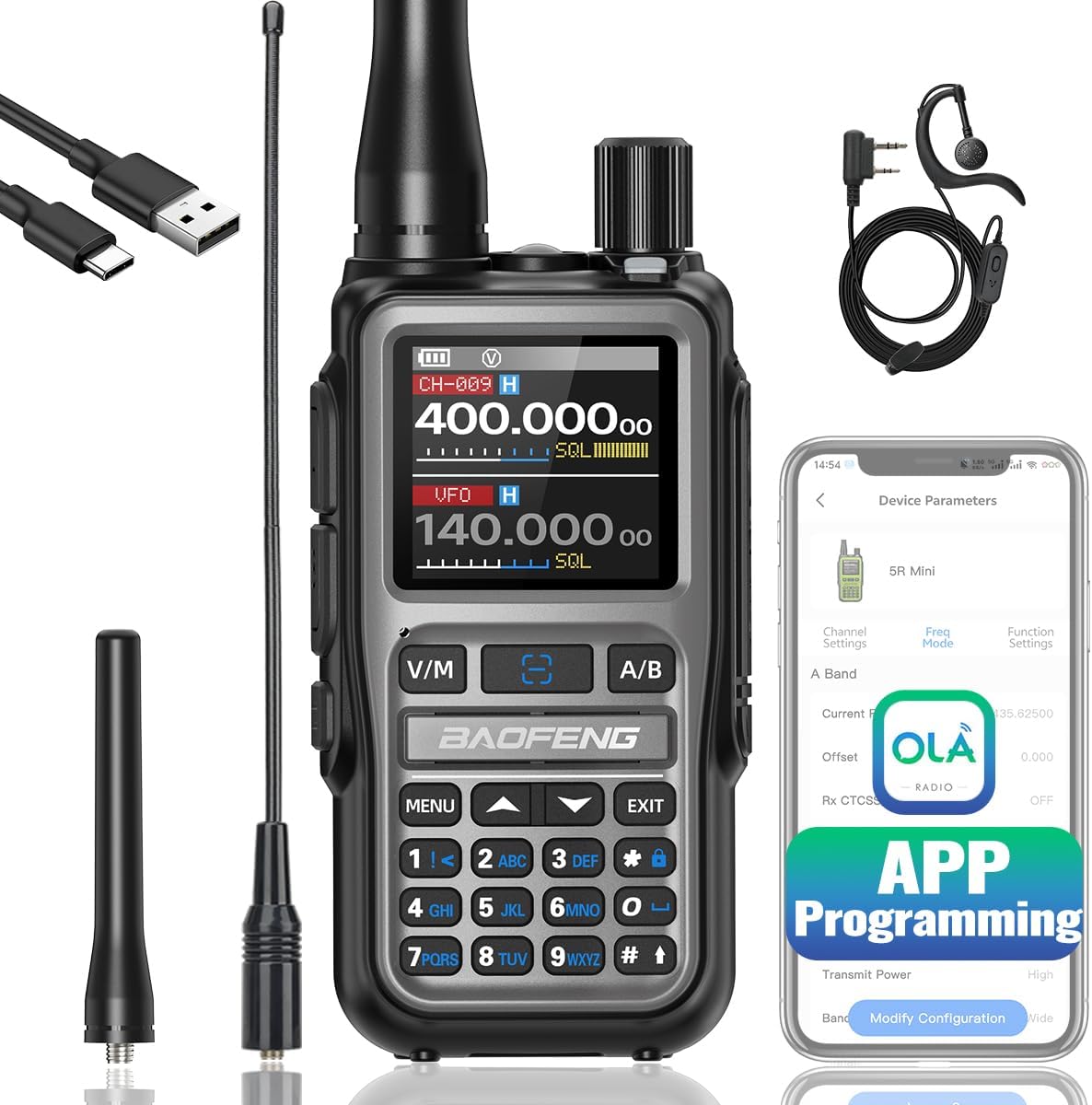
Baofeng UV-5R Mini Ham Radio — In-Depth Review


Overview
The Baofeng UV-5R Mini is a compact, budget-minded dual-band handheld transceiver that takes the familiar UV-5R platform and shrinks it into an even more pocketable form while adding a handful of modern conveniences such as USB-C charging and simplified app-based programming options. It aims at new hams and casual users who want a low-cost entry to VHF/UHF operations, local repeaters, NOAA weather monitoring, and short-range emergency communications without a heavy or bulky unit.

Design and Build
Physically, the Mini keeps a straightforward, no-frills layout: a small but readable display, a numeric keypad for direct frequency entry, PTT and function buttons, and a removable antenna. The body is light and compact — easy to carry on a belt or slip into a jacket pocket — and the simpler control layout makes it approachable for beginners. The casing is typically plastic with a matte finish; it’s adequate for everyday handling but not as rugged-feeling as higher-end handhelds.

The USB-C charging port is a welcome, modern update that removes the need for proprietary chargers or older micro-USB cables. Many packages include a rechargeable battery and a basic charger cable; battery capacity varies by seller and bundle but generally supports a full day of casual use. Some bundles include an earpiece/headset; connector type for external audio (3.5mm vs two-pin Kenwood-style) varies by variant, so buyers should check what their specific kit contains.

Radio Performance and RF Features
At its core the UV-5R Mini remains a dual-band VHF/UHF transceiver capable of transmit and receive on the popular 2-meter and 70-centimeter amateur bands. It receives public-service broadcasts and NOAA weather channels, which is useful for monitoring weather alerts and local broadcasts.

Transmit power on most Baofeng handhelds is selectable (high/low) and typically sufficient for simplex work and for hitting nearby repeaters when used with a decent antenna and proper location. Range in real-world terms depends heavily on antenna, terrain, height, local noise, and repeater placement — expect neighborhood to several miles in typical suburban conditions, and substantially farther if you can place the antenna high or use repeaters.

Receiver sensitivity and selectivity are surprisingly capable for the price: the Mini will pull in local repeaters,-weather and aircraft/airband (receive-only, if equipped to) reasonably well. That said, it does not match the front-end filtering or audio fidelity of more expensive commercial or hobbyist radios, so in very crowded RF environments you may notice handling of strong out-of-band signals is not as robust.

Channels, Memory and Features
One of the marketing hooks is large channel memory counts (advertised 999 channels on some models). Practically, the memory system lets you store frequencies, offsets and tones for repeaters, weather channels, and simplex buddies. The front panel allows manual frequency entry and navigation through stored memories.

Other common features include dual-watch/dual-standby (monitor two channels/frequencies), FM broadcast reception, CTCSS/DCS tone support for repeater access, VOX (hands-free transmit), and an emergency alarm function in some firmware versions. The Mini also often includes a “frequency copy” or wireless frequency copy feature allowing two radios of the same model to copy programmed channels to each other without a computer — handy for field operations and quick setup.

Programming: App, Cable, and Software
Programming options are flexible. For users who prefer GUI programming, many sellers bundle a USB programming cable and the radio can be programmed using PC software such as CHIRP — though support and cable compatibility may vary with clones and firmware revisions. The increasingly common alternative is smartphone app programming: a Bluetooth or proprietary app can write frequencies and memories to the radio, which appeals to users who dislike dealing with desktop software. App functionality and reliability vary by vendor and third-party app developer; some apps are straightforward and work well for the basics while others are limited.

If you rely on USB-C for charging only and still need the traditional programming cable, double-check the bundle contents. The radio’s keypad and small screen permit manual programming, but that is slower and error-prone for many channels compared to software upload.

Audio and Accessories
On receive and transmit, audio clarity is acceptable for casual use. Speaker volume is adequate in quiet conditions; in noisy environments or when clear audio is vital, a headset or external speaker improves intelligibility. Many kits include a basic earpiece/mic; higher-quality aftermarket accessories with secure connectors improve comfort and durability.

Common accessory purchases include upgraded antennas (better whip or telescoping designs), high-capacity batteries for longer operating time, belt clips, and carry cases. Antenna upgrades often yield better range and performance than changing radio settings.

Battery Life and Charging
Battery life varies with transmit duty cycle, power level, and battery capacity. For intermittent use (monitoring and occasional transmissions), a standard rechargeable pack typically lasts many hours; for heavy transmit use (net control, long data bursts), life shortens. The USB-C charging option is convenient for field use with power banks and modern chargers — a practical advantage over older micro-USB or proprietary charge ports.

Safety, Regulations, and Practical Use
Important: transmitting on amateur bands requires an appropriate license in most countries (for example, an FCC amateur radio license in the United States). Users should obtain the correct license and operate within permitted frequencies and power limits. Additionally, do not transmit on public safety, aviation, or other restricted frequencies — many handhelds can receive such bands but transmitting there is illegal and dangerous. Learn local regulations and program only authorized frequencies.

Real-World Experience and Usability
For new hams, the Mini is an accessible, low-cost way to learn the basics: making simplex contacts, checking into local repeaters, monitoring NOAA weather, and understanding radio etiquette. Its light weight and small size encourage taking it along on hikes, RV trips, or local events.

Ease-of-use depends on the user’s patience with small menus and a compact keypad. Those comfortable with programming via PC or app will set up the radio quickly. For group deployments or emergency prep, the wireless frequency copy function (if present) and app-based sharing are practical features that speed distributing channel plans among multiple units.

Limitations and Trade-Offs
The UV-5R Mini is a budget device and shows it in several ways: build materials are economical, front-end filtering is limited compared to mid- or high-end handhelds, and audio fidelity and ergonomics are basic. Some users report variability across different batches or vendor clones, so quality control can be inconsistent. The small form factor also means smaller buttons and a smaller display, which can be a nuisance for large-gloved hands or for users who value large, tactile controls.

Many advanced features common in pricier radios — superior receiver front-end, better shielding against strong-signal overload, more robust firmware, superior ergonomics, and more reliable accessory connectors — are absent here. If you plan frequent contesting, serious weak-signal work, or professional-grade reliability, stepping up to a higher-tier radio is worth considering.

Pros and Cons (concise)
Pros: Extremely affordable; pocketable; dual-band VHF/UHF; NOAA/weather receive; USB-C charging; multiple programming options including app and cable; good entry-level feature set.

Cons: Build and audio quality are basic; front-end performance limited in crowded RF environments; possible variation between suppliers/clones; small keypad/display; some bundle inconsistencies (battery size, headset type).

Who Is This Radio For?
The UV-5R Mini is best for beginners who want an inexpensive, portable way to get on the air and learn. It’s useful for hikers, campers, event volunteers, and anyone who wants a low-cost handheld for local communications, weather monitoring, and basic repeater use. It is less suited to users requiring professional durability, heavy-duty contest performance, or the best possible receiver performance in noisy RF environments.

Verdict
The Baofeng UV-5R Mini delivers a compelling value proposition for its price: a compact, modernized take on a popular low-cost handheld platform that includes practical updates like USB-C charging and app-friendly programming. It won’t match the refinement or performance of mid-range handhelds, but for newcomers, hobbyists on a budget, and those needing a light, inexpensive backup radio, it’s an attractive choice. As with any inexpensive radio, buyers should be mindful of bundle differences, confirm exact features before purchase, and plan on learning basic programming and radio etiquette to get the most out of it.

Final Notes and Tips
Learn the local band plan and licensing requirements where you live. Program NOAA weather channels and a few local repeater memories before heading out. Invest in a better antenna and a spare battery if you expect regular use. Use the radio’s lower power setting for short-range contacts to conserve battery life, and reserve high power for reaching distant repeaters when needed.

🎅See The Baofeng Mini On Amazon!🎅

Saturday, December 6, 2025

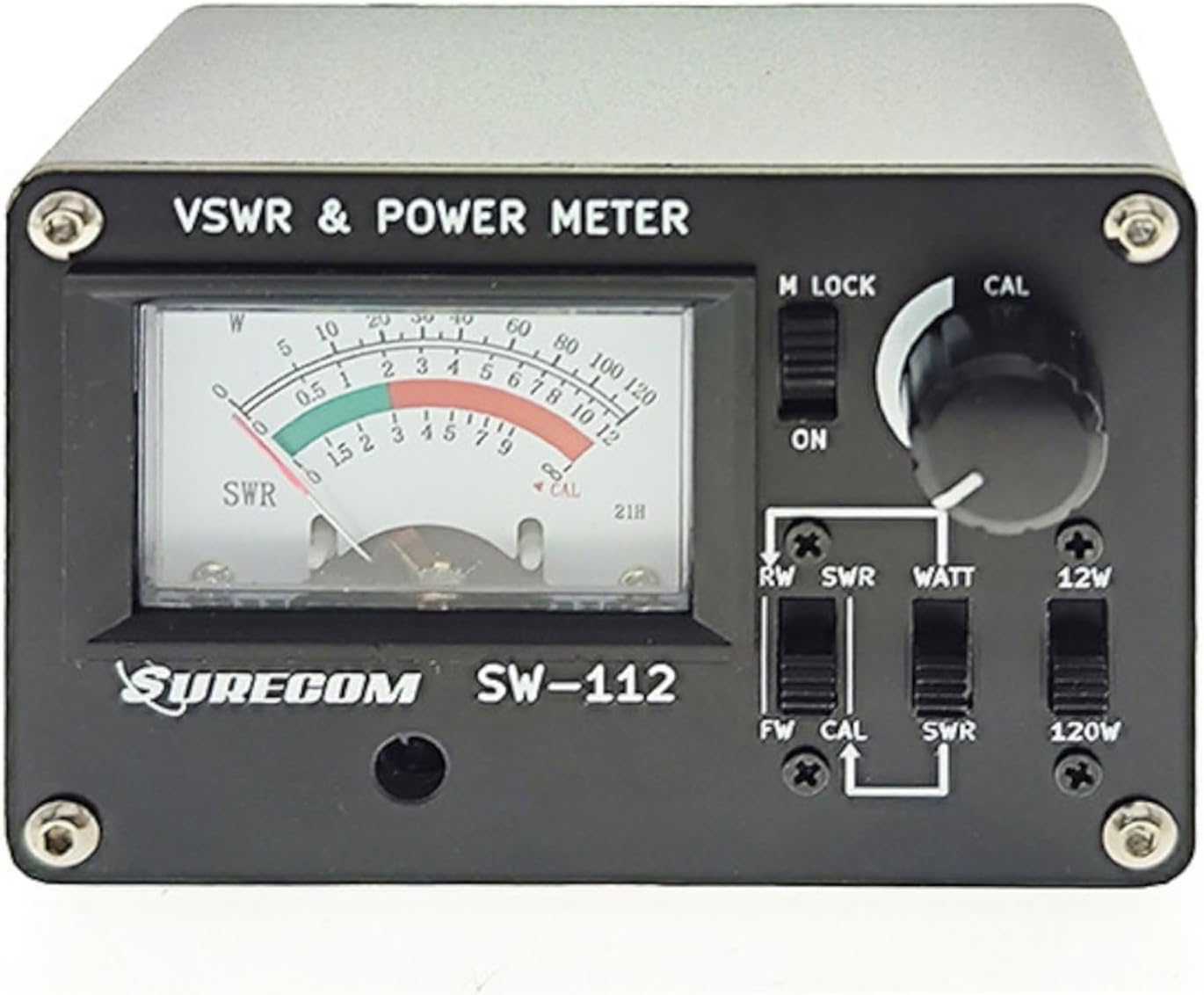
McBazel Surecom SW-112HF — In-Depth Review


Introduction
The Mcbazel Surecom SW-112HF is a compact V.S.W.R. and power meter designed for HF radio operators who need a simple, affordable way to measure forward power, reflected power, and standing wave ratio. It covers a wide portion of the HF spectrum, offers an analogue-style meter with backlighting, and supports up to 120 watts of power. This makes it a practical tool for everyday amateur radio use, field work, and antenna troubleshooting.

What It Is
The SW-112HF is built for HF bands from 1.5 to 60 MHz. It uses an analogue meter to show forward and reflected power, and it can also display SWR. The power handling rating reaches up to 120 watts, which is suitable for most HF transceivers operating at standard output levels. The unit uses SO-239 connectors and includes a backlit meter powered by an external DC source between 5 and 12 volts.

Build, Fit and Finish
The meter is small, lightweight, and easy to place in any radio setup. Its plastic housing and clear analogue meter cover feel typical for compact test gear, giving it a serviceable and practical appearance. The backlight improves readability in dim environments, which is especially helpful during mobile operations or evening tuning. The overall build is functional rather than premium, but appropriate for its price point.

User Interface and Ergonomics
The SW-112HF is extremely simple to operate. You insert it between your radio and antenna, apply power to the backlight if needed, key your transmitter, and observe the meter. The analogue needle gives immediate visual response, making it easy to spot issues such as high reflected power or poor antenna performance. There are no complicated menus or digital settings, making the unit ideal for beginners or quick field work.

Performance and Accuracy
The meter provides readings that are generally accurate enough for everyday troubleshooting, though not at the precision level of professional lab instruments. Expect the measurements to be best used for approximate tuning, antenna diagnostics, and ensuring your setup is safe for your radio. It excels at identifying major issues such as broken antenna elements, bad coax connections, or excessively high SWR. For tasks requiring calibration-grade accuracy, a higher-end meter or analyzer would be more appropriate.

Tips for Getting the Best Readings
Place the meter as close to the radio as possible using a short, high-quality jumper cable. Use a steady carrier such as AM, FM, or CW for consistent readings. SSB voice peaks will cause the needle to fluctuate, so for the most repeatable results, use a carrier mode during testing. Remember that this type of meter is best for practical measurements rather than precise laboratory data.

Pros
• Extremely simple to use
• Portable and lightweight
Covers the entire HF range from 1.5 to 60 MHz
• Useful analogue meter with backlight
• Affordable and suitable for field work or beginners
• Provides immediate visual feedback

Cons
• Accuracy is adequate but not precise enough for calibration work
• Analogue display requires careful interpretation
Limited to SO-239 connectors unless adapters are used
• Not designed for advanced analysis or frequency sweeps

Who This Is For
The SW-112HF is ideal for amateur radio operators who need a no-nonsense, low-cost meter for quick checks. It works well for field operations, mobile installations, and everyday antenna diagnostics. New hams will appreciate its simplicity. Advanced users who require precise measurements may want to pair it with more sophisticated equipment.

Comparisons
Compared to digital SWR meters or antenna analyzers, the SW-112HF trades numeric precision and advanced features for simplicity and cost savings. If you rely on visual response and only need to confirm whether an antenna is performing correctly, its analogue readout can be more intuitive than digital numbers. For plotting antenna resonance or performing detailed testing, however, a more advanced analyzer is the better choice.

Final Verdict
The Mcbazel Surecom SW-112HF is a practical and reliable tool for basic HF antenna and power testing. Its analogue meter, broad frequency coverage, and straightforward operation make it an excellent choice for quick diagnostics and field use. While it is not a precision instrument, it is more than capable of identifying problems and giving you the information needed to keep your HF station operating safely. For its price and simplicity, it offers solid value to the everyday amateur radio operator.

See The Mcbazel Surecom On Amazon!

Friday, November 28, 2025

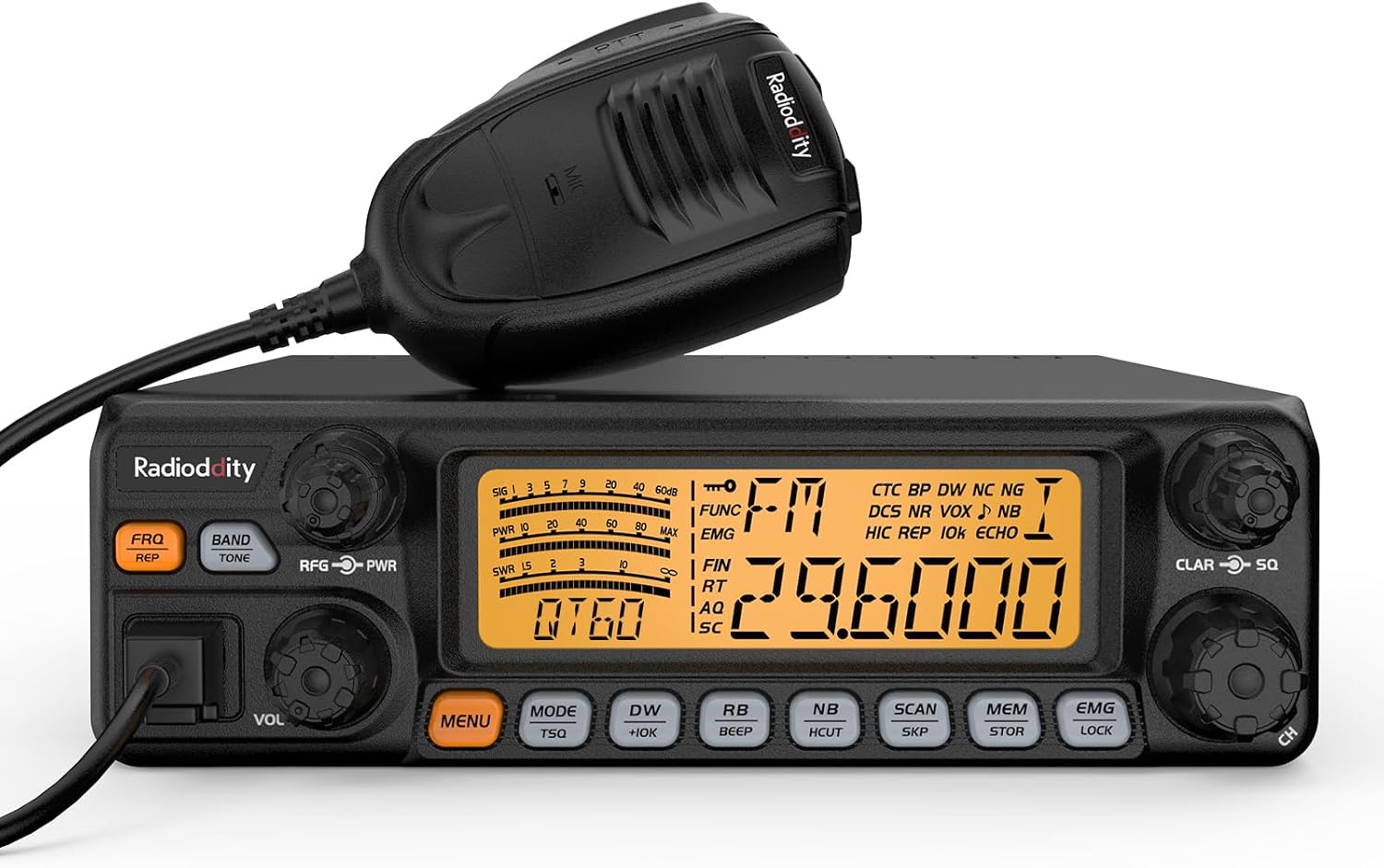
Radioddity QT60 Pro — In-depth Review


Overview
The Radioddity QT60 Pro is a modern 10-meter mobile transceiver designed for amateur operators who want a high-power, feature-rich radio in a compact vehicle-friendly package. It supports SSB, AM, FM, and PA modes, offers up to 60 watts of output power, includes a large backlit LCD display, and provides both RX and TX noise reduction. Additional conveniences such as NOAA weather reception with alert capability, CTCSS/DCS tones, and adjustable squelch/ASQ make it a versatile radio for mobile or portable use.

What’s in the box and first impressions
Inside the box you find the radio, a mobile mounting bracket, a fused power cable, a standard microphone, and the user manual. The radio feels solidly built with a dense chassis and a front panel layout that is intuitive. Buttons and the main tuning encoder have a good feel, and the microphone is perfectly serviceable for everyday use. The overall construction gives the impression of a radio built to handle the bumps and vibrations of mobile operation.

Design and build quality
The QT60 Pro follows Radioddity’s compact design philosophy. The matte finish, large display, and clean button layout are practical for vehicle installations. The front panel is dominated by a clear LCD that shows frequency, mode, signal strength, and menu functions. The chassis is rigid, the connectors feel secure, and the radio has enough weight to stay stable once mounted. Build quality is strong for a mobile 10-meter transceiver in this class.

Display, ergonomics and controls
The LCD display is one of the standout features. It is bright, clear, and readable in bright sunlight or low-light conditions. Controls are straightforward: the primary tuning dial is smooth, the push buttons are responsive, and the menu system is organized logically. While some deeper features require menu navigation, basic functions such as changing modes, adjusting power, or selecting memory channels are quick and simple.

Receive and transmit audio performance
Receive audio from the built-in speaker is loud and clean enough for use in a noisy vehicle. Voice audio on SSB and AM is clear, with noise reduction helping improve intelligibility. Transmit audio using the stock microphone is good for most contacts, but those who operate SSB extensively or participate in nets may prefer an upgraded microphone for more natural tone and improved clarity. The radio’s TX noise reduction aids in cutting background noise when speaking in a moving vehicle.

Transmit power and operating modes
Radioddity rates the QT60 Pro at up to 60 watts depending on the mode. This offers a noticeable advantage for mobile 10-meter operation where every watt matters when conditions are marginal. SSB usually delivers the highest practical power, with AM and FM often slightly lower. As with any mobile HF-band radio, actual performance depends heavily on antenna tuning, power cable quality, and overall system grounding. In practice, the radio delivers strong, reliable output when properly installed.

Receiver performance and filtering
The QT60 Pro has respectable sensitivity and provides enough filtering flexibility for typical 10-meter SSB, AM, and FM operation. Adjustable squelch and ASQ reduce operator fatigue from noise and weak interferences. The noise reduction features are especially useful in mobile environments. While extremely strong nearby signals can overload many compact radios, the QT60 Pro handles ordinary band conditions quite well for its class.

Noise reduction, ASQ and extra features
The radio includes both RX and TX noise reduction, adjustable squelch, automatic squelch (ASQ), and multiple filtering options depending on mode. These features combine to create a comfortable listening experience, especially on long drives. The QT60 Pro is also compatible with data-mode operation when connected to appropriate sound card interfaces. Programming software and firmware updates are available, making it easier to manage memory channels and parameters.

NOAA weather, CTCSS/DCS and PA mode
Having built-in NOAA weather channels with alert capability makes the QT60 Pro well suited for long trips, seasonal weather, or emergency driving situations. CTCSS and DCS tone functions provide selective access for FM channels and reduce unwanted chatter. The PA mode allows you to route audio to an external PA speaker, useful in certain field or emergency scenarios.

Programming and software
Radioddity provides programming software that lets you manage memory channels, frequencies, tone settings, and other options from a PC. This is much faster than relying solely on front-panel programming. Firmware updates add future functionality and fix issues, giving the QT60 Pro better longevity.

Installation and power considerations
To get the best performance, use a high-quality, properly gauged power cable directly connected to the vehicle’s battery. Good grounding is essential for reducing noise and ensuring stable high-power output. Because the radio is capable of significant transmit wattage, heat buildup can occur, so mount it in a space with adequate ventilation. A properly tuned 10-meter antenna with low SWR is mandatory not only for performance but also for protecting the finals from damage.

Antenna and real-world range
10 meters can provide both short-range ground communication and impressive long-distance DX when the band opens. With a well-installed mobile antenna and favorable propagation, the QT60 Pro’s high power can help you reach distant stations more reliably. In poor conditions, antenna quality matters far more than power, so investing in a good 10-meter whip is strongly recommended.

Who should buy this radio
The Radioddity QT60 Pro is ideal for operators who want a dedicated 10-meter mobile transceiver with multiple voice modes and strong performance. It is well suited for:
Mobile hams who enjoy SSB and AM operation
Operators who want NOAA weather monitoring built into their radio
Users who need high power in a compact form factor
Beginners who want a modern, easy-to-navigate 10-meter radio
Anyone who values PC programmability and good filtering options

Areas for improvement
The stock microphone works but serious voice operators might prefer an upgrade. The radio’s high power requires careful installation to prevent overheating in tight spaces. Finally, those operating in extremely busy or high-interference areas may want external filtering, though this is common among radios in this price bracket.

Pros
High transmit power up to 60W
Large, easy-to-read LCD
SSB, AM, FM, and PA capability
Effective noise reduction features
NOAA weather channels with alerts
CTCSS/DCS support
Good PC programming options

Cons
Stock microphone is average
Needs careful power and heat management
Some menu functions require a learning curve
Optional external filtering may be needed in harsh RF environments

Final verdict
The Radioddity QT60 Pro offers tremendous value for hams who want a capable, modern 10-meter mobile transceiver with real SSB performance, strong output power, and a robust feature set. It balances functionality, clarity, and convenience in a compact form that fits well into most vehicles. With a properly matched antenna and a thoughtful installation, the QT60 Pro performs well for everyday mobile QSOs, DX attempts during band openings, and general 10-meter enjoyment.

Get The Radioddity QT60 Pro On Amazon!

Saturday, November 15, 2025

The Wide World of HF: Exploring the Many Aspects of High Frequency Ham Radio


High frequency ham radio is one of the most exciting and diverse areas of the amateur radio hobby. Covering the frequency range from 1.8 MHz up to 30 MHz, HF allows operators to communicate across continents, chase distant signals, experiment with propagation, build antennas, and take part in a huge variety of activities that simply are not possible on VHF and UHF alone. HF is the heart of long-distance radio, and the more you explore it, the more it opens up.

Introduction to HF and Its Special Characteristics

HF is unique because it can take advantage of the ionosphere, a layer of charged particles high above the Earth. Unlike VHF and UHF signals that mostly travel in straight lines, HF radio waves can reflect off the ionosphere and return to Earth far beyond the horizon. This process, known as skywave propagation, makes it possible to talk to someone thousands of miles away with a modest radio and simple antenna.

HF activity can change from hour to hour, season to season, and year to year as solar conditions shift. That variability is part of the fun, because no two days are quite the same. HF invites experimentation. It encourages learning. And it rewards those who pay attention to changing conditions.

What HF Is Used For in the Ham Radio Hobby

HF supports a broad set of activities that attract operators of all skill levels.

Long Distance DXing
One of the most popular uses for HF is DXing, the pursuit of long distance contacts. Because HF signals reflect off the ionosphere, reaching Europe, Asia, South America, Africa, or Oceania from the United States is achievable even with a simple dipole antenna. DXing challenges operators to learn about propagation, gray line enhancement, sporadic openings, and band timing.

Contesting
HF contests take place throughout the year, ranging from small regional events to massive worldwide competitions. These contests test an operator’s operating speed, efficiency, and station setup. Each HF band behaves differently during contests, and knowing when to shift bands can be the difference between an average score and a top-tier performance.

Digital Modes
Modes like FT8, PSK31, RTTY, and others are extremely popular on HF. FT8 in particular has become a major tool for monitoring propagation and making reliable long distance contacts even when conditions are poor. Digital modes require minimal power yet achieve impressive distances.

Voice and Ragchewing
Single sideband voice remains a classic method of HF communication. Operators often find friends, join nets, and spend time in extended conversations known as ragchews. These nets can focus on emergency communication, technical advice, or general conversation.

CW (Morse Code)
While not required for licensing anymore, Morse code is still widely used on HF. CW signals penetrate noise better than voice and are more efficient for long-distance work. Many operators enjoy the skill and rhythm of practicing code on HF bands.

Portable and Field Operations
HF is popular for camping, field activations, summits, and portable work. With modern lightweight radios, operators can set up portable HF stations almost anywhere and enjoy the magic of long range communication from remote locations.

Emergency Communications
HF plays a vital role in emergency communication because it can reach across states or entire regions without relying on internet or repeaters. Many emergency groups still practice HF communication as part of a prepared response system.

Detailed HF Band Breakdown and Best Uses

Each HF band has its own personality. Knowing when and how to use each one helps operators get the most from their radio.

160 Meters (1.8 to 2.0 MHz)
Often called the top band, 160 meters behaves more like a mix of HF and low frequency. It offers excellent nighttime range, especially in winter when noise levels are low and the ionosphere supports longer paths. Antennas for this band tend to be large, but the challenge is rewarding. Best for nighttime regional and long haul contacts.

80 Meters (3.5 to 4.0 MHz)
A prime band for nighttime operation. It offers excellent coverage for local and regional communication and can also achieve long distance contacts when conditions are right. Noise levels can be high in summer, but winter provides outstanding operating conditions.

60 Meters (5 channels from 5330 to 5405 kHz)
This shared band offers dependable medium range communication even when other HF bands are poor. It is popular for emergency work and for stable regional communication. Operating is channelized, so the band feels different from others.

40 Meters (7.0 to 7.3 MHz)
This is one of the most reliable HF bands, providing both daytime and nighttime usefulness. During the day, 40 meters supports regional communication. At night, it can reach across continents. Many nets operate on 40 meters, making it versatile and lively.

30 Meters (10.1 to 10.15 MHz)
A peaceful band used mainly for CW and digital modes. It offers excellent long distance performance and quiet operation. Daytime and early evening are particularly strong times to use this band.

20 Meters (14.0 to 14.35 MHz)
This is the flagship DX band. When solar conditions are moderate or high, 20 meters can remain open nearly 24 hours a day. It is often the most reliable band for contacting distant continents. Voice, CW, and digital modes all flourish here.

17 Meters (18.068 to 18.168 MHz)
Part of the newer WARC bands, 17 meters avoids contest interference and gives operators a clean place to work DX. It is excellent during daylight hours and often supports long path propagation. Signals tend to be strong and clear.

15 Meters (21.0 to 21.45 MHz)
Another high performance DX band, especially during periods of high solar activity. During good conditions, 15 meters becomes lively with worldwide signals. It behaves similarly to 20 meters but with a slightly higher frequency advantage during solar peaks.

12 Meters (24.89 to 24.99 MHz)
A quieter band that does extremely well during strong solar cycles. Like 17 meters, it avoids contest congestion. When open, it can provide fast and exciting DX contacts.

10 Meters (28.0 to 29.7 MHz)
One of the most interesting HF bands because it can go from silent to explosive within minutes. During good solar conditions or sporadic E events, 10 meters can offer global communication with very low power. It supports FM, repeaters, SSB, CW, and digital modes. Summer and winter sporadic E seasons bring surprising short-skip propagation.

Putting It All Together

HF is more than just frequencies. It is a dynamic, ever-changing world filled with challenges, discoveries, and opportunities to connect with people across the globe. Each band has its own personality, and learning when and how to use them is part of the excitement. Whether you enjoy contesting, building antennas, chasing DX, or simply talking with hams near and far, HF opens the door to a lifetime of exploration.

No matter your equipment or experience level, HF always has something new to offer.

Friday, November 14, 2025

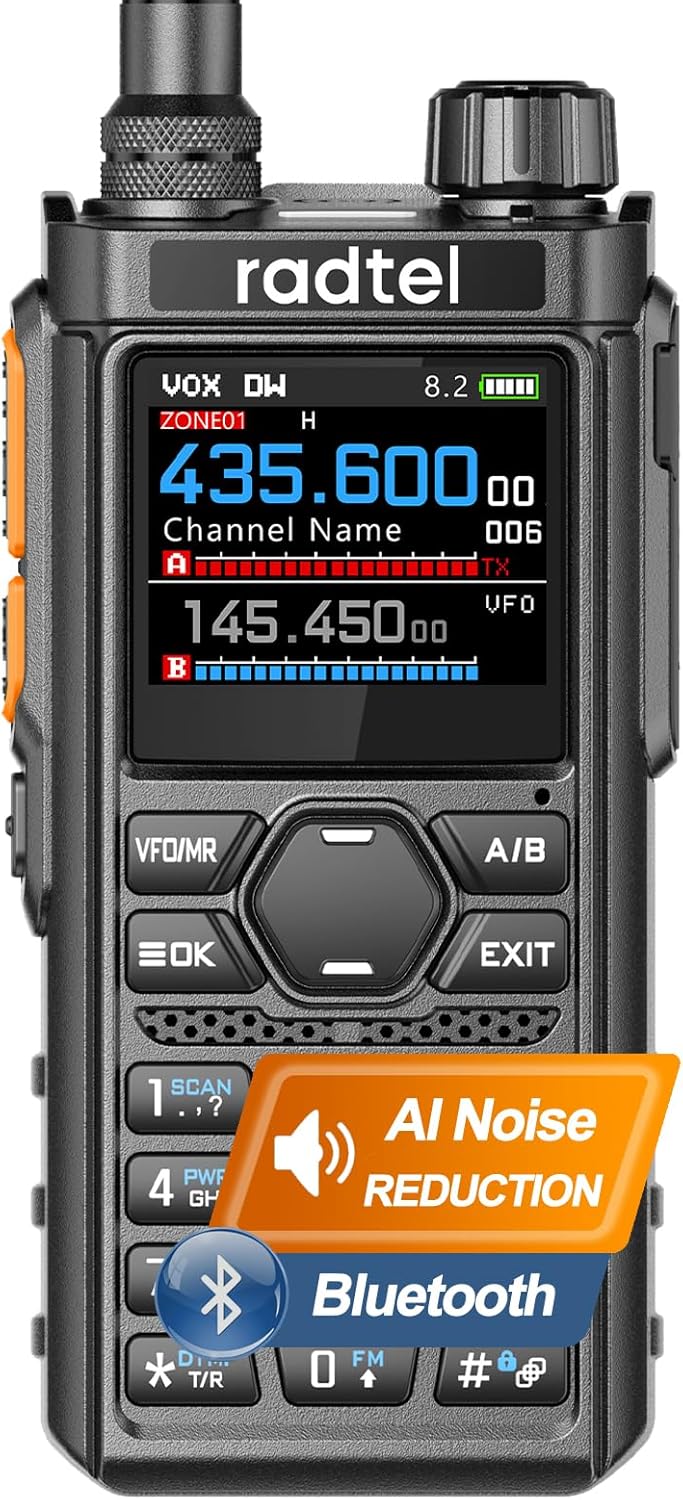
Radtel RT-910B 5W Multi-Band Ham Radio Handheld Walkie Talkie — In-Depth Review


Overview
The Radtel RT-910B is a compact, feature-heavy handheld aimed at amateur radio operators who want a versatile, budget-friendly rig. It packs multi-band coverage including the 6 meter amateur band, up to 5 watts transmit power, a large channel capacity (960 channels), AM/FM broadcast receive, Type-C charging, spectrum scan, and Bluetooth support. On paper it looks like a Swiss Army knife for hams who want one radio that does a bit of everything: local simplex, repeater work, shortwave-ish monitoring, and casual scanning. This review walks through the hardware, ergonomics, audio, RF performance, usability, programming options, battery life and charging, Bluetooth and accessories, plus who will get the most from this radio.

What it is good for

What it is not

  • A substitute for a full-power base station or contest-grade transceiver.

  • The best choice for serious weak-signal work, long-distance DXing, or high-performance contesting.

  • A replacement for radios with extensive aftermarket support, custom firmware, or world-class receiver performance.

Build quality and design
The RT-910B follows the now-common handheld stylistic template: a rugged-looking ABS/polycarbonate housing, a rubberized grip area, a detachable antenna, and a top-mounted rotary or button control for volume and channel selection. The chassis feels reasonably solid for the price point; seams are tight and buttons have a positive feel, though they’re not as crisp as midrange handhelds from legacy brands. The radio usually ships with a removable belt clip and a basic antenna; higher performance or longer antennas will improve transmit and receive noticeably.

Ergonomics and controls
Controls are laid out to be usable by one hand: a push-to-talk (PTT) on the side, programmable function keys, and a front-facing keypad for direct channel entry and quick menu access. The menu system is typically layered but logical — expect a learning curve if you’re used to simpler consumer radios. The display is clear enough for channel info, frequency readout, and menu navigation; backlighting helps in low light but is not overwhelmingly bright. The keypad and soft keys work fine with gloved hands if the gloves are not too bulky.

Display and user interface
The radio’s display presents frequency, mode (FM/AM), channel number, and status icons for battery, Bluetooth, lock, and scan. Spectrum scan functions usually show a waterfall or bar display to let you visually locate active signals — useful for newcomers and for chasing activity on less-commonly used bands like 6 meters. The channel memory system (up to 960 channels) is powerful: you can store repeaters, offsets, tones, and custom names — a strong point for portable operation and for users who hop between many repeaters.

Receiver and audio performance
For typical on-the-air use the receiver is serviceable. Sensitivity and selectivity are adequate for local repeater work and casual monitoring, though it won’t match the front-end filtering or DSP of higher-end transceivers. The inclusion of AM and FM broadcast receive expands utility for monitoring local news or propagation beacons. The speaker gets loud enough for noisy outdoor environments; audio is clear at reasonable volume levels but shows compression and distortion at extremes. Bluetooth audio output is handy for headset use, but expect slightly higher latency and compressed audio quality compared with wired headsets.

Transmit performance and power
The RT-910B is rated up to 5 watts on transmit, which is typical for handheld ham radios that allow QRP/low-power operation and still provide usable range into repeaters. Users should verify actual transmit power for each band/mode and expect that HTs with stock antennas and 5W will perform like other handhelds — excellent for local contacts and repeater access, limited for long-distance simplex unless propagation is favorable. The dual-PTT feature (if present) is useful for quick switching between channels or for linking talk groups in certain setups.

Antenna and RF considerations
Performance out of the box depends heavily on the supplied antenna. Stock antennas favor compactness over efficiency; swapping to a higher-gain, longer whip or using a mag-mount on a vehicle will substantially improve both transmit and receive. Because the radio covers multiple bands (including 6 meters), using band-appropriate aftermarket antennas for 6m, 2m, and 70cm will yield the best results.

Programming, memory, and features
The RT-910B’s 960-channel memory system is one of its headline features. It supports channel naming, offsets, CTCSS/DCS tones, and priority scanning. Many users will want to program channels via software (PC programming using a compatible cable and CHIRP-like formats where supported); if the radio supports CHIRP or vendor software, that makes bulk programming much easier. The spectrum scan function helps identify active frequencies quickly; it’s a great learning tool and simplifies finding local repeaters and beacons on the 6 meter band. Other useful features often include dual-watch, priority channel, VOX (if present), and adjustable power settings (high/low).

Bluetooth version and capabilities
The Bluetooth version adds convenience: wireless headsets, earpieces, and possibly wireless programming or phone link depending on implementation. Expect standard Bluetooth audio profiles that allow voice routing to a headset; Bluetooth will be handy for hands-free operation but is not a replacement for wired, low-latency connections in high-demand environments. If the radio supports Bluetooth PTT through an accessory, that can be a useful field addition.

Battery life and charging
Type-C charging is a modern convenience and means you can top up the battery almost anywhere without hunting for a proprietary charger. The stated battery capacity (if listed by the manufacturer) will determine real-world runtime; with moderate use a mid-sized battery often yields a full day of casual operation, while heavy scanning, Bluetooth streaming, or continuous transmit will shorten runtime quickly. Fast top-ups via USB-C are convenient in the field. If the radio supports external power via USB-C while transmitting, verify voltage/current specs to avoid charger overheating or insufficient power during transmit.

Accessories and expandability

  • Upgraded antenna: highly recommended for real improvement.

  • Desktop/charging cradle: handy if offered.

  • Programming cable and PC software: essential for bulk memory management.

  • Bluetooth headset or boom mic: for hands-free operation.

  • External mag-mount or mobile adapter: if you plan to use the radio in a car.

  • Spare batteries for extended outings.

Usability in real-world scenarios

Pros

  • Multi-band coverage including the 6 meter band.

  • Large channel memory (960 channels) for repeaters, simplex frequencies, and scanning playlists.

  • AM/FM broadcast receive adds general utility.

  • Spectrum scan helps visually locate activity.

  • Modern conveniences: Type-C charging and Bluetooth support.

  • Compact, lightweight, and feature-rich for the price point.

Cons

  • Build and button feel are not the premium level of legacy high-end brands.

  • Receiver and audio quality are good but not class-leading—limited selectivity on crowded bands.

  • Out-of-the-box antenna usually limits real-world range; upgrade recommended.

  • Bluetooth audio is convenient but usually compressed and slightly latent compared to wired.

  • Programming can be tedious without PC software and a cable.

Tips and recommended settings

  • Replace the stock antenna early — you’ll notice an immediate improvement.

  • Program repeaters, offsets, and tones into memory before field use. Bulk programming via PC is faster and reduces mistakes.

  • Use the spectrum scan to find active spots on 6 meters before relying on memory channels.

  • Keep Bluetooth off if you need the lowest latency or best audio clarity for monitoring weak signals.

  • Carry a spare battery or powerbank for long outings; USB-C top-up from a powerbank is very convenient.

  • Learn how to lock keys and set backlight timeout to prevent accidental channel changes.

Who should buy it

  • New hams wanting many features at a modest price.

  • Portable operators who value light weight and battery convenience.

  • Casual users who want AM/FM listening plus a capable ham handheld.

  • Hams who want an inexpensive multi-band backup radio with modern features like Type-C charging and Bluetooth.

Who might skip it

  • Contesters, DX chasers, and weak-signal enthusiasts who require top-tier receiver performance and advanced filtering.

  • Operators who demand best-in-class ergonomics, proven long-term firmware support, and extensive aftermarket accessories.

Final verdict
The Radtel RT-910B brings together an appealing set of modern features into a single, compact handheld: multi-band coverage with 6 meters, 960 programmable channels, AM/FM receive, spectrum scanning, Bluetooth, and USB-C charging. For the price-conscious operator or the newcomer who wants to experiment across bands and modes, it’s a strong value proposition. Expect solid—but not exceptional—RF performance and build quality; the radio shines when paired with a better antenna and a bit of programming work. If you want a versatile daily carry or a capable backup HT with modern conveniences, the RT-910B deserves serious consideration. If, however, you need the absolute best receiver performance, premium buttons and knobs, or professional-grade durability, look to higher-tier models from long-established manufacturers.

🎅See The Radtel RT-910B On Amazon!🎅

Friday, November 7, 2025

Wouxun KG-Q10H — Full In-Depth Review


Overview


The Wouxun KG-Q10H is a compact quad-band handheld transceiver designed for amateur radio operators who want 1.25 m, 2 m, 6 m, and 70 cm transmit capability in a single handheld unit. It’s a versatile radio with a full-color dual-channel display, GPS/location functions, wide receive coverage, and modern conveniences such as USB-C charging and a large rechargeable battery.

What the radio is and who it’s for
This model is aimed at hams who value multi-band flexibility in a portable format. It’s perfect for those who want to work local repeaters on 2 m and 70 cm, explore the 6 m “magic band,” and use 1.25 m where available, all without carrying multiple radios. It also appeals to users who appreciate features like GPS and modern charging options. However, it’s not ideal for operators who require built-in digital voice modes or those looking for the smallest, most basic HT possible.

Key specifications


• Quad-band transmit: 1.25 m (220 MHz), 2 m (144 MHz), 6 m (50 MHz), and 70 cm (430 MHz)
• Broad receive coverage across VHF and UHF ranges, including airband reception in AM
• Adjustable transmit power with multiple settings, typically reaching up to around 6 watts depending on the band
• 3000 mAh Li-Ion battery with USB-C charging
• Size: approximately 132 × 62 × 37 mm and around 238 g without antenna
• Full-color dual-channel display with clear readability and dual watch capability


First impressions and build quality

The KG-Q10H feels sturdy and solid in the hand, with a textured shell that provides good grip. Its design follows a familiar handheld format with a top-mounted volume knob and side buttons that feel well-built. The full-color display is bright and sharp, making it easy to identify which band or channel is active. The included 3000 mAh battery gives a sense of reliability for extended outdoor or emergency use, and the USB-C port makes it easy to charge from power banks or modern adapters. Overall, build quality is high for its price range.

User interface and display


The color dual-display screen is one of the best features of the KG-Q10H. It shows both active channels simultaneously, allowing easy monitoring of two frequencies at once. The menu system offers plenty of customization options, including tone settings, display themes, and scanning preferences. The interface is fairly intuitive for anyone experienced with Wouxun radios, though beginners may need time to get used to navigating through the options.

Transmit and receive performance


Transmission quality is clear, with good modulation and dependable power output on all four bands. The radio performs well on both simplex and repeater operations. Receive sensitivity is solid, providing clean audio and minimal background noise. The inclusion of airband reception adds versatility, letting users monitor aviation frequencies. In field use, the KG-Q10H maintains stable connections and performs similarly to higher-priced handhelds.

Battery life and charging


Battery performance is excellent thanks to the 3000 mAh capacity. Light-to-moderate use can easily last an entire day or more, while heavy transmit activity may still provide several hours of runtime. USB-C charging is a modern upgrade that many older HTs lack, allowing convenient charging from laptops, power banks, or car adapters without the need for a proprietary charger.


Antenna and accessories


The KG-Q10H comes with a dual-band or multiband antenna, belt clip, and wrist strap. While the stock antenna performs decently, upgrading to a higher-gain aftermarket antenna can noticeably improve both transmit and receive range. The SMA connector allows easy antenna swaps, and the radio can also be connected to external antennas for mobile or base setups.

Features worth noting
• Quad-band transmit and wide receive coverage
• Full-color dual-display with customizable themes
GPS positioning and location data display
• NOAA weather reception and alert functions
• Cross-band repeater functionality
• Multiple scan modes and dual-watch monitoring

Software, programming, and updates


Programming can be done through the keypad or more efficiently using Wouxun’s PC software (CPS) and a programming cable. The software interface makes it simple to organize memory channels, tones, and settings. For large repeater lists or complex configurations, PC programming is highly recommended. Firmware updates are occasionally released to improve stability and performance.

Real-world pros and cons

Pros:
• True quad-band transmit capability in a single handheld
• Excellent battery life with modern USB-C charging
Bright color display and modern menu system
• Solid audio and strong receiver performance
• GPS and weather features useful for outdoor and emergency use

Cons:
• No built-in digital voice modes (DMR, D-STAR, etc.)
• Menu system can be overwhelming for new users
Requires programming cable and software for full setup convenience
• Slightly bulkier than single or dual-band handhelds


Price and value

At a mid-range price, the Wouxun KG-Q10H offers strong value for its combination of features. Few handhelds provide true quad-band transmit capability with modern conveniences like GPS and USB-C charging. For amateur operators who want flexibility across multiple bands without the need for several radios, this model offers excellent performance and reliability at a fair price.

Practical tips before buying


• Verify you are purchasing the amateur (H) version, not the GMRS variant (G)
• Use PC programming software to manage frequencies easily
Consider upgrading the antenna for maximum range
• Keep firmware updated for best performance

Final verdict


The Wouxun KG-Q10H is a feature-rich, dependable quad-band handheld that combines classic ham radio versatility with modern technology. It’s ideal for hobbyists, field operators, and emergency communicators who want wide coverage, long battery life, and ease of use. While it lacks digital voice modes, its analog performance and practical design make it one of the most capable and convenient handhelds in its class.

🐷See The Wouxun KG-Q10H On Amazon!🐷

AnyTone AT-779UV Mini Size Dual Band Transceiver Mobile Radio VHF/UHF Two Way Radio Review

Overview The AnyTone AT-779UV is a compact dual band mobile transceiver designed for vehicle installation. It operates on both VHF (136–...

Search This Blog