Introduction
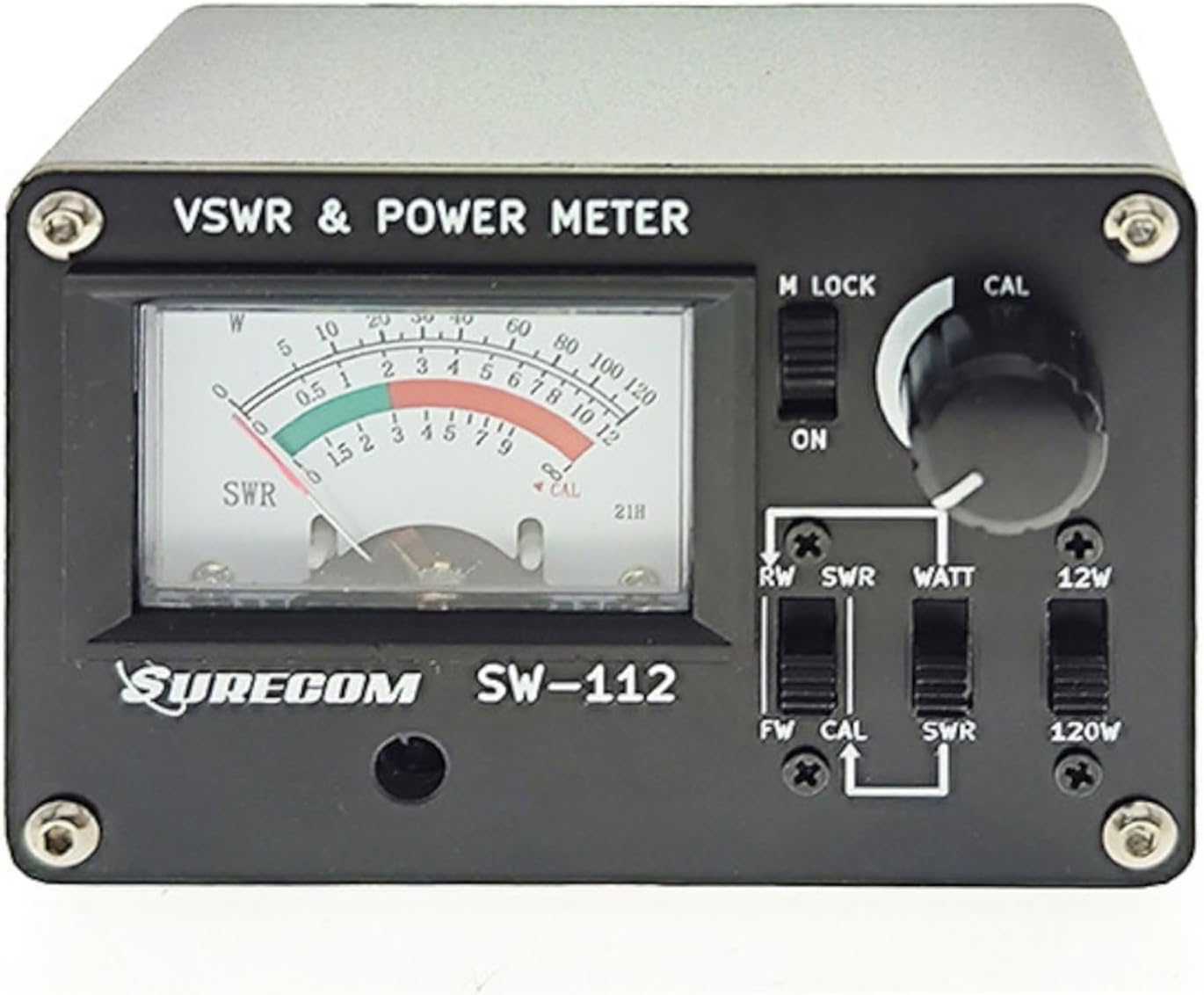
The Mcbazel Surecom SW-112HF is a compact V.S.W.R. and power meter designed for HF radio operators who need a simple, affordable way to measure forward power, reflected power, and standing wave ratio. It covers a wide portion of the HF spectrum, offers an analogue-style meter with backlighting, and supports up to 120 watts of power. This makes it a practical tool for everyday amateur radio use, field work, and antenna troubleshooting.
What It Is
The SW-112HF is built for HF bands from 1.5 to 60 MHz. It uses an analogue meter to show forward and reflected power, and it can also display SWR. The power handling rating reaches up to 120 watts, which is suitable for most HF transceivers operating at standard output levels. The unit uses SO-239 connectors and includes a backlit meter powered by an external DC source between 5 and 12 volts.
Build, Fit and Finish
The meter is small, lightweight, and easy to place in any radio setup. Its plastic housing and clear analogue meter cover feel typical for compact test gear, giving it a serviceable and practical appearance. The backlight improves readability in dim environments, which is especially helpful during mobile operations or evening tuning. The overall build is functional rather than premium, but appropriate for its price point.
User Interface and Ergonomics
The SW-112HF is extremely simple to operate. You insert it between your radio and antenna, apply power to the backlight if needed, key your transmitter, and observe the meter. The analogue needle gives immediate visual response, making it easy to spot issues such as high reflected power or poor antenna performance. There are no complicated menus or digital settings, making the unit ideal for beginners or quick field work.
Performance and Accuracy
The meter provides readings that are generally accurate enough for everyday troubleshooting, though not at the precision level of professional lab instruments. Expect the measurements to be best used for approximate tuning, antenna diagnostics, and ensuring your setup is safe for your radio. It excels at identifying major issues such as broken antenna elements, bad coax connections, or excessively high SWR. For tasks requiring calibration-grade accuracy, a higher-end meter or analyzer would be more appropriate.
Tips for Getting the Best Readings
Place the meter as close to the radio as possible using a short, high-quality jumper cable. Use a steady carrier such as AM, FM, or CW for consistent readings. SSB voice peaks will cause the needle to fluctuate, so for the most repeatable results, use a carrier mode during testing. Remember that this type of meter is best for practical measurements rather than precise laboratory data.
Pros
• Extremely simple to use
• Portable and lightweight
• Covers the entire HF range from 1.5 to 60 MHz
• Useful analogue meter with backlight
• Affordable and suitable for field work or beginners
• Provides immediate visual feedback
Cons
• Accuracy is adequate but not precise enough for calibration work
• Analogue display requires careful interpretation
• Limited to SO-239 connectors unless adapters are used
• Not designed for advanced analysis or frequency sweeps
Who This Is For
The SW-112HF is ideal for amateur radio operators who need a no-nonsense, low-cost meter for quick checks. It works well for field operations, mobile installations, and everyday antenna diagnostics. New hams will appreciate its simplicity. Advanced users who require precise measurements may want to pair it with more sophisticated equipment.
Comparisons
Compared to digital SWR meters or antenna analyzers, the SW-112HF trades numeric precision and advanced features for simplicity and cost savings. If you rely on visual response and only need to confirm whether an antenna is performing correctly, its analogue readout can be more intuitive than digital numbers. For plotting antenna resonance or performing detailed testing, however, a more advanced analyzer is the better choice.
Final Verdict
The Mcbazel Surecom SW-112HF is a practical and reliable tool for basic HF antenna and power testing. Its analogue meter, broad frequency coverage, and straightforward operation make it an excellent choice for quick diagnostics and field use. While it is not a precision instrument, it is more than capable of identifying problems and giving you the information needed to keep your HF station operating safely. For its price and simplicity, it offers solid value to the everyday amateur radio operator.


