Showing posts with label ham. Show all posts

Friday, December 26, 2025

Full In-Depth Review: BTECH UV-50PRO 50W Dual Band Mobile Ham Radio


The BTECH UV-50PRO 50W Dual Band Mobile Ham Radio is designed for amateur radio operators who want a modern, feature-packed mobile transceiver that goes far beyond basic voice communication. With integrated APRS, GPS, Bluetooth app programming, AI noise reduction, and satellite tracking, this radio aims to blend traditional ham radio operation with smart technology normally found in higher-end or specialized equipment.


Overview and Core Features

At its core, the UV-50PRO is a dual band VHF/UHF mobile transceiver built for vehicle or base station use. It operates on the 2 meter and 70 centimeter amateur bands and delivers up to 50 watts of output power, giving it the ability to reach repeaters and make solid simplex contacts over long distances compared to handheld radios.

What makes the UV-50PRO stand out is the amount of advanced functionality built directly into the radio:

  • Built-in APRS for position reporting and messaging

  • Integrated GPS for accurate location data

  • Bluetooth connectivity for wireless programming and audio

  • AI-based noise reduction for clearer transmit and receive audio

  • Satellite tracking with Doppler correction for amateur satellite operation

These features make the UV-50PRO feel less like a traditional mobile radio and more like a communications platform.


Design and Build Quality

The radio is compact for a mobile unit, making it easy to mount in a vehicle without taking up excessive space. The metal chassis feels solid and well constructed, designed to handle vibration, heat, and daily mobile use. The controls are logically laid out, with a clear front display that provides frequency, channel, GPS, and status information at a glance.

The included hand microphone is sturdy and comfortable to use, with responsive buttons and good audio pickup. Mounting hardware and power cabling are included, allowing most users to install the radio quickly without purchasing many extra accessories.


Transmit and Receive Performance

On the air, the UV-50PRO performs well as a dual band mobile transceiver. The transmitter provides strong, clean output on both VHF and UHF, making it reliable for local repeater work, emergency communication, and mobile operations.

The receiver is sensitive and capable, with support for more than just amateur bands. In addition to standard VHF and UHF ham frequencies, the radio can monitor:

This wide receive coverage makes the radio useful not only for amateur radio contacts but also for situational awareness while traveling or operating during severe weather events.

Audio quality is one of the highlights. The built-in speaker is loud and clear, and the AI noise reduction noticeably improves intelligibility in noisy environments such as moving vehicles. On transmit, reports generally indicate clean and natural-sounding audio.


APRS and GPS Functionality

The integrated GPS and APRS capabilities are major advantages of the UV-50PRO. With no external GPS receiver or TNC required, operators can beacon their location, send and receive APRS messages, and track other stations directly from the radio.

This is especially useful for emergency communications, public service events, off-road travel, and group coordination. The ability to automatically report position while mobile adds an extra layer of safety and convenience.

Configuration of APRS settings does require some learning, especially for operators new to packet radio, but once set up, the system works reliably and provides valuable real-time information.


Bluetooth and App Programming

Bluetooth connectivity is another area where the UV-50PRO shines. Using a smartphone app, operators can wirelessly program channels, adjust settings, manage zones, and update firmware without needing a programming cable or computer.

This approach makes programming far more convenient than traditional mobile radios, especially when changes need to be made on the road or in the field. Bluetooth headset support also allows for hands-free operation, which is a significant advantage for mobile users.

While the app is powerful, it may take some time to explore all available options and settings, particularly for users accustomed to simpler radios.


Satellite Tracking Capability

One of the most unique features of the UV-50PRO is its satellite tracking support. The radio can track amateur satellites and automatically adjust for Doppler shift, simplifying satellite communication for operators interested in space-based contacts.

This feature lowers the barrier to entry for amateur satellite work, making it possible to experiment with satellite communications using a single mobile radio rather than a complex multi-radio setup.


Strengths and Advantages

The UV-50PRO offers an impressive feature set at its price point. Having APRS, GPS, Bluetooth programming, AI noise reduction, and satellite tracking all built into one mobile radio provides excellent value. The strong transmit power and clear audio make it well suited for daily mobile use, emergency communication, and outdoor activities.

Its modern design and wireless programming capabilities appeal to operators who want flexibility and ease of use without sacrificing performance.


Potential Drawbacks

With so many features, the UV-50PRO does come with a learning curve. New operators or those unfamiliar with APRS and satellite operation may need time to understand the menus and settings.

Some users may find the interface and documentation less polished than those of more expensive brands, meaning that online tutorials and community discussions can be helpful when exploring advanced functions.


Final Thoughts

The BTECH UV-50PRO is a forward-looking mobile ham radio that blends traditional amateur radio performance with modern digital features. It is well suited for operators who want more than just basic voice communication and appreciate tools like APRS, GPS tracking, and wireless programming.

While it may require some time to fully master, the capabilities offered make it a strong choice for mobile operators, emergency communicators, and tech-savvy hams looking for a versatile and powerful dual band mobile transceiver.

Get The Btech UV-50PRO On Amazon!

Saturday, December 13, 2025

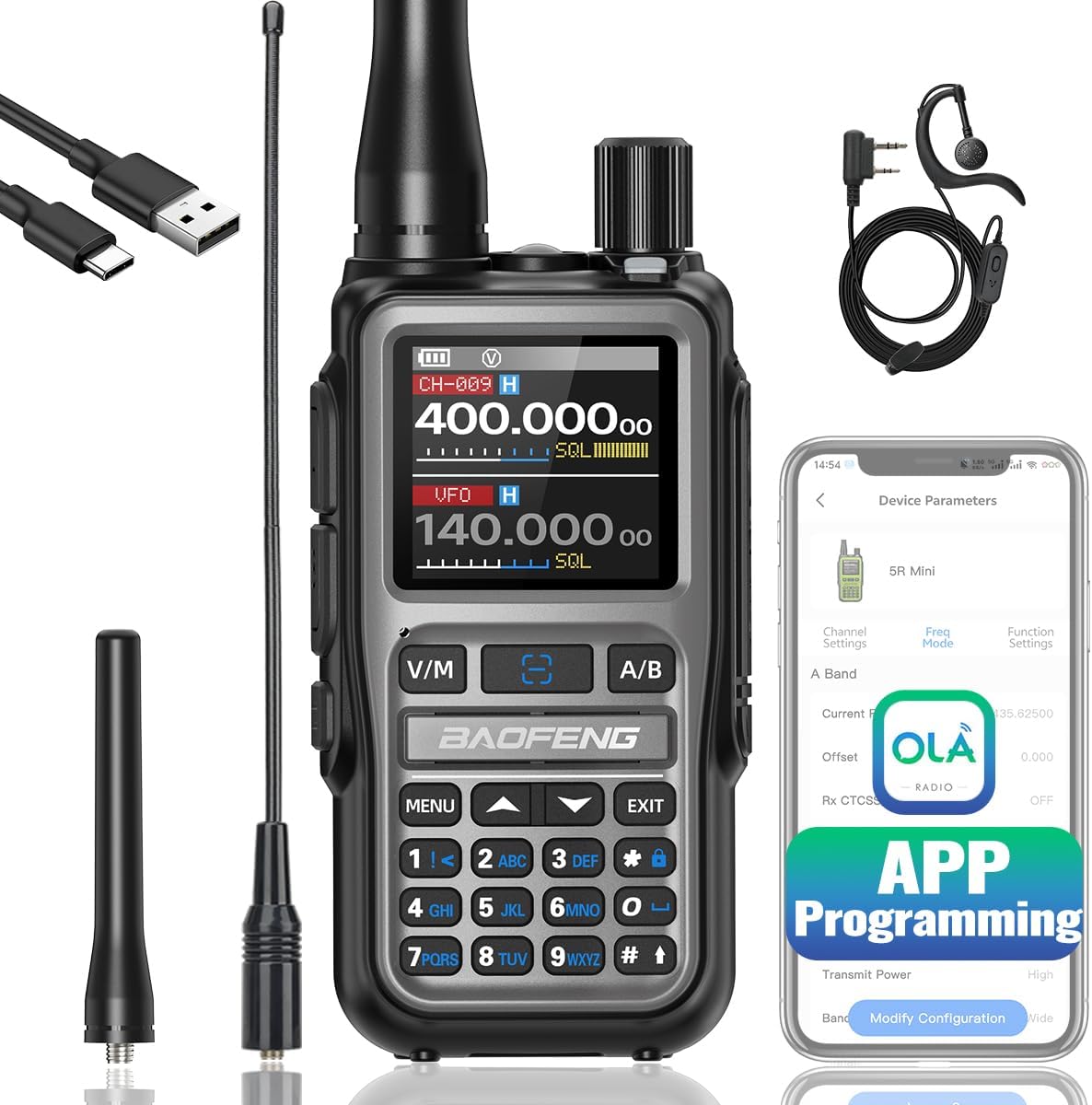
Baofeng UV-5R Mini Ham Radio — In-Depth Review


Overview
The Baofeng UV-5R Mini is a compact, budget-minded dual-band handheld transceiver that takes the familiar UV-5R platform and shrinks it into an even more pocketable form while adding a handful of modern conveniences such as USB-C charging and simplified app-based programming options. It aims at new hams and casual users who want a low-cost entry to VHF/UHF operations, local repeaters, NOAA weather monitoring, and short-range emergency communications without a heavy or bulky unit.

Design and Build
Physically, the Mini keeps a straightforward, no-frills layout: a small but readable display, a numeric keypad for direct frequency entry, PTT and function buttons, and a removable antenna. The body is light and compact — easy to carry on a belt or slip into a jacket pocket — and the simpler control layout makes it approachable for beginners. The casing is typically plastic with a matte finish; it’s adequate for everyday handling but not as rugged-feeling as higher-end handhelds.

The USB-C charging port is a welcome, modern update that removes the need for proprietary chargers or older micro-USB cables. Many packages include a rechargeable battery and a basic charger cable; battery capacity varies by seller and bundle but generally supports a full day of casual use. Some bundles include an earpiece/headset; connector type for external audio (3.5mm vs two-pin Kenwood-style) varies by variant, so buyers should check what their specific kit contains.

Radio Performance and RF Features
At its core the UV-5R Mini remains a dual-band VHF/UHF transceiver capable of transmit and receive on the popular 2-meter and 70-centimeter amateur bands. It receives public-service broadcasts and NOAA weather channels, which is useful for monitoring weather alerts and local broadcasts.

Transmit power on most Baofeng handhelds is selectable (high/low) and typically sufficient for simplex work and for hitting nearby repeaters when used with a decent antenna and proper location. Range in real-world terms depends heavily on antenna, terrain, height, local noise, and repeater placement — expect neighborhood to several miles in typical suburban conditions, and substantially farther if you can place the antenna high or use repeaters.

Receiver sensitivity and selectivity are surprisingly capable for the price: the Mini will pull in local repeaters,-weather and aircraft/airband (receive-only, if equipped to) reasonably well. That said, it does not match the front-end filtering or audio fidelity of more expensive commercial or hobbyist radios, so in very crowded RF environments you may notice handling of strong out-of-band signals is not as robust.

Channels, Memory and Features
One of the marketing hooks is large channel memory counts (advertised 999 channels on some models). Practically, the memory system lets you store frequencies, offsets and tones for repeaters, weather channels, and simplex buddies. The front panel allows manual frequency entry and navigation through stored memories.

Other common features include dual-watch/dual-standby (monitor two channels/frequencies), FM broadcast reception, CTCSS/DCS tone support for repeater access, VOX (hands-free transmit), and an emergency alarm function in some firmware versions. The Mini also often includes a “frequency copy” or wireless frequency copy feature allowing two radios of the same model to copy programmed channels to each other without a computer — handy for field operations and quick setup.

Programming: App, Cable, and Software
Programming options are flexible. For users who prefer GUI programming, many sellers bundle a USB programming cable and the radio can be programmed using PC software such as CHIRP — though support and cable compatibility may vary with clones and firmware revisions. The increasingly common alternative is smartphone app programming: a Bluetooth or proprietary app can write frequencies and memories to the radio, which appeals to users who dislike dealing with desktop software. App functionality and reliability vary by vendor and third-party app developer; some apps are straightforward and work well for the basics while others are limited.

If you rely on USB-C for charging only and still need the traditional programming cable, double-check the bundle contents. The radio’s keypad and small screen permit manual programming, but that is slower and error-prone for many channels compared to software upload.

Audio and Accessories
On receive and transmit, audio clarity is acceptable for casual use. Speaker volume is adequate in quiet conditions; in noisy environments or when clear audio is vital, a headset or external speaker improves intelligibility. Many kits include a basic earpiece/mic; higher-quality aftermarket accessories with secure connectors improve comfort and durability.

Common accessory purchases include upgraded antennas (better whip or telescoping designs), high-capacity batteries for longer operating time, belt clips, and carry cases. Antenna upgrades often yield better range and performance than changing radio settings.

Battery Life and Charging
Battery life varies with transmit duty cycle, power level, and battery capacity. For intermittent use (monitoring and occasional transmissions), a standard rechargeable pack typically lasts many hours; for heavy transmit use (net control, long data bursts), life shortens. The USB-C charging option is convenient for field use with power banks and modern chargers — a practical advantage over older micro-USB or proprietary charge ports.

Safety, Regulations, and Practical Use
Important: transmitting on amateur bands requires an appropriate license in most countries (for example, an FCC amateur radio license in the United States). Users should obtain the correct license and operate within permitted frequencies and power limits. Additionally, do not transmit on public safety, aviation, or other restricted frequencies — many handhelds can receive such bands but transmitting there is illegal and dangerous. Learn local regulations and program only authorized frequencies.

Real-World Experience and Usability
For new hams, the Mini is an accessible, low-cost way to learn the basics: making simplex contacts, checking into local repeaters, monitoring NOAA weather, and understanding radio etiquette. Its light weight and small size encourage taking it along on hikes, RV trips, or local events.

Ease-of-use depends on the user’s patience with small menus and a compact keypad. Those comfortable with programming via PC or app will set up the radio quickly. For group deployments or emergency prep, the wireless frequency copy function (if present) and app-based sharing are practical features that speed distributing channel plans among multiple units.

Limitations and Trade-Offs
The UV-5R Mini is a budget device and shows it in several ways: build materials are economical, front-end filtering is limited compared to mid- or high-end handhelds, and audio fidelity and ergonomics are basic. Some users report variability across different batches or vendor clones, so quality control can be inconsistent. The small form factor also means smaller buttons and a smaller display, which can be a nuisance for large-gloved hands or for users who value large, tactile controls.

Many advanced features common in pricier radios — superior receiver front-end, better shielding against strong-signal overload, more robust firmware, superior ergonomics, and more reliable accessory connectors — are absent here. If you plan frequent contesting, serious weak-signal work, or professional-grade reliability, stepping up to a higher-tier radio is worth considering.

Pros and Cons (concise)
Pros: Extremely affordable; pocketable; dual-band VHF/UHF; NOAA/weather receive; USB-C charging; multiple programming options including app and cable; good entry-level feature set.

Cons: Build and audio quality are basic; front-end performance limited in crowded RF environments; possible variation between suppliers/clones; small keypad/display; some bundle inconsistencies (battery size, headset type).

Who Is This Radio For?
The UV-5R Mini is best for beginners who want an inexpensive, portable way to get on the air and learn. It’s useful for hikers, campers, event volunteers, and anyone who wants a low-cost handheld for local communications, weather monitoring, and basic repeater use. It is less suited to users requiring professional durability, heavy-duty contest performance, or the best possible receiver performance in noisy RF environments.

Verdict
The Baofeng UV-5R Mini delivers a compelling value proposition for its price: a compact, modernized take on a popular low-cost handheld platform that includes practical updates like USB-C charging and app-friendly programming. It won’t match the refinement or performance of mid-range handhelds, but for newcomers, hobbyists on a budget, and those needing a light, inexpensive backup radio, it’s an attractive choice. As with any inexpensive radio, buyers should be mindful of bundle differences, confirm exact features before purchase, and plan on learning basic programming and radio etiquette to get the most out of it.

Final Notes and Tips
Learn the local band plan and licensing requirements where you live. Program NOAA weather channels and a few local repeater memories before heading out. Invest in a better antenna and a spare battery if you expect regular use. Use the radio’s lower power setting for short-range contacts to conserve battery life, and reserve high power for reaching distant repeaters when needed.

🎅See The Baofeng Mini On Amazon!🎅

Friday, November 14, 2025

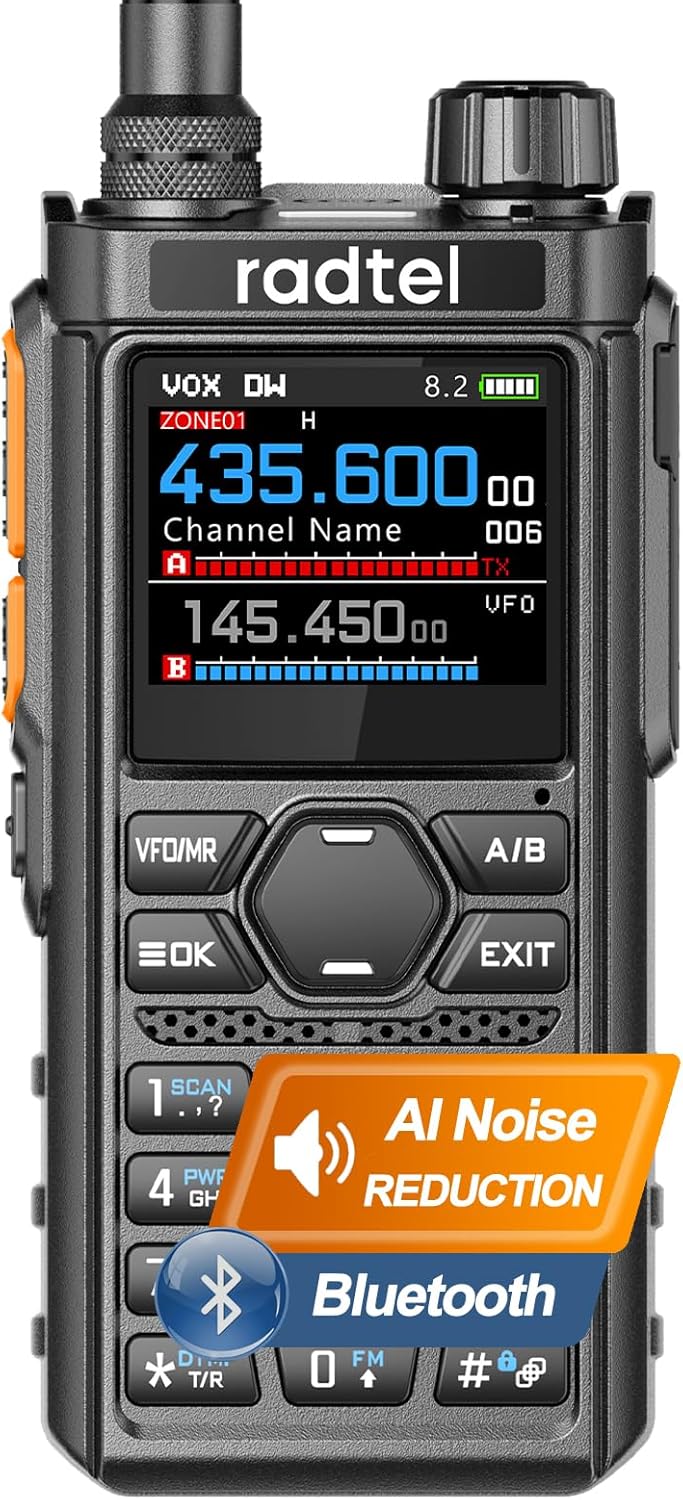
Radtel RT-910B 5W Multi-Band Ham Radio Handheld Walkie Talkie — In-Depth Review


Overview
The Radtel RT-910B is a compact, feature-heavy handheld aimed at amateur radio operators who want a versatile, budget-friendly rig. It packs multi-band coverage including the 6 meter amateur band, up to 5 watts transmit power, a large channel capacity (960 channels), AM/FM broadcast receive, Type-C charging, spectrum scan, and Bluetooth support. On paper it looks like a Swiss Army knife for hams who want one radio that does a bit of everything: local simplex, repeater work, shortwave-ish monitoring, and casual scanning. This review walks through the hardware, ergonomics, audio, RF performance, usability, programming options, battery life and charging, Bluetooth and accessories, plus who will get the most from this radio.

What it is good for

What it is not

  • A substitute for a full-power base station or contest-grade transceiver.

  • The best choice for serious weak-signal work, long-distance DXing, or high-performance contesting.

  • A replacement for radios with extensive aftermarket support, custom firmware, or world-class receiver performance.

Build quality and design
The RT-910B follows the now-common handheld stylistic template: a rugged-looking ABS/polycarbonate housing, a rubberized grip area, a detachable antenna, and a top-mounted rotary or button control for volume and channel selection. The chassis feels reasonably solid for the price point; seams are tight and buttons have a positive feel, though they’re not as crisp as midrange handhelds from legacy brands. The radio usually ships with a removable belt clip and a basic antenna; higher performance or longer antennas will improve transmit and receive noticeably.

Ergonomics and controls
Controls are laid out to be usable by one hand: a push-to-talk (PTT) on the side, programmable function keys, and a front-facing keypad for direct channel entry and quick menu access. The menu system is typically layered but logical — expect a learning curve if you’re used to simpler consumer radios. The display is clear enough for channel info, frequency readout, and menu navigation; backlighting helps in low light but is not overwhelmingly bright. The keypad and soft keys work fine with gloved hands if the gloves are not too bulky.

Display and user interface
The radio’s display presents frequency, mode (FM/AM), channel number, and status icons for battery, Bluetooth, lock, and scan. Spectrum scan functions usually show a waterfall or bar display to let you visually locate active signals — useful for newcomers and for chasing activity on less-commonly used bands like 6 meters. The channel memory system (up to 960 channels) is powerful: you can store repeaters, offsets, tones, and custom names — a strong point for portable operation and for users who hop between many repeaters.

Receiver and audio performance
For typical on-the-air use the receiver is serviceable. Sensitivity and selectivity are adequate for local repeater work and casual monitoring, though it won’t match the front-end filtering or DSP of higher-end transceivers. The inclusion of AM and FM broadcast receive expands utility for monitoring local news or propagation beacons. The speaker gets loud enough for noisy outdoor environments; audio is clear at reasonable volume levels but shows compression and distortion at extremes. Bluetooth audio output is handy for headset use, but expect slightly higher latency and compressed audio quality compared with wired headsets.

Transmit performance and power
The RT-910B is rated up to 5 watts on transmit, which is typical for handheld ham radios that allow QRP/low-power operation and still provide usable range into repeaters. Users should verify actual transmit power for each band/mode and expect that HTs with stock antennas and 5W will perform like other handhelds — excellent for local contacts and repeater access, limited for long-distance simplex unless propagation is favorable. The dual-PTT feature (if present) is useful for quick switching between channels or for linking talk groups in certain setups.

Antenna and RF considerations
Performance out of the box depends heavily on the supplied antenna. Stock antennas favor compactness over efficiency; swapping to a higher-gain, longer whip or using a mag-mount on a vehicle will substantially improve both transmit and receive. Because the radio covers multiple bands (including 6 meters), using band-appropriate aftermarket antennas for 6m, 2m, and 70cm will yield the best results.

Programming, memory, and features
The RT-910B’s 960-channel memory system is one of its headline features. It supports channel naming, offsets, CTCSS/DCS tones, and priority scanning. Many users will want to program channels via software (PC programming using a compatible cable and CHIRP-like formats where supported); if the radio supports CHIRP or vendor software, that makes bulk programming much easier. The spectrum scan function helps identify active frequencies quickly; it’s a great learning tool and simplifies finding local repeaters and beacons on the 6 meter band. Other useful features often include dual-watch, priority channel, VOX (if present), and adjustable power settings (high/low).

Bluetooth version and capabilities
The Bluetooth version adds convenience: wireless headsets, earpieces, and possibly wireless programming or phone link depending on implementation. Expect standard Bluetooth audio profiles that allow voice routing to a headset; Bluetooth will be handy for hands-free operation but is not a replacement for wired, low-latency connections in high-demand environments. If the radio supports Bluetooth PTT through an accessory, that can be a useful field addition.

Battery life and charging
Type-C charging is a modern convenience and means you can top up the battery almost anywhere without hunting for a proprietary charger. The stated battery capacity (if listed by the manufacturer) will determine real-world runtime; with moderate use a mid-sized battery often yields a full day of casual operation, while heavy scanning, Bluetooth streaming, or continuous transmit will shorten runtime quickly. Fast top-ups via USB-C are convenient in the field. If the radio supports external power via USB-C while transmitting, verify voltage/current specs to avoid charger overheating or insufficient power during transmit.

Accessories and expandability

  • Upgraded antenna: highly recommended for real improvement.

  • Desktop/charging cradle: handy if offered.

  • Programming cable and PC software: essential for bulk memory management.

  • Bluetooth headset or boom mic: for hands-free operation.

  • External mag-mount or mobile adapter: if you plan to use the radio in a car.

  • Spare batteries for extended outings.

Usability in real-world scenarios

Pros

  • Multi-band coverage including the 6 meter band.

  • Large channel memory (960 channels) for repeaters, simplex frequencies, and scanning playlists.

  • AM/FM broadcast receive adds general utility.

  • Spectrum scan helps visually locate activity.

  • Modern conveniences: Type-C charging and Bluetooth support.

  • Compact, lightweight, and feature-rich for the price point.

Cons

  • Build and button feel are not the premium level of legacy high-end brands.

  • Receiver and audio quality are good but not class-leading—limited selectivity on crowded bands.

  • Out-of-the-box antenna usually limits real-world range; upgrade recommended.

  • Bluetooth audio is convenient but usually compressed and slightly latent compared to wired.

  • Programming can be tedious without PC software and a cable.

Tips and recommended settings

  • Replace the stock antenna early — you’ll notice an immediate improvement.

  • Program repeaters, offsets, and tones into memory before field use. Bulk programming via PC is faster and reduces mistakes.

  • Use the spectrum scan to find active spots on 6 meters before relying on memory channels.

  • Keep Bluetooth off if you need the lowest latency or best audio clarity for monitoring weak signals.

  • Carry a spare battery or powerbank for long outings; USB-C top-up from a powerbank is very convenient.

  • Learn how to lock keys and set backlight timeout to prevent accidental channel changes.

Who should buy it

  • New hams wanting many features at a modest price.

  • Portable operators who value light weight and battery convenience.

  • Casual users who want AM/FM listening plus a capable ham handheld.

  • Hams who want an inexpensive multi-band backup radio with modern features like Type-C charging and Bluetooth.

Who might skip it

  • Contesters, DX chasers, and weak-signal enthusiasts who require top-tier receiver performance and advanced filtering.

  • Operators who demand best-in-class ergonomics, proven long-term firmware support, and extensive aftermarket accessories.

Final verdict
The Radtel RT-910B brings together an appealing set of modern features into a single, compact handheld: multi-band coverage with 6 meters, 960 programmable channels, AM/FM receive, spectrum scanning, Bluetooth, and USB-C charging. For the price-conscious operator or the newcomer who wants to experiment across bands and modes, it’s a strong value proposition. Expect solid—but not exceptional—RF performance and build quality; the radio shines when paired with a better antenna and a bit of programming work. If you want a versatile daily carry or a capable backup HT with modern conveniences, the RT-910B deserves serious consideration. If, however, you need the absolute best receiver performance, premium buttons and knobs, or professional-grade durability, look to higher-tier models from long-established manufacturers.

🎅See The Radtel RT-910B On Amazon!🎅

Friday, May 9, 2025

BaoFeng UV-82HP (Blue) High Power Dual Band Radio Review: A Comprehensive Look at This Popular Ham Radio


The BaoFeng UV-82HP (Blue) is a high-power dual-band amateur radio that caters to both newcomers and experienced users in the ham radio community. With its expanded capabilities and durable design, it offers a step up from earlier models in BaoFeng’s lineup, making it a reliable choice for those seeking a versatile and affordable two-way communication device. In this in-depth review, we will explore its features, performance, design, usability, and overall value.

Overview of Key Specifications

The BaoFeng UV-82HP is a dual-band radio operating in the VHF range of 136-174 MHz and the UHF range of 400-520 MHz. It is marketed as a high-power device, capable of transmitting at three selectable power levels: 1 watt (low), 5 watts (medium), and 7 to 8 watts (high), depending on the frequency band and battery charge. This extended power output makes it more effective for long-range communication in open environments and dense urban areas alike.

Design and Build Quality

The UV-82HP features a robust design that is slightly larger and more rugged than the popular UV-5R. Its body is encased in a thick blue plastic shell that not only makes it more resistant to impact but also visually appealing. The larger form factor houses a more substantial speaker and a more ergonomic layout.

A standout feature is the dual push-to-talk (PTT) button, which allows users to transmit on two different frequencies without manually switching channels. This is particularly useful for emergency responders, event coordinators, or amateur radio operators who monitor two bands simultaneously.

The radio’s keys are backlit and tactile, making it easier to operate in low-light conditions. The screen is clear and readable, although it is still a basic LCD display typical of handheld radios in this price range.

Performance and Range

The UV-82HP’s high transmission power sets it apart from many entry-level radios. In real-world conditions, users can expect reliable communication over several miles in open terrain, with reduced range in urban environments depending on obstacles and interference. The ability to adjust power output also helps conserve battery life when full power isn’t necessary.

Reception is solid, with the included V-85 antenna performing reasonably well for a stock accessory. Many users opt to upgrade the antenna for even better performance, which the UV-82HP supports easily thanks to its standard SMA-Female connector.

Audio quality is another area where the UV-82HP shines. The larger speaker delivers clear and loud audio, which is especially important in noisy environments or outdoor use. The built-in microphone also transmits clean audio, making communication on both ends effective and pleasant.

Battery Life

The UV-82HP comes with a 1800mAh lithium-ion battery, which is sufficient for a full day of casual use on medium power settings. For heavy users or those operating at high power continuously, an extra battery or higher-capacity battery pack may be worthwhile. The included charger is a drop-in cradle, which is convenient and easy to use, but the radio can also be charged directly via a battery eliminator or USB adapter, sold separately.

Programming and Customization

Programming the UV-82HP can be done manually through the keypad, but this process is time-consuming for large channel banks. Most users prefer to use CHIRP, a free programming software that allows for easy channel management, frequency input, and feature customization when paired with a USB programming cable.

The radio supports a wide range of features including dual watch and dual reception, channel scanning, emergency alert tones, VOX (voice-activated transmission), and privacy tones (CTCSS/DCS). While not all features are intuitive to access, the user manual provides sufficient guidance for those willing to take the time to learn the system.

Durability and Field Use

Though not officially rated for water or dust resistance, the UV-82HP is built to handle light outdoor use, including hiking, camping, and off-roading. It has proven to be a popular choice for preppers, outdoor enthusiasts, and amateur radio operators needing a dependable backup or field radio.

The included belt clip and wrist strap add to its portability, though some may prefer a more rugged case for demanding environments. The UV-82HP's blue casing helps it stand out in a crowded gear bag or in the field, a small but practical feature.

Pros and Considerations

The UV-82HP’s combination of high power output, dual-band operation, and competitive price point make it one of the best values in handheld amateur radios. It fills the gap between basic entry-level models and more expensive commercial-grade radios.

However, it is important to note that operating this radio on amateur frequencies requires an FCC license in the United States or similar licensing in other countries. Additionally, while the UV-82HP can technically receive transmissions on commercial frequencies, using it to transmit on restricted channels (such as police, fire, or aviation bands) without authorization is illegal and strongly discouraged.

Final Thoughts

The BaoFeng UV-82HP (Blue) is a highly capable handheld dual-band radio that offers excellent performance and features for its price. With higher power output, durable construction, and solid audio quality, it represents a significant upgrade over BaoFeng’s earlier models. Whether you are a licensed ham radio operator looking for a budget-friendly field radio, a beginner preparing for emergencies, or someone interested in reliable two-way communication, the UV-82HP is a versatile tool that delivers.

See The Baofeng UV-82HP On Amazon!

Friday, March 21, 2025

Radioddity VB70-B Mobile Radio Transceiver: A Comprehensive Review


The Radioddity VB70-B Mobile Radio Transceiver is a high-performance VHF radio designed for amateur radio operators who demand reliability, power, and advanced features. With a power output of 70 watts, a frequency range of 144-148MHz, Bluetooth connectivity, and advanced noise reduction technology, this radio is packed with functionalities that make communication more efficient and convenient. This in-depth review covers its features, performance, usability, and overall value for amateur radio enthusiasts.

Design and Build Quality

The Radioddity VB70-B is built with durability in mind. Its rugged metal casing ensures longevity and resistance to harsh environments, making it a great choice for mobile installations in vehicles or base stations. The compact design allows for easy installation, whether in a car or on a desk. The front panel features a well-organized layout with a bright, easy-to-read LCD screen that displays essential information such as frequency, channel, and settings. The buttons and knobs are ergonomically placed, making navigation through the menu system straightforward.

Powerful 70W Output

One of the standout features of the VB70-B is its impressive 70-watt power output. This level of power allows for extended communication range, making it ideal for users who need to reach distant stations with clarity. Whether used for emergency communication, outdoor adventures, or daily HAM radio operations, the high power ensures reliable transmission over long distances.

Frequency and Channel Capacity

Operating in the VHF 144-148MHz range, the VB70-B is designed for amateur radio operators looking for clear and stable communication. The radio supports up to 510 programmable channels, allowing users to organize frequencies efficiently for different purposes. This makes it especially useful for those who participate in HAM radio networks, emergency response groups, or public service communications.

Bluetooth Connectivity and Wireless PTT

One of the more modern features of the VB70-B is its built-in Bluetooth connectivity. This allows for a seamless wireless experience, making it possible to connect compatible headsets or external devices for hands-free operation. The inclusion of a wireless Push-to-Talk (PTT) button further enhances convenience, enabling users to communicate without having to reach for the radio itself. This is particularly beneficial for drivers or operators who need to keep their hands free while using the radio.

Noise Reduction Technology (NRC)

Noise reduction is critical for clear and uninterrupted communication, and the VB70-B incorporates advanced NRC (Noise Reduction Circuit) technology. This feature significantly reduces background noise, making transmissions clearer even in noisy environments. Whether operating in a vehicle, a busy event, or an industrial setting, the NRC function helps filter out unwanted interference for better audio clarity.

Air Band Reception

A unique aspect of the VB70-B is its ability to receive air band frequencies. This feature is particularly useful for aviation enthusiasts, emergency responders, and HAM operators who monitor aircraft communications. The ability to listen to air traffic control and aircraft transmissions adds versatility to the radio, making it a valuable tool for those interested in aviation monitoring.

Ease of Use and Programming

The VB70-B is designed to be user-friendly, with an intuitive menu system that allows for easy programming and operation. Users can manually program frequencies or use optional programming software to streamline the process. The large LCD screen with adjustable brightness makes it easy to read in different lighting conditions, and the backlit keypad ensures visibility in low-light environments. The radio also supports customizable channel names, which helps users quickly identify their saved frequencies.

Audio Quality and Performance

In terms of audio performance, the VB70-B delivers clear and strong sound output. The built-in speaker provides loud and crisp audio, ensuring that transmissions are heard even in noisy surroundings. The microphone is also designed to capture clear voice communication, reducing distortion and background noise. The combination of high power output and noise reduction technology contributes to a reliable and professional-grade communication experience.

Installation and Compatibility

The VB70-B is compatible with various mounting options, making it suitable for installation in vehicles or as a base station setup. It includes necessary mounting brackets and cables for easy integration into different environments. The radio also supports multiple power input options, making it flexible for various power sources.

Final Verdict

The Radioddity VB70-B Mobile Radio Transceiver is a powerful and feature-rich VHF radio that caters to the needs of amateur radio operators, emergency responders, and aviation enthusiasts. With its 70-watt high-power output, extensive channel capacity, Bluetooth connectivity, NRC noise reduction, and air band reception, it offers a comprehensive solution for effective communication. Its durable build, user-friendly interface, and wireless capabilities make it a top choice for those looking for a reliable and modern mobile transceiver.

Whether you are a seasoned HAM radio operator or someone looking to upgrade their communication setup, the Radioddity VB70-B is a solid investment that delivers performance, convenience, and versatility in one package.

See The Radioddity VB70-B On Amazon!

Thursday, January 16, 2025

Amateur Radio Station Log Book Review


The Amateur Radio Station Log Book by Amateur Radio Publishing is a practical and thoughtfully designed tool for amateur radio enthusiasts. Published on May 11, 2020, this paperback logbook is tailored to meet the organizational needs of ham radio operators, regardless of their level of experience.


Key Features

1. Ample Space for 1300 Contacts

One of the standout features of this logbook is its capacity to log up to 1,300 contacts. This generous allocation ensures operators have plenty of room to document their QSOs (radio contacts) without needing to frequently replace their logbook. For avid operators or those participating in contests, this capacity is a welcome advantage.

2. Handy Format and Size

The logbook is presented in an 8.5 x 11-inch letter format, providing ample space for detailed entries while remaining portable and easy to store. This size strikes a good balance between usability and convenience, allowing operators to write comfortably without feeling constrained.

3. Quick Reference Guide Included

The inclusion of a Quick Reference Guide is a thoughtful addition, making this logbook particularly appealing to beginners. This guide offers essential information, such as common operating frequencies, Q-codes, and abbreviations. Having this handy resource integrated into the logbook reduces the need for external reference materials, allowing operators to focus on their communications.

4. Organized Layout

The interior layout is simple yet effective, featuring preformatted sections to record key details of each contact:

  • Date and Time: Logs the specific time of communication for accurate records.
  • Frequency/Band: Keeps track of the band used during the contact.
  • Mode: Indicates whether the contact was made via CW, SSB, FM, or other modes.
  • Call Sign and Operator Info: A designated area to jot down the call sign and additional notes about the operator contacted.
  • Signal Reports: Space for exchanging and recording signal strength and clarity (RST).

The clear, structured design ensures ease of use, even during fast-paced operating sessions.


Pros

  1. Durability: The paperback cover is sturdy enough to withstand frequent use, making it ideal for field operations or home stations.
  2. Beginner-Friendly: The inclusion of the Quick Reference Guide and intuitive layout caters to new ham radio enthusiasts.
  3. High Capacity: The ability to log 1,300 contacts eliminates the need for multiple logbooks in the short term.
  4. Cost-Effective: Priced affordably, this logbook offers excellent value for the price.

Cons

  1. Limited Customization: While the layout is organized, more experienced operators might prefer customizable fields for niche activities such as contesting or satellite operations.
  2. No Indexing System: The lack of a built-in indexing or bookmarking system might make it harder to quickly locate specific contacts.
  3. Basic Design: The book’s aesthetic is functional but could benefit from more polished visuals or durable binding.

Who Should Buy This?

The Amateur Radio Station Log Book is an excellent choice for:

  • New Operators: Its quick reference guide and straightforward layout provide a great starting point.
  • Casual Operators: Those who operate occasionally or for fun will appreciate its simplicity.
  • Field Operators: Its portable format makes it ideal for on-the-go use during field activities or emergency operations.

However, experienced operators with specialized logging needs or those who require digital logging might prefer more advanced solutions.


Final Thoughts

The Amateur Radio Station Log Book by Amateur Radio Publishing is a well-designed and practical tool that meets the basic logging needs of amateur radio enthusiasts. Its ample contact capacity, convenient size, and beginner-friendly features make it an excellent investment for those looking for a reliable and straightforward paper logging solution.

If you value simplicity and functionality in your ham radio operations, this logbook is worth considering.

See The Station Log Book On Amazon!

Wednesday, November 27, 2024

A Comprehensive Review of the S-Pixie CW QRP Ham Amateur Shortwave Radio Transceiver DIY Kit


The S-Pixie CW QRP Ham Radio Transceiver is a popular choice among amateur radio enthusiasts looking for a simple, affordable, and rewarding DIY project. Operating on the 7.023 and 7.050 MHz frequencies, this compact kit offers a glimpse into the fundamentals of shortwave communication while doubling as a practical transceiver for low-power CW (continuous wave) operation. Here’s an in-depth review of this product’s features, assembly process, performance, and overall value.


Unboxing and First Impressions

The S-Pixie kit comes neatly packaged, with all components organized in separate bags. The standout feature is its transparent acrylic shell, which gives the final assembly a sleek, modern look. This casing not only protects the internals but also allows users to display their craftsmanship.

Inside the kit, you'll find:

  • A pre-drilled acrylic case.
  • A printed circuit board (PCB) with labeled components.
  • Essential electronic parts, including resistors, capacitors, a crystal oscillator, and an RF transformer.
  • User-friendly assembly instructions.

The overall design is minimalist, making it an appealing choice for beginners and experienced hobbyists alike.


Assembly Process

Assembling the S-Pixie is straightforward, requiring basic soldering skills and some patience. The instructions are clear, but beginners should pay close attention to the polarity of components like diodes and capacitors. The PCB is well-labeled, which minimizes confusion during placement.

Tips for Assembly:

  • Use a fine-tipped soldering iron for precise connections.
  • Test each component before installation to ensure functionality.
  • Consider using a multimeter to verify connections as you go.

The acrylic case assembly is equally simple, using screws and spacers to secure the transceiver. The result is a compact, visually appealing unit that’s surprisingly robust for its size.


Performance and Usability

The S-Pixie operates on the 40-meter band (7.023 and 7.050 MHz), making it ideal for CW communication. It’s a QRP (low power) transceiver, meaning it transmits at less than 1 watt. While this limits range, it’s sufficient for local and regional contacts under favorable conditions.

Pros:

  1. Clear Reception: The S-Pixie’s simplicity doesn’t compromise its ability to receive signals clearly, provided you have a good antenna setup.
  2. Stable Transmission: The crystal-controlled oscillator ensures frequency stability, a critical factor for CW operations.
  3. Low Power Consumption: Ideal for portable or emergency use, the S-Pixie can run efficiently on a small battery pack.

Cons:

  1. Limited Range: As a QRP transceiver, its range depends heavily on antenna quality and atmospheric conditions.
  2. Basic Features: It lacks advanced features like frequency tuning or digital readouts, which may deter advanced users.
  3. Interference Management: The design does not include advanced filtering, making it prone to nearby signal interference.

Who Is It For?

The S-Pixie is an excellent choice for:

  • Beginners: It provides a hands-on introduction to the principles of radio transmission and CW communication.
  • Budget-conscious hobbyists: Priced affordably, it delivers significant value for its cost.
  • Tinkerers: The open design allows room for modifications and upgrades, catering to those who enjoy experimenting with circuits.

Value for Money

At its price point, the S-Pixie is hard to beat. It’s not just a functional transceiver but also a learning experience. The transparent case and compact design add aesthetic appeal, while its performance, though basic, meets expectations for a kit in this range.


Final Verdict

The S-Pixie CW QRP Ham Radio Transceiver is a fantastic entry-level DIY project for amateur radio enthusiasts. Its combination of affordability, ease of assembly, and functionality makes it a favorite in the ham radio community. While it may not replace more sophisticated transceivers, it excels as a tool for learning and experimenting.

Rating: 4/5

If you’re looking to dive into the world of amateur radio or need a compact, low-power transceiver for casual CW communication, the S-Pixie is well worth considering.

Check Out The S-Pixie On Amazon!

Tuesday, October 8, 2024

In-Depth Review of the Yaesu FT-5DR C4FM/FM Dual Band Transceiver


The Yaesu FT-5DR is a cutting-edge dual band handheld transceiver that has quickly garnered attention among amateur radio enthusiasts. Known for its versatility, innovative features, and user-friendly design, the FT-5DR represents a significant upgrade from its predecessors in the Yaesu lineup. This article aims to provide an in-depth review of the FT-5DR, covering its specifications, performance, features, and overall usability.

Overview

Key Specifications

  • Frequency Range:
    • 144-148 MHz (2 meters)
    • 430-450 MHz (70 cm)
  • Output Power: 5W (high), 2.5W (medium), 1W (low)
  • Modes: C4FM digital, FM, and Wires-X
  • Dimensions: 5.1 x 2.4 x 1.6 inches
  • Weight: Approximately 0.78 lbs (without battery)
  • Battery: 2000 mAh lithium-ion (up to 12 hours of use)
  • Display: 2.6-inch TFT touch screen
  • Memory Channels: 1,000
  • Audio Output: 500 mW

Design and Build Quality

The FT-5DR features a robust and compact design, which is typical of Yaesu products. The ergonomic shape ensures comfortable handling, while the weight feels substantial enough to convey quality without being overly heavy. The transceiver is built to withstand the rigors of outdoor use, featuring a rugged chassis that meets MIL-STD-810 specifications for shock and vibration.

Touch Screen Interface

One of the standout features of the FT-5DR is its 2.6-inch TFT touch screen. The interface is intuitive and responsive, making it easy to navigate through menus and settings. Users can quickly adjust frequency, mode, and other parameters with a simple touch, which is a notable improvement over traditional button-based interfaces. The display is bright and clear, even in direct sunlight, enhancing usability in various conditions.

Performance

Transmitting and Receiving

The FT-5DR is known for its exceptional transmitting and receiving capabilities. With 5W of output power, the transceiver delivers clear signals across both the 2-meter and 70-centimeter bands. The audio quality during transmission is excellent, with crisp and clear modulation. Users report that signal penetration is robust, even in urban environments with significant interference.

C4FM Digital Mode

The C4FM (Continuous 4 Level Frequency Modulation) mode is a major selling point of the FT-5DR. This digital mode enables users to communicate with exceptional clarity and provides features like Automatic Mode Select (AMS) and digital voice capabilities. The ability to connect to Wires-X (Wide Coverage Internet Repeater Enhancement System) expands the transceiver's functionality, allowing for worldwide communications via the internet.

Battery Life

The included 2000 mAh lithium-ion battery provides ample power for extended use. With a claimed operating time of up to 12 hours on a single charge, the FT-5DR is suitable for field operations and emergency communications. Users can monitor battery levels easily on the display, ensuring they’re never caught off guard.

Features

Memory Channels

With 1,000 memory channels, the FT-5DR allows users to store and quickly access their favorite frequencies. This is especially useful for operators who frequent different repeater locations or participate in various nets. The memory management is straightforward, and users can easily rename channels for better organization.

Built-In GPS

The built-in GPS functionality is another noteworthy feature. It allows for location-based services, including Automatic Packet Reporting System (APRS) capabilities. Users can share their location data with fellow operators, which is particularly useful in emergency situations or during outdoor activities.

Advanced Features

  • Voice Annunciation: The FT-5DR includes voice prompts to announce channel selections and battery status, making it easier for users to operate the radio without needing to look at the display constantly.
  • Wideband Receiver: Beyond amateur bands, the FT-5DR offers wideband reception capabilities, covering airband and commercial frequencies, adding versatility for non-amateur listening.
  • Customizable Settings: The user can configure various settings to personalize the radio, including display colors, audio settings, and other operational parameters.

Usability

The FT-5DR excels in user-friendliness. The combination of the touch screen interface and logically arranged menus allows for quick adjustments on the go. The inclusion of voice prompts is beneficial for both novice and experienced operators, providing guidance without distracting from the task at hand.

Programming and Software

Programming the FT-5DR can be done through the intuitive interface or via computer using Yaesu's programming software. This flexibility allows for efficient management of memory channels and settings, catering to both casual users and those who require detailed configurations.

Conclusion

The Yaesu FT-5DR C4FM/FM Dual Band Transceiver is a standout choice for amateur radio operators looking for a powerful, feature-rich handheld radio. Its blend of advanced digital modes, rugged design, and user-friendly interface makes it suitable for both everyday use and emergency communications.

Pros

  • Excellent audio quality and signal strength
  • Intuitive touch screen interface
  • Comprehensive memory and customization options
  • Robust build quality
  • Strong battery life

Cons

  • The price point may be higher compared to simpler models
  • Some features may have a learning curve for new users

Overall, the FT-5DR represents an excellent investment for amateur radio enthusiasts seeking a reliable and versatile transceiver that meets modern communication needs. Whether you’re a seasoned operator or just starting, the FT-5DR is equipped to enhance your ham radio experience.

Check Out The Yaesu FT-5DR On Amazon!

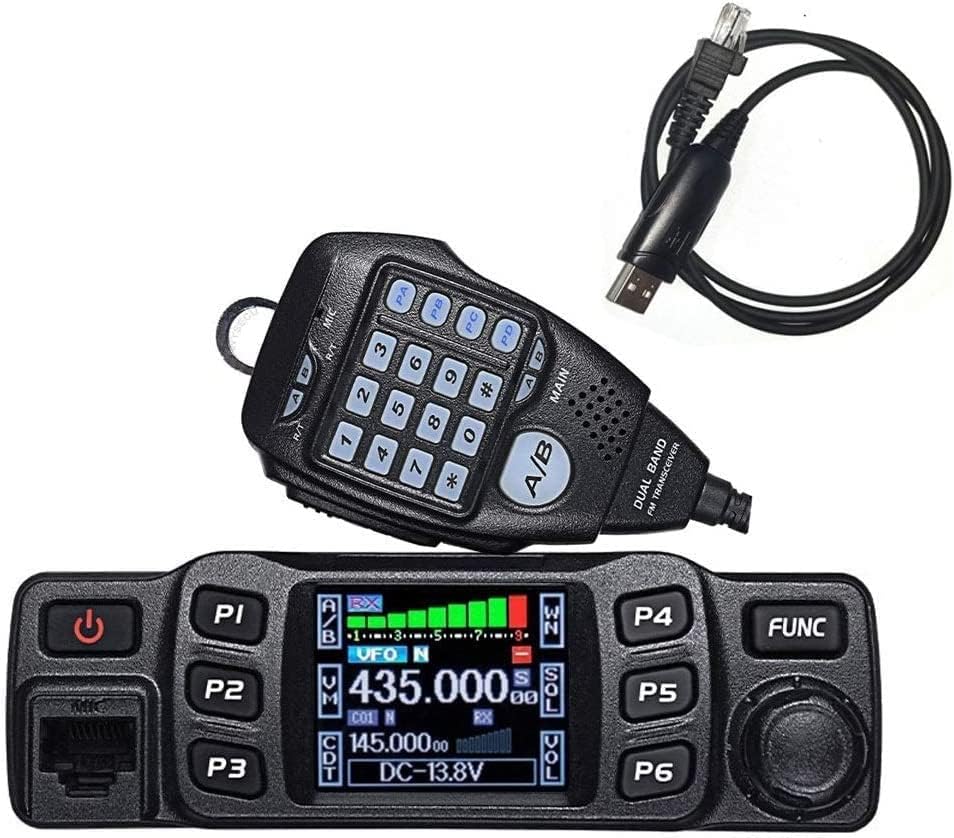
AnyTone AT-779UV Mini Size Dual Band Transceiver Mobile Radio VHF/UHF Two Way Radio Review

Overview The AnyTone AT-779UV is a compact dual band mobile transceiver designed for vehicle installation. It operates on both VHF (136–...

Search This Blog