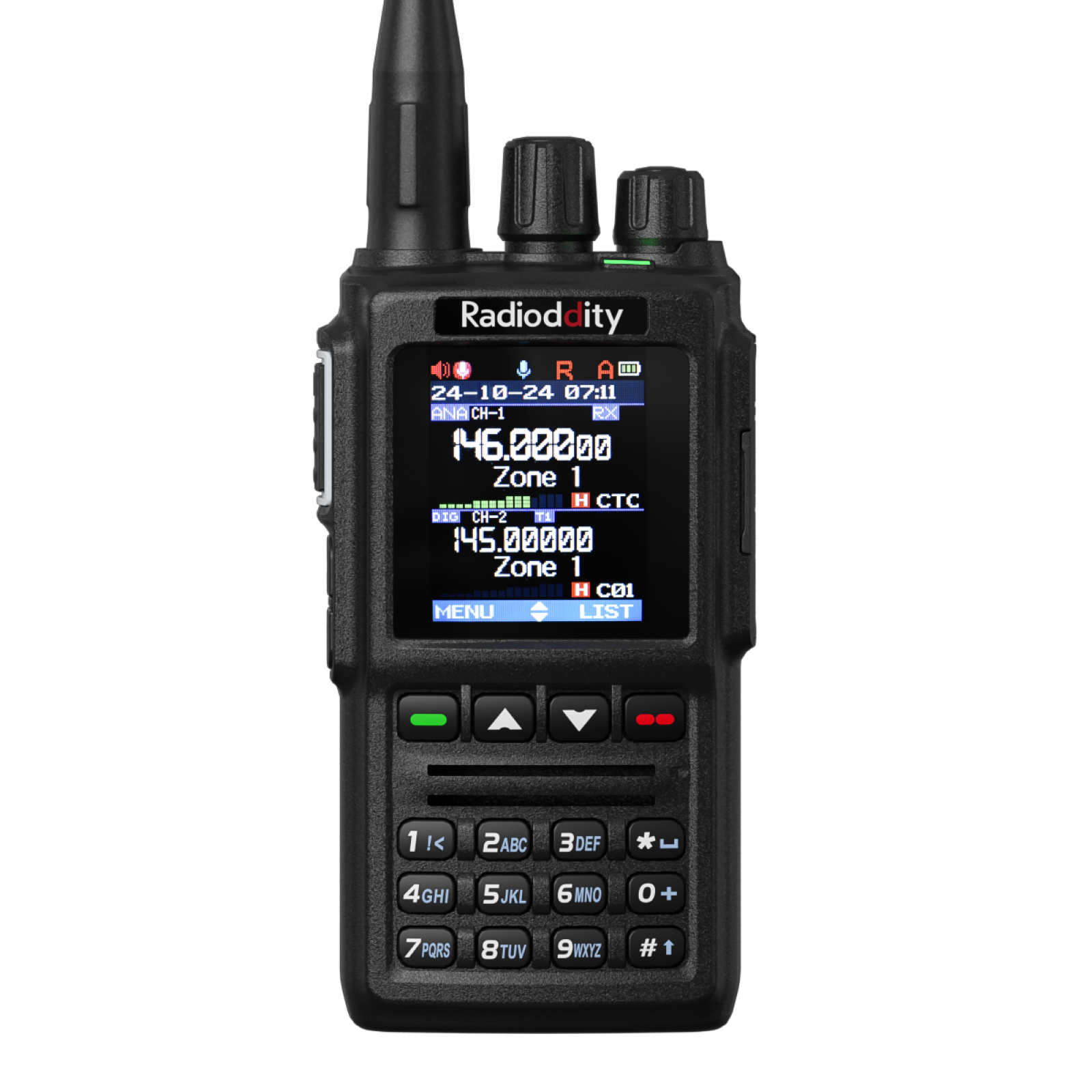
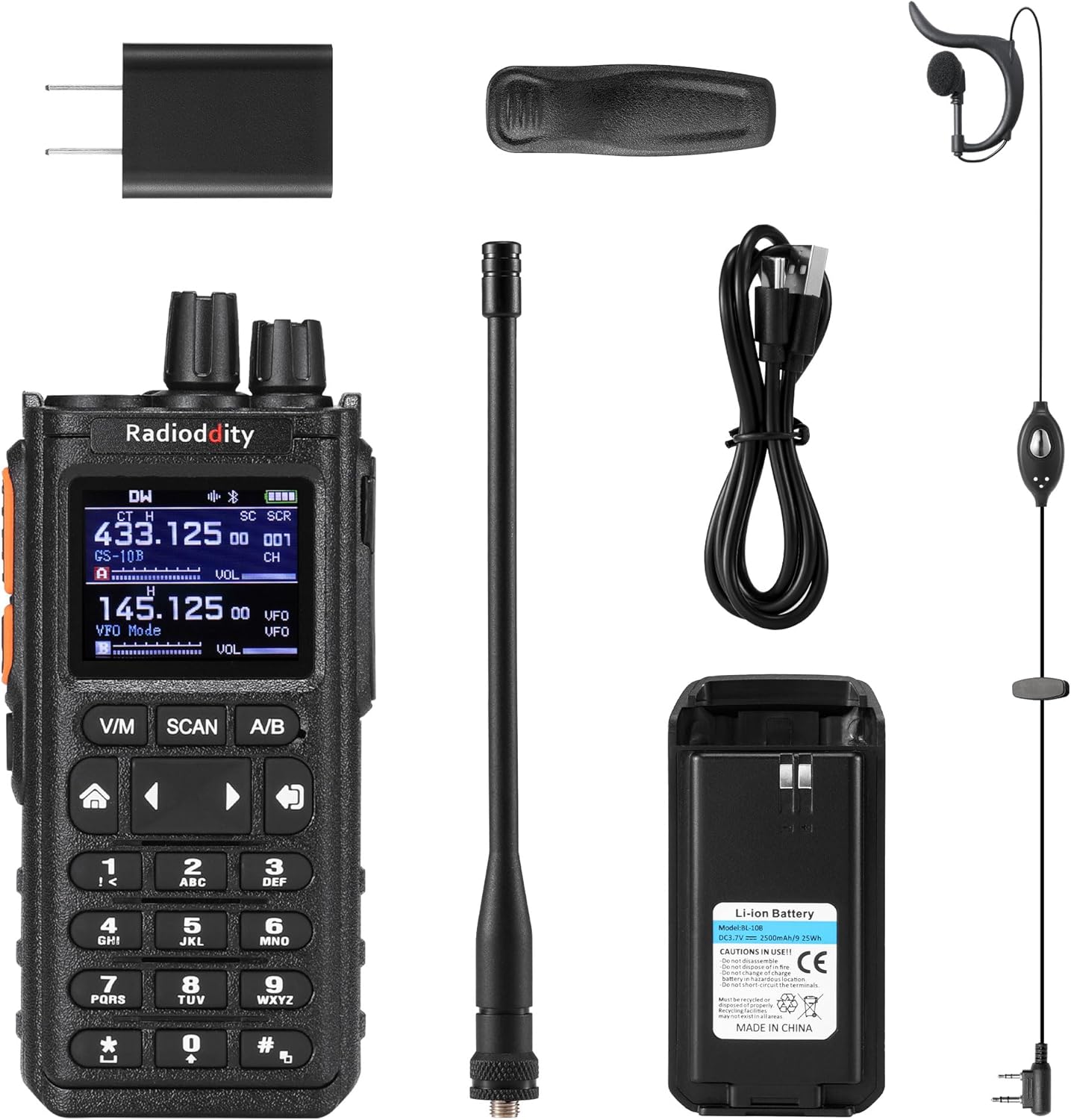
Showing posts with label handy talkie. Show all posts

Friday, August 21, 2026

BaoFeng UV-82C Review: A Surprisingly Capable Budget Dual-Band Handheld


The BaoFeng UV-82C occupies an interesting place in the amateur-radio world. It is inexpensive, uncomplicated by modern standards, and undeniably dated—but it remains one of the more distinctive budget handheld transceivers BaoFeng has produced.

At first glance, the UV-82C looks like a larger, more substantial alternative to the ubiquitous UV-5R. That description is partly accurate, but it misses the feature that makes the UV-82C genuinely different: its dual push-to-talk system. Instead of using one PTT button and selecting which of two displayed frequencies will transmit, the UV-82C provides separate PTT controls for the A and B sides of the radio.

The result is a radio that can be particularly convenient for monitoring two repeaters, a repeater and a simplex frequency, or two local operating channels.

It is not a modern, premium handheld. It has an old-fashioned interface, mediocre receiver behavior in difficult RF environments, relatively primitive programming, and none of the digital modes or networking capabilities found on newer radios. But if your priorities are low cost, analog VHF/UHF operation, loud audio, dual monitoring, and a physical dual-PTT interface, the UV-82C still has a compelling argument.

What exactly is the UV-82C?

The UV-82C is a dual-band FM handheld transceiver developed as part of BaoFeng's UV-82 family. The current BTECH/BaoFeng documentation identifies the UV-82C as a commercial/Part 90-oriented model, rather than simply a consumer amateur-radio HT. It covers 136–174 MHz and 400–520 MHz, has 128 memory channels, selectable 5 W/1 W output, an 1800 mAh battery, and the characteristic dual-PTT arrangement.

BaoFeng's official documentation also lists features such as VOX, busy-channel lockout, transmission timeout, narrow/wide bandwidth selection, CTCSS/DCS tone functions, programmable memories, dual standby, and PC programming.

One important distinction is worth making at the outset: Part 90 certification does not give an amateur operator permission to transmit wherever the radio happens to tune. Amateur operation is governed by FCC Part 97, and operation outside the amateur allocations requires the appropriate service authorization and equipment requirements. The FCC has specifically addressed dual-use land-mobile equipment capable of operating in amateur allocations.

For a U.S. amateur operator, the practical takeaway is simple: use the UV-82C on amateur frequencies in accordance with your license and Part 97 rules; don't assume its wide frequency capability makes it legal to transmit on every frequency it can display.


Design and build quality

The first thing you notice about the UV-82C is that it doesn't feel like a tiny disposable handheld.

It is noticeably larger than the UV-5R, with a wider body, larger controls, and a substantially larger speaker. BTECH lists the UV-82C at approximately 8 ounces and supplies it with an 1800 mAh battery.

That extra bulk is not necessarily a disadvantage.

For handheld operation, a little additional size can actually make a radio easier to use. The UV-82C is easier to grip, the keypad is less cramped, and the controls are easier to locate by touch. The larger speaker is especially useful in vehicles, workshops, outdoors, or anywhere background noise makes a tiny handheld speaker difficult to hear.

The tradeoff is portability. If you want something that disappears into a shirt pocket, the UV-82C isn't it. If you want something that feels like a conventional walkie-talkie and fits naturally in your hand, the larger enclosure is an advantage.

The buttons

The physical controls are one of the radio's strengths.

The main PTT is essentially divided into two buttons: one for the A side and one for the B side. This is the defining feature of the UV-82 design.

There are also conventional menu and keypad controls, volume/channel controls, and an LCD display. The overall interface is very much a product of the early-to-mid-2010s BaoFeng design philosophy.

It works—but it isn't elegant.

The menu system is functional rather than intuitive, and anyone coming from a modern touchscreen radio will find it primitive.


The dual-PTT system: the UV-82C's killer feature

This is the feature that separates the UV-82C from the typical UV-5R-style handheld.

The radio can monitor two channels or frequencies, designated A and B. The two PTT buttons correspond to those two sides.

If you have:

  • A = local repeater
  • B = simplex frequency

you can monitor both and press the appropriate PTT button depending on where you want to transmit.

That sounds like a small convenience, but it changes the way the radio feels in actual use.

With a conventional dual-watch radio, you generally have to make sure the correct VFO or active channel is selected before transmitting. The UV-82C's physical controls make the selection almost automatic: press the upper PTT for A, or the lower PTT for B.

Contemporary reviews of the UV-82 repeatedly identified the dual-PTT arrangement as one of the radio's most useful distinguishing features.

There is a learning curve, though.

When you first pick up the radio, it is surprisingly easy to press the wrong button. After a few days of use, the two-button arrangement becomes second nature.

Is dual PTT actually useful?

Yes—provided you regularly monitor two channels.

It is particularly useful for:

Repeater + simplex:
Keep your local repeater on A and a simplex calling frequency on B.

Two repeaters:
Monitor two repeaters and transmit to either one without changing the active side.

Events:
Monitor an event coordination channel while keeping another frequency immediately available.

Public-service communications:
For appropriately licensed operations, separate channels can be monitored without repeatedly changing the radio's active selection.

For someone who only uses one repeater, however, dual PTT is mostly unnecessary complexity.


Audio performance

Audio is one of the better aspects of the UV-82C.

The larger speaker gives the radio a significant advantage over many tiny handhelds. BaoFeng/BTECH specifies approximately 1 watt of audio output for the UV-82 platform, and the larger speaker enclosure helps turn that specification into useful real-world volume.

The radio is loud enough for ordinary outdoor use and generally easy to hear in a vehicle or workshop.

Transmit audio is also generally respectable for an inexpensive analog HT. Historical user reviews frequently praised the UV-82's transmit and receive audio, although individual experiences vary.

That said, "good for the price" is the appropriate description.

A premium Icom, Kenwood, or Yaesu handheld will generally offer a more refined audio experience, and microphone characteristics can vary between units and accessories.

The UV-82C is a communication radio, not an audiophile product.


RF performance and range

This is where expectations need to be realistic.

BaoFeng advertises up to 5 watts on high power and 1 watt on low power. The manufacturer's specifications also list approximately 0.2 µV sensitivity under a stated measurement condition and 2.5 ppm frequency stability.

Five watts sounds impressive, but transmitter power alone doesn't determine range.

A 5 W handheld can communicate only as far as the propagation environment, antenna, terrain, receiver, and other stations permit. On VHF and UHF, a repeater located on a hill or tower can make a modest handheld seem extraordinarily powerful, while two handhelds separated by buildings and terrain can struggle at surprisingly short distances.

With the stock antenna, the UV-82C is best thought of as a normal inexpensive 5 W HT, not a long-range miracle.

The antenna matters

One of the easiest ways to improve the performance of an inexpensive HT is to use a better antenna.

The stock rubber-duck antenna is a compromise between portability, cost, durability, and performance. A quality aftermarket dual-band antenna can sometimes produce a more noticeable improvement than increasing transmitter power.

For stationary operation, an external antenna is an even bigger improvement.

In other words:

A better antenna often does more for an HT than another few watts of transmitter power.


Receiver performance

The receiver is probably the biggest technical compromise of the UV-82C.

In ordinary use, it works perfectly well. If you're listening to a strong local repeater or nearby simplex station, there's little to complain about.

The problem appears in RF-dense environments.

Cheap wide-coverage handhelds have historically been criticized for front-end overload and intermodulation. The UV-82 family is no exception. Independent testing and reviews of the closely related UV-82 have noted that the receiver can be less impressive than the basic sensitivity numbers suggest, particularly in environments with many strong signals.

That distinction is important.

A receiver can have excellent measured sensitivity yet perform poorly when bombarded by strong signals just outside the frequency you're trying to receive.

You may encounter this around:

  • commercial radio sites
  • high-power transmitters
  • large public events
  • mountain-top repeater sites
  • urban RF environments
  • amateur-radio gatherings

For casual neighborhood repeater operation, this is rarely a deal-breaker.

For serious RF work, it is.


Squelch behavior

The UV-82C offers multiple squelch levels, but this is another area where expectations should be tempered.

The nominal numerical settings don't necessarily correspond to a sophisticated, precisely calibrated signal-strength threshold. Reviews of the UV-82 family have criticized the squelch behavior and described instances of unwanted receiver opening or chatter.

This isn't unique to the UV-82C. It is one of the recurring characteristics of inexpensive BaoFeng handhelds.

The radio is usable, but it isn't as refined as a higher-end receiver.


Programming: the part you'll either love or hate

If there is one thing I would recommend to almost every UV-82C owner, it is this:

Program it from a computer.

The UV-82C can be programmed from the keypad, but manually entering repeater information is much less pleasant than creating a channel list on a computer.

You will want to configure things such as:

Once you've done that, the radio becomes considerably easier to live with.

BaoFeng provides programming software and documentation for the UV-82 family.

What about CHIRP?

CHIRP has historically been widely used with the UV-82 family, and its development history includes explicit support for UV-82 variants. There have nevertheless been model-specific compatibility and programming issues, particularly around different UV-82 variants and firmware versions.

This is an important point for the UV-82C specifically.

Don't assume that a programming file from another UV-82 variant will automatically work correctly. The UV-82 family contains multiple models and firmware variations.

Before writing a programming image to the radio:

  1. Read the radio first.
  2. Save the original configuration.
  3. Verify the exact model.
  4. Use current compatible software.
  5. Make a backup before experimenting.

That five-minute backup can save a great deal of frustration.


128 memory channels

The UV-82C provides 128 memory channels, which is more than enough for most amateur operators using a handheld.

You can organize channels around repeaters, simplex frequencies, local clubs, travel destinations, or other legitimate monitoring needs.

The limitation isn't really the number of memories. It's the interface.

Modern radios make memory management substantially easier. The UV-82C's channel organization is functional but dated.

For someone comfortable with programming software, this isn't a major problem.

For someone who wants to enter everything directly from the keypad, it can become tedious.


Battery life

The UV-82C uses an 1800 mAh lithium-ion battery.

Actual operating time depends heavily on transmit/receive duty cycle, power setting, battery condition, and how frequently the display and receiver are active.

For normal casual amateur operation, the battery is capable of providing a useful day of service.

The radio's 1 W low-power setting is especially useful when you're communicating with nearby stations. There's little reason to use 5 W all the time when 1 W provides reliable communication.

That saves battery and reduces unnecessary RF output.

The charging system

The included desktop charger is convenient, but it is one of the areas where the radio's budget origins are apparent.

The basic charging arrangement works, but modern radios increasingly offer USB charging or more sophisticated battery-management systems.

For emergency preparedness, I would strongly recommend having:

The radio itself is inexpensive enough that accessories can quickly become an important part of the overall package.


Display and user interface

The UV-82C's display is functional and relatively easy to read.

The radio can show the two active sides, frequency/channel information, status indicators, and various configuration information.

The problem is not visibility so much as interaction.

The interface comes from an era when handheld radios were designed around menu numbers and small LCDs rather than graphical interfaces.

For an experienced amateur, that's manageable.

For a beginner, the menu system can initially feel like a puzzle.

The manual helps, but the most effective way to learn the radio is to program it on a computer and then learn only the handful of menu functions you actually use.


Features

For a radio at this price point, the feature list is impressive.

Depending on configuration and firmware, the UV-82C family offers:

BaoFeng's published UV-82 specifications document these capabilities.

What it doesn't offer is equally important.

There is no built-in:

  • DMR
  • D-Star
  • System Fusion
  • P25
  • APRS data modem
  • Bluetooth
  • Wi-Fi
  • GPS
  • cellular connectivity

This is a conventional analog FM handheld.

That's not necessarily a criticism. In fact, the simplicity can be an advantage if all you need is analog VHF/UHF.


The UV-82C versus the UV-5R

The obvious comparison is the BaoFeng UV-5R.

The UV-5R became enormously popular because it was inexpensive, compact, and capable of surprisingly broad functionality.

The UV-82C feels like the more substantial radio.

Where the UV-82C wins

Better physical ergonomics:
The larger body is easier to grip.

Larger speaker:
Audio is more practical in noisy environments.

Dual PTT:
This is the major advantage.

More substantial controls:
The radio generally feels less cramped.

1800 mAh battery:
A reasonable capacity for an HT of this generation.

Where the UV-5R wins

Smaller size:
Much easier to carry.

Huge accessory ecosystem:
There are countless UV-5R accessories.

Familiarity:
The UV-5R interface is extremely well documented by the amateur-radio community.

Availability:
The UV-5R family has had a much longer and broader market presence.

If you're choosing purely between the two and don't care about size, I'd generally take the UV-82C for its ergonomics and dual-PTT design.


The UV-82C versus modern handhelds

This is where the age of the design becomes obvious.

A modern midrange handheld may offer:

  • better receiver selectivity
  • USB charging
  • Bluetooth
  • GPS
  • APRS
  • digital modes
  • improved displays
  • better menus
  • more sophisticated scanning
  • better weather sealing
  • more advanced battery systems

The UV-82C doesn't compete with those radios feature-for-feature.

Instead, it competes on price and simplicity.

If a modern $150–$400 handheld solves problems you don't have, spending the extra money may not make sense.

If you regularly operate in RF-heavy environments or want digital functionality, however, the argument changes considerably.


Reliability and durability

The UV-82C is not a ruggedized professional handheld in the same sense as a commercial Motorola, Kenwood, or similarly engineered radio.

That doesn't mean it is fragile.

It simply means you shouldn't confuse inexpensive construction with professional-grade environmental protection.

The radio is perfectly appropriate for:

For harsh industrial environments, heavy rain, repeated drops, or mission-critical communications, I'd spend more.

This is a budget handheld, not a tactical or intrinsically safe radio.


Accessories

The standard UV-82C package has historically included the basic equipment needed to get started: radio, battery, antenna, charger, belt clip, hand strap, headset/earpiece, and documentation. BTECH's current product page lists an 1800 mAh battery and associated accessories.

The most useful accessories are probably:

Programming cable

Essential if you're going to use the radio seriously.

Better antenna

Potentially one of the best upgrades.

Spare battery

More useful than many cosmetic accessories.

Speaker microphone

Useful when the radio is clipped to a belt or carried in a pocket.

Vehicle antenna

If you want substantially better mobile performance, an external antenna is generally far more effective than simply expecting the handheld's rubber antenna to perform miracles.


Who should buy the UV-82C?

The UV-82C makes sense for several types of users.

New amateur-radio operators

It can be an inexpensive way to learn the fundamentals of:

It is particularly attractive if cost is a major concern.

Experienced hams wanting a backup

A $50-ish-class analog HT can be a useful spare radio to keep in a vehicle, emergency kit, backpack, or workshop.

People who specifically want dual PTT

This is probably the strongest reason to choose it.

If you routinely monitor two frequencies, the physical dual-PTT system is genuinely useful.

Event and volunteer communications

For appropriate licensed communications, the UV-82C's dual-channel functionality and inexpensive replacement cost can be attractive.

Experimenters

The radio provides a lot of conventional analog-radio functionality without requiring a large investment.


Who should avoid it?

I'd look elsewhere if you need:

A high-performance receiver:
Consider a better-designed amateur HT.

Digital radio:
The UV-82C is analog FM.

Modern connectivity:
There is no Bluetooth, Wi-Fi, or integrated GPS.

Waterproofing:
Choose a radio designed and rated for the environment.

A polished interface:
The UV-82C's menus are old-fashioned.

Mission-critical communications:
Spend more on professional equipment.

Excellent RF immunity:
The inexpensive receiver architecture is not ideal for strong-signal environments.


A note about legal operation

This deserves special emphasis because the UV-82C's broad frequency coverage can be misleading.

The fact that the radio can tune to a frequency does not mean you are authorized to transmit there.

For U.S. amateur operators, Part 97 governs amateur-radio operation. The FCC has also explained that dual-use land-mobile radios can operate in portions of the amateur bands while being certified under Part 90 for land-mobile operation.

The UV-82C's Part 90 certification is therefore not a blanket authorization to transmit on public-safety, business, GMRS, MURS, or other frequencies.

Use the radio according to the rules of the service in which you're operating.

For amateur use, that means operating within the frequencies, power limits, emission requirements, and other conditions applicable to your license and Part 97.


What I like most about the UV-82C

1. The dual PTT

This remains the standout feature.

It is not merely a gimmick. Once accustomed to it, it can be genuinely convenient.

2. The speaker

The larger speaker makes the radio pleasant to use compared with many tiny HTs.

3. Ergonomics

The larger case feels better in the hand than many ultra-compact budget radios.

4. Price

The UV-82C was designed around affordability, and that remains one of its biggest strengths.

5. Straightforward analog operation

There is something appealing about a radio that simply does VHF/UHF FM without requiring an app, account, cloud service, or digital infrastructure.


What I like least

1. Programming

The radio's menus aren't terrible, but they aren't modern.

Computer programming is strongly preferable.

2. Receiver limitations

Strong-signal environments can expose the weaknesses of the inexpensive receiver design.

3. Dated interface

The radio feels like a product from another era—and technically, it is.

4. No modern digital features

If you want DMR, D-Star, Fusion, APRS, GPS, Bluetooth, or other modern features, you'll need another radio.

5. Model/firmware variations

The UV-82 family contains multiple variants, and programming compatibility isn't something I'd take for granted. CHIRP's issue history demonstrates that model-specific compatibility has occasionally been troublesome.


Final verdict

The BaoFeng UV-82C is an old-school budget analog HT that gets the important basics right.

It isn't technically sophisticated. It isn't the best receiver. It doesn't have modern digital modes. Its menus can be frustrating, and the programming experience is considerably better from a computer than from the keypad.

But it has three things going for it that are hard to ignore:

It's inexpensive.

It's physically comfortable to use.

Its dual-PTT system is genuinely useful.

See The Baofeng UV-82C On Btech's Website!


Friday, May 1, 2026

Radioddity GD-168 DMR Handheld Radio – Full In-Depth Review


Introduction

The Radioddity GD-168 is a feature-packed dual-band DMR handheld radio that targets amateur radio operators and professionals looking for modern digital functionality without the premium price tag. With support for both analog and digital modes, satellite communication features, noise reduction, and an impressive 500,000 contact capacity, it positions itself as a serious contender in the mid-range DMR market.

This review takes a deep dive into its design, performance, real-world usability, strengths, and limitations.


Design and Build Quality

The first impression of the GD-168 is that it feels solid without being overly bulky. It weighs around 220 grams with the battery installed, making it comfortable for extended handheld use. The layout is intuitive, with well-placed buttons and two programmable keys for quick access to important functions.

The 1.77-inch color TFT screen is a standout feature. It’s bright, easy to read outdoors, and provides significantly more information than older monochrome displays. Menu navigation is relatively straightforward once you get used to DMR terminology.

Included in the box:

This “complete kit” approach is a major advantage, especially for beginners.


Key Features

Dual Band Dual Mode (Analog + DMR)

The GD-168 operates on both VHF (136–174 MHz) and UHF (400–480 MHz), giving it flexibility across a wide range of amateur and commercial frequencies. It supports both analog FM and DMR digital modes, with automatic detection between the two, making it highly versatile for mixed environments.


Massive Contact Capacity

One of the most impressive specifications is its ability to store up to 500,000 contacts and 10,000 talk groups. This allows users to load a large portion of the global DMR database, enabling callsigns and user details to appear on screen rather than just numeric IDs.


Satellite Communication & APRS

The GD-168 includes satellite prediction capability along with both analog and digital APRS transmit and digital APRS receive. These features expand the radio’s usefulness beyond standard repeater and simplex communication, allowing for position reporting and satellite operation.

In practice, satellite prediction may require some manual verification for accurate operation, but it remains a valuable addition at this price point.


Noise Reduction Technology

The radio includes both transmit and receive noise reduction, which helps improve clarity in challenging environments. This results in cleaner audio, reduced background noise, and better intelligibility, especially when operating in noisy or mobile conditions.


Power Flexibility

The GD-168 offers multiple selectable power levels:

This flexibility allows users to conserve battery when full power is unnecessary or maximize range when needed.


Dual Batteries for Extended Use

A major advantage of the GD-168 is the inclusion of two batteries:

This setup significantly extends operating time, making the radio suitable for long outings, emergency preparedness, or field operations without constant recharging.


USB-C Charging and Programming

The inclusion of USB-C support is a modern and highly practical feature. It allows for both charging and programming using a standard cable, eliminating the need for proprietary accessories and making it easy to use with power banks, laptops, and other common devices.


Performance and Real-World Use

Audio Quality

Audio quality is strong overall, with clear and loud output. The noise reduction system contributes to improved clarity, especially in environments with background interference.


Range

With a maximum output of 5 watts, the GD-168 delivers typical handheld performance:

  • Urban environments: a few miles depending on buildings and obstacles
  • Open areas: significantly greater range

Using the included longer antenna can provide noticeable improvements in signal performance.


Programming and Learning Curve

Like most DMR radios, the GD-168 is not a plug-and-play device. Programming requires an understanding of codeplugs, talk groups, and digital contacts. The included CPS software allows for full customization, but new users should expect a learning curve.

Once properly configured, the radio becomes much easier to operate and highly efficient in daily use.


Firmware and Compatibility

The GD-168 shares design similarities with other DMR radios, which can be beneficial for experienced users familiar with similar interfaces. However, firmware and software compatibility should be approached carefully, especially when exploring unofficial options.


Pros and Cons

Pros

  • Excellent value for the features offered
  • Large 500,000 contact capacity
  • Dual batteries included for extended use
  • USB-C charging and programming
  • Effective noise reduction for clearer audio
  • APRS and satellite functionality included
  • Bright and informative color display

Cons


Who This Radio Is For

The GD-168 is well suited for:

  • Amateur radio operators exploring DMR
  • Users wanting advanced features without a high cost
  • Field operators and emergency preparedness enthusiasts
  • Hobbyists interested in APRS and satellite communication

It may not be the best fit for users seeking a simple, ready-to-use radio with minimal setup.


Final Verdict

The Radioddity GD-168 stands out as a powerful and versatile DMR handheld radio that delivers an impressive range of features for its price. From dual-band operation and massive contact storage to APRS and USB-C convenience, it offers capabilities typically found in more expensive models.

While it does require time and effort to learn and configure, the result is a highly capable communication tool that can handle everything from local analog use to advanced digital operations.

For users willing to invest in learning the system, the GD-168 represents outstanding value and a strong addition to any radio lineup.

See The GD-168 At Radioddity!

Tuesday, October 28, 2025

Radioddity GS-10B 10W Ham Radio Handheld — Full Review


Overview
The Radioddity GS-10B positions itself as a feature-packed, budget-friendly handheld aimed at hams and radio hobbyists who want more transmit power, flexible programming, and modern conveniences like USB-C charging and app control. At its core it’s a dual-band VHF/UHF transceiver with a claimed 10-watt high-power mode, a 2500 mAh battery, dual PTT capability, aviation and NOAA receiver features, and wireless APP programming. In this review I’ll cover design and build, radio performance (receive and transmit), user interface and programming, battery and charging, real-world range expectations, audio and noise handling, accessories and expandability, pros and cons, and who the GS-10B is best for.

Design and build quality
The GS-10B follows the familiar pocket HT form factor but leans slightly toward the robust side. The housing is plastic but feels sturdier than the cheapest no-name handhelds. Controls are conventional: a rotary volume/encoder, a multi-function keypad, PTT on the side, and two PTT buttons for dual-PTT operation. The display is a compact backlit LCD that shows essential information — frequency, mode, battery, and basic status. The keypad legends and labeling are serviceable; they aren’t premium but are clear enough for everyday use.

The battery pack (2500 mAh) attaches to the back with a flush fit and the USB-C port for charging is conveniently placed — a modern touch that simplifies charging compared with older micro-USB-equipped HTs. Antenna thread appears standard SMA or similar (confirm before ordering aftermarket antennas). Overall, the construction is appropriate for the asking price: not indestructible but competent for field use.

Specifications (what matters)

  • Bands: VHF and UHF (typical ham handheld coverage)

  • Power: Up to 10 W transmit in high-power mode (also lower power steps for mid/low)

  • Battery: 2500 mAh removable pack

  • Programming: Wireless app programming plus USB-C wired connection

  • Extra receive: Aviation band and NOAA weather radio receive capability

  • Noise reduction: DSP-based noise reduction or AGC (depending on firmware/implementation)

  • Dual PTT: Two programmable PTTs for different modes/outputs

  • Channel sync: Ability to sync channels between modes or devices (implementation varies)

Because the GS-10B packs 10 watts in a handheld package it occupies a different niche than the common 5 W HTs — more transmit power can help in marginal conditions but comes with tradeoffs in heat and battery drain.

Receive performance
Receive sensitivity on modern budget handhelds is generally acceptable, and the GS-10B’s multi-mode receiver (FM primarily) is competent for local repeater, simplex, and broadcast reception. The inclusion of aviation band and NOAA weather band receive adds practical value for travelers and outdoor users who want situational awareness. Filtering and selectivity are typical for this price class: it will handle strong local signals well enough, but in very crowded RF environments you can sometimes hear overload or intermodulation. The presence of DSP-based noise reduction (if enabled in firmware) helps make weaker signals more intelligible and improves copy in noisy environments.

Transmit performance and power management
The headline is 10 W transmit. That gives the GS-10B an edge over standard 5 W HTs for opening distant repeaters or reaching simplex contacts from less-than-ideal locations. In practice, range improvement is real but not miraculous — doubling power is not the same as doubling range, and propagation plus antenna height dominate. Expect noticeably better performance on line-of-sight links and moderate improvement in obstructed conditions.

Tradeoffs of running 10 W in a handheld:

Battery life and charging
The 2500 mAh battery is decent capacity for an HT but not huge, especially when paired with 10 W transmit. In low-power voice use the battery should get a typical day’s casual operating; under heavy use, especially with frequent high-power transmit bursts, expect hours rather than all-day operation. The USB-C port is a welcome convenience — it allows you to use modern chargers and power banks for field charging. A removable battery also means you can carry a spare, which is strongly recommended if you plan to use high-power settings regularly.

Programming and usability — wireless APP and USB-C
Wireless app programming is a major selling point for users who dislike PC cables or want quick field edits. The convenience of programming channels, tones, and names from a smartphone is high, but the actual quality of the app experience depends on Radioddity’s software and firmware implementation. Expect basic functionality: reading/writing channel lists, setting offsets and tones, and perhaps easy import/export of CSV-like data. For bulk editing or advanced features many users still prefer a computer and a conventional programming cable and software — check whether the radio supports common PC CAT or CPS software if you want deep control.

The USB-C port serves dual roles: charging and probably wired programming/data connection. USB-C makes life easier in the field since power banks and modern chargers are ubiquitous.

User interface and ergonomics
If you are used to conventional HTs, you’ll find the GS-10B’s controls familiar. The two PTT buttons provide utility: one can be configured for the main transmit, the other for quick access to a different band, monitor, or auxiliary function. The encoder plus keypad makes frequency entry and menu navigation workable. The display is small but shows essential info; for advanced contesting or heavy scanning it’s not as pleasant as larger-screen radios, but that's a typical compromise in handheld design.

Noise reduction and audio quality
The radio advertises noise reduction which typically means some form of DSP filtering and AGC. In practice this helps on weak signals and when background noise is present. Speaker volume and clarity will depend on the specific speaker design; expect intelligible audio for voice, but do not expect hi-fi. Microphone performance is adequate for normal voice use; consider using a quality external speaker-mic if you want better audio and more durable PTT ergonomics.

Range expectations — realistic outlook
"Long range" is marketing-friendly wording; realistic range depends on many variables:

Channel sync and memory features
Channel sync can be handy if you want to clone channels between modes or maintain consistent channel lists across banks. Memory management and channel naming make the radio practical for everyday use. The app programming should make organizing channels quicker than menu-only editing.

Accessories and expandability
Typical accessories to consider:

Firmware and community support
Feature-rich handhelds benefit greatly from active firmware updates and community support (third-party programming files, user tips, etc.). Expect incremental firmware improvements over time that can add features or refine behavior. If you value community-driven tips, check active user forums for tips on programming, heat management at 10 W, and recommended accessory combinations.

Who should buy the Radioddity GS-10B?

Who should consider something else?

Pros

Cons

Practical tips and recommendations

  • Carry at least one spare battery if you plan to run at high power for more than a few hours.

  • Use the lowest power that accomplishes your contact (conserve battery and reduce heat).

  • Invest in a quality external speaker-mic and, if you like, a better handheld antenna for improved performance.

  • Learn the app’s read/write procedure before relying on it in the field — test programming at home first.

  • Be mindful of duty cycle when using prolonged digital modes or long voice transmissions at 10 W.

Final verdict
The Radioddity GS-10B offers an attractive feature set for experimental and practical use: higher-than-usual handheld transmit power, modern conveniences like USB-C and app programming, and extra receive bands that broaden usefulness. It’s a strong choice for hams who want more reach from a portable radio and are comfortable managing the tradeoffs in battery life and heat. For casual users who prioritize battery endurance above all, or for professionals needing extremely rugged hardware, there may be better alternatives. For its price class the GS-10B delivers an excellent combination of functionality and value, especially for those who appreciate the flexibility of app-based programming and the extra oomph of a 10 W handheld.

See The Radioddity GS-10B On Amazon!

Friday, June 27, 2025

BAOFENG K61 Multi-Band Ham Radio Handheld Review


The BAOFENG K61 Multi-Band Ham Radio Handheld is a notable evolution in the world of portable communications, especially for amateur radio enthusiasts and those in need of reliable long-range communication. As an upgrade to the widely popular UV-5R, the K61 incorporates advanced features, better performance, and user-friendly enhancements, making it a serious contender in the multi-band radio market. This in-depth review will examine the radio's design, functionality, performance, battery life, and overall value to determine how it measures up to user expectations and modern communication needs.

Design and Build Quality

The BAOFENG K61 maintains a rugged, compact form factor that will feel familiar to previous UV-5R users, yet it features several design enhancements that improve both aesthetics and ergonomics. The body feels solid and well-constructed, capable of withstanding everyday wear and tear. The buttons are tactile and responsive, with a layout that is easy to navigate, even with gloved hands. The screen is brighter and more legible than its predecessors, making it easier to read frequencies and menu options in daylight or low-light conditions.

The inclusion of a USB-C charging port is a modern touch, allowing users to recharge the unit with a variety of common charging cables. This eliminates the need for a proprietary charger and aligns the device with contemporary tech standards.

Frequency Range and Band Coverage

One of the standout features of the K61 is its extended multi-band coverage. Unlike many handheld radios that are limited to UHF and VHF bands, the K61 also includes support for the 1.25-meter band, as well as NOAA weather channels, FM broadcast radio, and even AM radio reception. This makes it incredibly versatile for a wide range of users—from ham radio hobbyists and emergency preppers to outdoor adventurers and marine operators.

The ability to receive AM broadcasts is a unique addition, allowing users to tune into aviation bands or listen to AM talk radio, something not commonly found on typical handheld radios. The wide band coverage allows users to monitor multiple frequencies and makes the device useful in a broader array of scenarios.

Channel Capacity and Programming

With support for up to 999 channels, the K61 provides ample room to store frequencies for repeaters, simplex channels, and scanning needs. This high capacity is ideal for those who operate in multiple areas or need to monitor numerous channels regularly. Users can manually program frequencies or use programming software with a standard programming cable, making the setup process faster for those familiar with radio software.

Menu navigation is intuitive for those already acquainted with BAOFENG’s interface, though beginners may face a slight learning curve. However, the abundance of online communities and guides for BAOFENG radios helps to bridge the gap for newcomers.

Audio and Signal Performance

The K61 offers strong audio clarity on both transmit and receive. The speaker outputs clear and loud audio, which is crucial in noisy environments such as construction sites, outdoor events, or emergencies. The included microphone is sensitive and picks up voice well, maintaining clean transmission quality even when speaking at a distance.

In terms of signal performance, the K61 boasts impressive range for a handheld radio, especially when used with an upgraded antenna. Under optimal conditions, communication over several miles is possible, making it effective for both urban and rural use. Its reception sensitivity is equally commendable, allowing it to pick up weaker signals with reasonable clarity.

Battery Life and Charging

Equipped with a 2600mAh battery, the K61 offers extended operational time compared to standard handheld radios. For light to moderate use, users can expect the battery to last through a full day or longer. Heavy users will still find it sufficient for several hours of continuous operation.

The real convenience lies in its USB-C charging capability. This enables faster and more flexible recharging options, such as using a power bank, car charger, or laptop, which is particularly beneficial during travel or field operations. The inclusion of this feature modernizes the user experience and removes the dependence on bulky charging docks.

Extra Features

The BAOFENG K61 includes a built-in flashlight, which is useful for emergencies and night-time use. The dual-watch and dual-standby features allow users to monitor two frequencies at once, increasing situational awareness. The NOAA weather channels provide real-time updates on hazardous weather conditions, which is essential for outdoor enthusiasts and emergency responders.

Voice prompts, keypad lock, VOX functionality for hands-free use, and customizable scanning options round out the suite of features, adding to the overall versatility of the device.

Pros and Cons Summary

Strengths:

Potential Drawbacks:

Final Thoughts

The BAOFENG K61 is a well-rounded, feature-rich handheld ham radio that represents a significant upgrade over the UV-5R. With its extended band coverage, modern USB-C charging, strong battery performance, and high channel capacity, it caters to a broad spectrum of users—from amateur radio operators and emergency personnel to outdoor adventurers and survivalists.

While it still retains some of the quirks of earlier BAOFENG models, its added versatility and convenience make it a highly practical communication tool. Whether you are upgrading from an older radio or diving into the world of ham radio for the first time, the K61 provides excellent value and performance in a compact, affordable package.

See The Baofeng K61 On Amazon!

Friday, May 23, 2025

Radtel RT-880G GPS APRS 10W Ham Radio Walkie Talkie – A Comprehensive Review


For amateur radio enthusiasts seeking a feature-rich, high-performance handheld radio, the Radtel RT-880G presents an intriguing choice. This portable two-way radio combines GPS capability, APRS support, cross-band repeater functionality, and an impressive 10 watts of power in a compact body. Equipped with a 2.4-inch color display, HF SSB receive capability, and an SW/MW antenna, the RT-880G is designed to meet the demands of both advanced hobbyists and serious field operators.

Build and Design

The RT-880G boasts a sturdy, rugged construction designed for reliable use in a variety of environments. Its form factor strikes a balance between portability and usability, making it easy to carry while still offering tactile, well-spaced buttons for field operation. The 2.4-inch color display is a standout feature, offering clear readability in both daylight and low-light conditions. The interface is intuitive, allowing users to navigate through the menus and features without needing to constantly refer to a manual.

A high-capacity battery powers the unit, giving it extended runtime even at higher transmission power levels. The radio is also equipped with a detachable antenna and includes an SW/MW-capable model, which adds flexibility for monitoring a wider range of frequencies.

Transmission and Reception

One of the core strengths of the RT-880G is its 10-watt maximum transmission power, which provides a notable boost over standard 5-watt handheld units. This added power improves communication range, especially in areas with minimal obstruction. The radio supports UHF and VHF bands, making it suitable for a wide variety of amateur radio applications.

Additionally, the RT-880G offers HF SSB receive functionality. While it does not transmit on HF, the ability to receive single side band signals gives users access to a much broader scope of the amateur radio spectrum. This is especially useful for those who want to monitor long-distance communications or simply expand their listening experience.

APRS and GPS Functionality

The integration of APRS (Automatic Packet Reporting System) and GPS makes the RT-880G a valuable tool for location tracking and tactical communication. The GPS is built-in and works reliably, providing real-time position data. This data can be transmitted over APRS, allowing others in the network to track your location, which is particularly beneficial during group expeditions, search-and-rescue operations, or emergency scenarios.

APRS also supports sending and receiving messages, status updates, and weather data, giving this radio a strong advantage for those who operate in the field or participate in public service events.

Cross-Band Repeater Capability

Another advanced feature included in the RT-880G is cross-band repeat functionality. This allows the radio to receive a signal on one band and retransmit it on another. It's an essential tool for extending communication coverage when operating in hilly terrain or dense urban areas. Setting up cross-band repeat is straightforward, and it works efficiently, making the radio a potential backbone for a temporary communication network in remote locations.

Channel Capacity and Programming

With 1024 memory channels, the RT-880G provides ample storage for various frequencies, talk groups, and custom configurations. Users can organize their channel list for quick access during operations. Channel scanning is responsive and supports various scan modes to suit user preferences.

The radio includes a programming cable, simplifying the process of customizing settings via software. Programming through a PC is fast and intuitive, giving users granular control over frequencies, CTCSS/DCS tones, power levels, and other operational parameters.

Audio Quality and User Experience

The audio output from the built-in speaker is clear and sufficiently loud for outdoor use. The microphone provides strong modulation without distortion, even when used in high-wattage mode. The user interface is efficient, with labeled buttons, a responsive keypad, and a menu system that balances complexity with usability.

The color screen not only improves visual appeal but also enhances practical use. Menu navigation is intuitive, and the display is bright enough for use in direct sunlight, with sufficient backlighting for nighttime operation.

Accessories and Expandability

The RT-880G ships with a suite of accessories that includes a belt clip, antenna, programming cable, and a desktop charging cradle. The included antenna performs adequately for general use, though serious operators may choose to upgrade to a higher-gain antenna for improved range and signal clarity.

Thanks to the radio’s standard connectors, users can expand its functionality with third-party accessories, including external microphones, headsets, and high-gain antennas, enhancing its versatility even further.

Practical Use Scenarios

The RT-880G is an excellent option for a wide range of scenarios. Field communicators, emergency responders, and outdoor enthusiasts will appreciate the GPS and APRS integration. Radio hobbyists will benefit from the HF SSB receive function, and those working in team environments can utilize the cross-band repeater to maintain communication over large areas. The high output power and rich feature set make this radio a viable option for both casual users and advanced operators.

Final Thoughts

The Radtel RT-880G stands out as a powerful and feature-rich handheld ham radio that caters to the needs of both experienced operators and demanding field users. Its combination of high transmission power, GPS/APRS integration, cross-band repeat, and a vibrant display makes it a compelling option in its class.

While it might have a steeper learning curve for newcomers due to its extensive feature set, the functionality it offers is well worth the investment. Whether you’re operating in remote terrain, coordinating an event, or simply exploring the amateur radio bands, the RT-880G is a versatile tool that performs admirably across the board.

Find The Radtel RT-880G On Amazon!

BaoFeng UV-82C Review: A Surprisingly Capable Budget Dual-Band Handheld

The BaoFeng UV-82C occupies an interesting place in the amateur-radio world. It is inexpensive, uncomplicated by modern standards, and und...

Search This Blog