Showing posts with label rubber duck. Show all posts

Friday, May 1, 2026

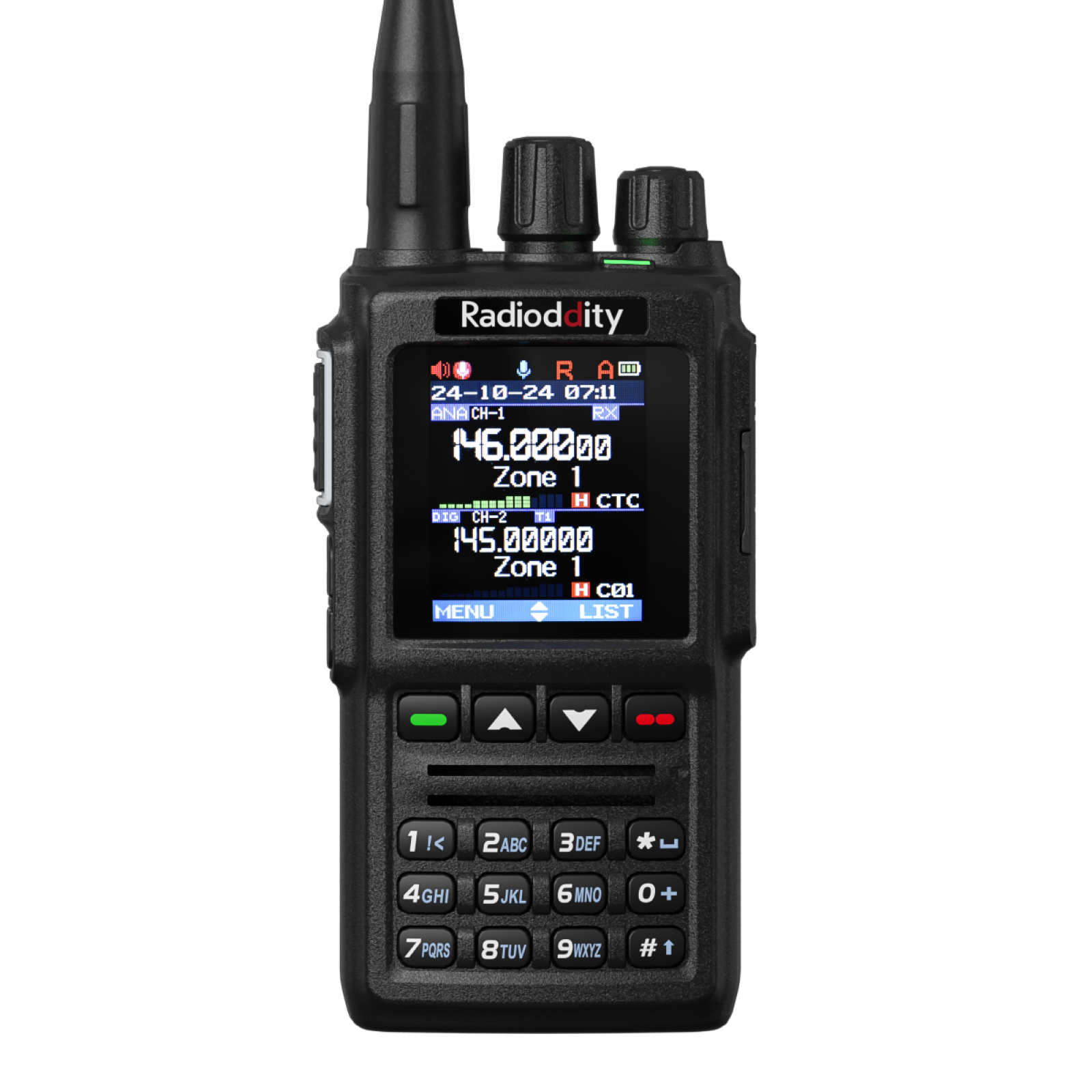
Radioddity GD-168 DMR Handheld Radio – Full In-Depth Review


Introduction

The Radioddity GD-168 is a feature-packed dual-band DMR handheld radio that targets amateur radio operators and professionals looking for modern digital functionality without the premium price tag. With support for both analog and digital modes, satellite communication features, noise reduction, and an impressive 500,000 contact capacity, it positions itself as a serious contender in the mid-range DMR market.

This review takes a deep dive into its design, performance, real-world usability, strengths, and limitations.


Design and Build Quality

The first impression of the GD-168 is that it feels solid without being overly bulky. It weighs around 220 grams with the battery installed, making it comfortable for extended handheld use. The layout is intuitive, with well-placed buttons and two programmable keys for quick access to important functions.

The 1.77-inch color TFT screen is a standout feature. It’s bright, easy to read outdoors, and provides significantly more information than older monochrome displays. Menu navigation is relatively straightforward once you get used to DMR terminology.

Included in the box:

This “complete kit” approach is a major advantage, especially for beginners.


Key Features

Dual Band Dual Mode (Analog + DMR)

The GD-168 operates on both VHF (136–174 MHz) and UHF (400–480 MHz), giving it flexibility across a wide range of amateur and commercial frequencies. It supports both analog FM and DMR digital modes, with automatic detection between the two, making it highly versatile for mixed environments.


Massive Contact Capacity

One of the most impressive specifications is its ability to store up to 500,000 contacts and 10,000 talk groups. This allows users to load a large portion of the global DMR database, enabling callsigns and user details to appear on screen rather than just numeric IDs.


Satellite Communication & APRS

The GD-168 includes satellite prediction capability along with both analog and digital APRS transmit and digital APRS receive. These features expand the radio’s usefulness beyond standard repeater and simplex communication, allowing for position reporting and satellite operation.

In practice, satellite prediction may require some manual verification for accurate operation, but it remains a valuable addition at this price point.


Noise Reduction Technology

The radio includes both transmit and receive noise reduction, which helps improve clarity in challenging environments. This results in cleaner audio, reduced background noise, and better intelligibility, especially when operating in noisy or mobile conditions.


Power Flexibility

The GD-168 offers multiple selectable power levels:

This flexibility allows users to conserve battery when full power is unnecessary or maximize range when needed.


Dual Batteries for Extended Use

A major advantage of the GD-168 is the inclusion of two batteries:

This setup significantly extends operating time, making the radio suitable for long outings, emergency preparedness, or field operations without constant recharging.


USB-C Charging and Programming

The inclusion of USB-C support is a modern and highly practical feature. It allows for both charging and programming using a standard cable, eliminating the need for proprietary accessories and making it easy to use with power banks, laptops, and other common devices.


Performance and Real-World Use

Audio Quality

Audio quality is strong overall, with clear and loud output. The noise reduction system contributes to improved clarity, especially in environments with background interference.


Range

With a maximum output of 5 watts, the GD-168 delivers typical handheld performance:

  • Urban environments: a few miles depending on buildings and obstacles
  • Open areas: significantly greater range

Using the included longer antenna can provide noticeable improvements in signal performance.


Programming and Learning Curve

Like most DMR radios, the GD-168 is not a plug-and-play device. Programming requires an understanding of codeplugs, talk groups, and digital contacts. The included CPS software allows for full customization, but new users should expect a learning curve.

Once properly configured, the radio becomes much easier to operate and highly efficient in daily use.


Firmware and Compatibility

The GD-168 shares design similarities with other DMR radios, which can be beneficial for experienced users familiar with similar interfaces. However, firmware and software compatibility should be approached carefully, especially when exploring unofficial options.


Pros and Cons

Pros

  • Excellent value for the features offered
  • Large 500,000 contact capacity
  • Dual batteries included for extended use
  • USB-C charging and programming
  • Effective noise reduction for clearer audio
  • APRS and satellite functionality included
  • Bright and informative color display

Cons


Who This Radio Is For

The GD-168 is well suited for:

  • Amateur radio operators exploring DMR
  • Users wanting advanced features without a high cost
  • Field operators and emergency preparedness enthusiasts
  • Hobbyists interested in APRS and satellite communication

It may not be the best fit for users seeking a simple, ready-to-use radio with minimal setup.


Final Verdict

The Radioddity GD-168 stands out as a powerful and versatile DMR handheld radio that delivers an impressive range of features for its price. From dual-band operation and massive contact storage to APRS and USB-C convenience, it offers capabilities typically found in more expensive models.

While it does require time and effort to learn and configure, the result is a highly capable communication tool that can handle everything from local analog use to advanced digital operations.

For users willing to invest in learning the system, the GD-168 represents outstanding value and a strong addition to any radio lineup.

See The GD-168 At Radioddity!

Friday, November 8, 2024

Review: Authentic Genuine Nagoya NA-771 15.6-Inch Whip VHF/UHF (144/430 MHz) Antenna SMA-Female


The Nagoya NA-771 antenna is a popular upgrade among amateur radio enthusiasts, particularly those using handheld radios like the BaoFeng and BTECH models. As part of the ever-expanding selection of antennas for VHF and UHF frequencies, the NA-771 promises to offer superior performance over the stock antenna typically bundled with entry-level handheld radios. In this review, we’ll take a detailed look at the Nagoya NA-771 antenna, evaluating its design, build quality, performance, and overall value.

Overview of the Nagoya NA-771 Antenna

The Nagoya NA-771 is a 15.6-inch whip antenna designed for use with handheld radios that support VHF (144 MHz) and UHF (430 MHz) bands. The antenna features a SMA-female connector, which is compatible with most popular handheld radios, including those from BaoFeng, BTECH, and other similar models that use the SMA-male connector.

The NA-771 antenna is marketed as an improvement over the stock antennas that typically come with these radios, offering better signal reception, improved transmission, and a more durable design. It's a popular choice for both amateur radio operators and those who simply need a more reliable antenna for general communication, such as during outdoor activities, emergencies, or in urban environments where signal strength can be inconsistent.

Key Features

  • Length: 15.6 inches (396 mm), providing a good balance between portability and performance.
  • Frequency Range: Optimized for VHF (144 MHz) and UHF (430 MHz) bands, which are commonly used by amateur radio operators for local communications, repeaters, and more.
  • Connector Type: SMA-Female, compatible with most radios that use an SMA-Male connector (common for handheld radios).
  • Whip Design: The antenna has a flexible, durable whip design, making it more resilient to impacts and bending compared to shorter or stiffer antennas.
  • Bandwidth: Supports a wide frequency range within the VHF and UHF bands, allowing for better performance across different radio channels.
  • Improved Performance: It is designed to offer better reception and transmission capabilities over the stock antenna, enhancing overall communication quality.

Build Quality and Design

The Nagoya NA-771 antenna is well-regarded for its solid construction and durable materials. The antenna consists of a flexible metal whip, which can bend and flex without breaking or damaging the antenna. This is particularly useful for users who frequently use their radios outdoors or in rugged environments.

The connector is gold-plated, which ensures good conductivity and corrosion resistance over time. This helps maintain the antenna’s performance and ensures a solid connection to your radio.

The length of the antenna at 15.6 inches is a sweet spot for portable antennas, offering a noticeable performance improvement over the short, stubby antennas that often come with budget radios, without being too bulky or cumbersome. The whip design helps enhance the antenna's gain, which in turn improves both signal reception and transmission range.

While the antenna is somewhat longer than many stock models, it is still fairly compact and lightweight, making it portable enough for everyday use. Its flexible nature allows users to store it easily or carry it in a bag without the concern of it snapping or getting damaged.

Performance in VHF/UHF Bands

The most important aspect of any antenna is its performance, and the Nagoya NA-771 delivers where it counts. On both VHF (144 MHz) and UHF (430 MHz) bands, the antenna significantly outperforms the stock antennas provided with most handheld radios.

  • VHF Performance (144 MHz): VHF frequencies are typically used for local communication, especially in the amateur radio community. The NA-771 antenna has a notable gain in the VHF range, providing better signal clarity, range, and overall communication quality compared to stock antennas. Users report clear, stable connections, even at longer distances than they could achieve with a standard antenna.

  • UHF Performance (430 MHz): UHF signals are often used for repeater access and other higher-frequency communication tasks. The NA-771 improves reception and transmission on UHF as well, reducing the amount of interference and enhancing overall audio clarity. The improved gain helps users maintain reliable communication over greater distances and through obstacles like buildings or trees.

The improved signal strength is particularly noticeable in environments where stock antennas fail to provide a reliable connection, such as in urban areas with high interference or when communicating at longer distances in rural settings. Many users find that their handheld radios with the NA-771 can pick up signals from further away and maintain clearer connections with repeaters or other operators.

Ease of Installation

One of the standout aspects of the Nagoya NA-771 antenna is its plug-and-play installation. The antenna uses a SMA-female connector, making it compatible with a wide range of handheld radios, including the popular BaoFeng UV-5R, BTECH UV-5X3, and similar models. Installation is as simple as screwing the antenna onto the SMA-male connector on your radio. No tools or technical knowledge are required—just screw it on, and you're ready to go.

Portability and Durability

The flexible whip design of the NA-771 makes it a great choice for users who need a portable antenna. While 15.6 inches is long enough to offer noticeable performance benefits, it’s still compact enough to be carried easily. The antenna’s flexibility means it can withstand drops or being bent, without breaking or losing performance. It is also resistant to weather elements, such as rain, wind, and UV exposure, making it suitable for outdoor use.

The NA-771’s durability is especially advantageous in situations where the antenna might be subjected to rough handling, such as hiking, camping, or emergency situations. However, it’s still recommended that users store the antenna safely when not in use to avoid potential damage during transport.

Pros of the Nagoya NA-771 Antenna

  1. Improved Range and Signal Reception: Provides better reception and transmission, with reduced static and clearer audio over stock antennas.
  2. Flexible and Durable Design: The whip antenna can withstand accidental bends, drops, and other impacts without compromising performance.
  3. Great Value for Money: At an affordable price point, the NA-771 delivers significantly improved performance over the stock antenna that comes with most handheld radios.
  4. Wide Compatibility: Works with a variety of handheld radios, especially those from BaoFeng and BTECH, thanks to its SMA-Female connector.
  5. Easy Installation: Simple to install and remove, with no tools or technical expertise required.

Cons of the Nagoya NA-771 Antenna

  1. Longer Length May Not Suit All Users: While the 15.6-inch length is ideal for performance, it may be too long for some users who prefer shorter antennas for portability and ease of use in tight spaces.
  2. Not Compatible with All Radios: The SMA-Female connector means that the NA-771 will not work with radios that use other types of connectors (e.g., BNC, TNC, or PL-259). Users must ensure their radios have the correct connector type.

Final Verdict

The Nagoya NA-771 antenna is an excellent upgrade for amateur radio enthusiasts and casual users who want better signal strength and performance from their handheld radios. It stands out for its improved gain, flexibility, and easy installation, offering noticeable benefits in both VHF and UHF performance. Whether you’re using a BaoFeng UV-5R, BTECH UV-5X3, or a similar model, the NA-771 provides superior reception and transmission over stock antennas, making it an affordable and practical choice for most users.

While its length may be slightly cumbersome for some, the NA-771’s durability, performance boost, and ease of use make it a top contender for anyone looking to upgrade their handheld radio’s antenna without breaking the bank. For most amateur radio operators and hobbyists, the Nagoya NA-771 offers a significant improvement in overall communication experience, making it a worthwhile investment.

Check Out The Nagoya On Amazon!

Tuesday, October 8, 2024

In-Depth Review of the Yaesu FT-5DR C4FM/FM Dual Band Transceiver


The Yaesu FT-5DR is a cutting-edge dual band handheld transceiver that has quickly garnered attention among amateur radio enthusiasts. Known for its versatility, innovative features, and user-friendly design, the FT-5DR represents a significant upgrade from its predecessors in the Yaesu lineup. This article aims to provide an in-depth review of the FT-5DR, covering its specifications, performance, features, and overall usability.

Overview

Key Specifications

  • Frequency Range:
    • 144-148 MHz (2 meters)
    • 430-450 MHz (70 cm)
  • Output Power: 5W (high), 2.5W (medium), 1W (low)
  • Modes: C4FM digital, FM, and Wires-X
  • Dimensions: 5.1 x 2.4 x 1.6 inches
  • Weight: Approximately 0.78 lbs (without battery)
  • Battery: 2000 mAh lithium-ion (up to 12 hours of use)
  • Display: 2.6-inch TFT touch screen
  • Memory Channels: 1,000
  • Audio Output: 500 mW

Design and Build Quality

The FT-5DR features a robust and compact design, which is typical of Yaesu products. The ergonomic shape ensures comfortable handling, while the weight feels substantial enough to convey quality without being overly heavy. The transceiver is built to withstand the rigors of outdoor use, featuring a rugged chassis that meets MIL-STD-810 specifications for shock and vibration.

Touch Screen Interface

One of the standout features of the FT-5DR is its 2.6-inch TFT touch screen. The interface is intuitive and responsive, making it easy to navigate through menus and settings. Users can quickly adjust frequency, mode, and other parameters with a simple touch, which is a notable improvement over traditional button-based interfaces. The display is bright and clear, even in direct sunlight, enhancing usability in various conditions.

Performance

Transmitting and Receiving

The FT-5DR is known for its exceptional transmitting and receiving capabilities. With 5W of output power, the transceiver delivers clear signals across both the 2-meter and 70-centimeter bands. The audio quality during transmission is excellent, with crisp and clear modulation. Users report that signal penetration is robust, even in urban environments with significant interference.

C4FM Digital Mode

The C4FM (Continuous 4 Level Frequency Modulation) mode is a major selling point of the FT-5DR. This digital mode enables users to communicate with exceptional clarity and provides features like Automatic Mode Select (AMS) and digital voice capabilities. The ability to connect to Wires-X (Wide Coverage Internet Repeater Enhancement System) expands the transceiver's functionality, allowing for worldwide communications via the internet.

Battery Life

The included 2000 mAh lithium-ion battery provides ample power for extended use. With a claimed operating time of up to 12 hours on a single charge, the FT-5DR is suitable for field operations and emergency communications. Users can monitor battery levels easily on the display, ensuring they’re never caught off guard.

Features

Memory Channels

With 1,000 memory channels, the FT-5DR allows users to store and quickly access their favorite frequencies. This is especially useful for operators who frequent different repeater locations or participate in various nets. The memory management is straightforward, and users can easily rename channels for better organization.

Built-In GPS

The built-in GPS functionality is another noteworthy feature. It allows for location-based services, including Automatic Packet Reporting System (APRS) capabilities. Users can share their location data with fellow operators, which is particularly useful in emergency situations or during outdoor activities.

Advanced Features

  • Voice Annunciation: The FT-5DR includes voice prompts to announce channel selections and battery status, making it easier for users to operate the radio without needing to look at the display constantly.
  • Wideband Receiver: Beyond amateur bands, the FT-5DR offers wideband reception capabilities, covering airband and commercial frequencies, adding versatility for non-amateur listening.
  • Customizable Settings: The user can configure various settings to personalize the radio, including display colors, audio settings, and other operational parameters.

Usability

The FT-5DR excels in user-friendliness. The combination of the touch screen interface and logically arranged menus allows for quick adjustments on the go. The inclusion of voice prompts is beneficial for both novice and experienced operators, providing guidance without distracting from the task at hand.

Programming and Software

Programming the FT-5DR can be done through the intuitive interface or via computer using Yaesu's programming software. This flexibility allows for efficient management of memory channels and settings, catering to both casual users and those who require detailed configurations.

Conclusion

The Yaesu FT-5DR C4FM/FM Dual Band Transceiver is a standout choice for amateur radio operators looking for a powerful, feature-rich handheld radio. Its blend of advanced digital modes, rugged design, and user-friendly interface makes it suitable for both everyday use and emergency communications.

Pros

  • Excellent audio quality and signal strength
  • Intuitive touch screen interface
  • Comprehensive memory and customization options
  • Robust build quality
  • Strong battery life

Cons

  • The price point may be higher compared to simpler models
  • Some features may have a learning curve for new users

Overall, the FT-5DR represents an excellent investment for amateur radio enthusiasts seeking a reliable and versatile transceiver that meets modern communication needs. Whether you’re a seasoned operator or just starting, the FT-5DR is equipped to enhance your ham radio experience.

Check Out The Yaesu FT-5DR On Amazon!

Ham Radio Today - Amazon Store - Our Picks

If you have spent any amount of time in the amateur radio hobby, you already know one thing is absolutely true — finding good equipment ca...

Search This Blog