Showing posts with label base. Show all posts

Friday, September 4, 2026

Harvest Taurus JN-316 HF/6M 3.5-57MHz Fiberglass Base Antenna Review


For amateur radio operators who want to get onto the HF bands without installing a large tower, extensive radial system, or multiple dedicated antennas, the Harvest Taurus JN-316 is an interesting budget-oriented option. Its long fiberglass vertical design covers a remarkably broad frequency range, from 3.5 MHz through 57 MHz for transmitting when used with an appropriate external antenna tuner.

The JN-316 is designed around simplicity. It is approximately 19 feet long, uses a fiberglass vertical radiator, has an SO-239 feedpoint, and incorporates an unun matching arrangement at the base. The manufacturer specifications commonly associated with the antenna list 3.5 to 57 MHz transmission capability with an external tuner and approximately 2 to 90 MHz reception capability.

That sounds impressive on paper, but antennas covering such a wide frequency range inevitably involve compromises. The Taurus JN-316 is not a substitute for a full-size resonant antenna on every band. Instead, it should be viewed as a relatively inexpensive multiband vertical that can be particularly useful for operators with limited space.

After looking at its design, specifications, installation requirements, real-world user experiences, strengths, weaknesses, and overall value, the JN-316 is best understood as a compromise antenna that can perform surprisingly well when properly installed, but whose limitations need to be understood before buying one.

Overview of the Harvest Taurus JN-316

The Taurus JN-316 is a tall fiberglass vertical antenna intended primarily for HF and 6-meter amateur radio operation. At roughly 19 feet long, it is substantially longer than many compact multiband antennas while remaining considerably easier to install than a full-size 80-meter vertical or large beam antenna.

The commonly published specifications include:

Frequency range for transmitting: 3.5 to 57 MHz with an external tuner

Reception range: approximately 2 to 90 MHz

Antenna type: fiberglass vertical

Length: approximately 19 feet

Impedance: 50 ohms nominal

Base connection: SO-239

Matching: unun at the base

Maximum advertised power: approximately 400 watts

Mast diameter: approximately 25 to 42 mm

The broad frequency coverage is obviously the primary attraction.

A single antenna can potentially give an amateur radio station access to 80, 40, 30, 20, 17, 15, 12, 10 and 6 meters, provided the radio or external tuner can successfully match the antenna on the desired frequency.

However, there is an important distinction between being able to match an antenna and having an efficient antenna system.

An antenna tuner can make a difficult antenna look electrically acceptable to a transmitter, but it cannot compensate for losses caused by an electrically short radiator, poor counterpoise, poor installation, or inefficient matching system.

That distinction is especially important with the JN-316.

Construction and Design

The JN-316 uses fiberglass sections to create its approximately 19-foot vertical radiator. Fiberglass is a logical material for an antenna like this because it provides mechanical support while insulating the radiating elements from the surrounding environment.

The relatively thin vertical profile also makes the antenna visually less imposing than many traditional aluminum verticals.

The base incorporates the matching network and mechanical mounting hardware. The SO-239 connector allows the antenna to be connected using standard coaxial cable with a PL-259 connector.

One of the appealing characteristics of the design is its simplicity. There are no large sets of traps or numerous adjustable tubing sections like those found on some traditional multiband verticals.

That simplicity comes with a tradeoff.

The JN-316 is heavily dependent on the matching system and the electrical environment around the antenna. The coaxial feedline, mounting structure, counterpoise or ground system, antenna height and surrounding objects can all affect the measured impedance and actual performance.

This is one reason why different owners can report dramatically different SWR measurements with what appears to be the same antenna.

Installation

Installation is one of the most important aspects of getting acceptable performance from the JN-316.

The antenna can be mounted on a suitable mast or pipe, but the mounting system needs to be mechanically strong enough to support a nearly 19-foot vertical structure.

Antenna height is also important.

Getting the radiator above nearby structures generally improves its ability to radiate efficiently and can reduce the amount of interaction with roofs, buildings, vehicles, fences and other objects.

The installation environment is particularly important with a vertical antenna because the ground and surrounding conductive structures become part of the overall antenna system.

Some owners have reported acceptable results with the antenna mounted relatively close to the ground, while others have installed it on elevated masts. There is no universal installation height that will produce the same results at every location.

One of the most important lessons from user experiences is to experiment with the grounding and counterpoise arrangement rather than assuming the antenna is completely independent of its surroundings.

Counterpoise and Grounding Considerations

This is arguably the most misunderstood aspect of antennas of this type.

Marketing descriptions sometimes make antennas appear to be "ground independent." In practical HF operation, however, the electrical return path remains important.

The JN-316's matching arrangement can interact with the coaxial shield and mounting structure. Consequently, the coaxial feedline can become part of the antenna system.

This can produce several effects.

Changing the length of the coax can change the measured SWR.

Moving the feedline can change the SWR.

Changing the mast material can change the SWR.

Adding a ground connection can change the SWR.

Adding or changing a counterpoise can change the SWR.

Moving the antenna higher can change the SWR.

This is not necessarily a defect. It is simply a consequence of using a compromise multiband vertical whose electrical characteristics are strongly influenced by its installation.

For the best results, operators should experiment with a proper counterpoise or ground arrangement and consider using a common-mode choke on the feedline where appropriate.

A choke can help prevent unwanted RF currents from traveling farther down the coax and entering the shack.

A good station ground and lightning protection system should also be considered for any permanently installed outdoor antenna.

Performance on the HF Bands

The JN-316's greatest attraction is its ability to provide multiband HF operation from a relatively compact installation.

However, performance is not equal on every band.

80 Meters

80 meters is where expectations should be kept realistic.

At approximately 19 feet, the antenna is electrically short compared with a quarter-wave 80-meter vertical. A quarter-wave radiator on 80 meters would be roughly 65 to 70 feet long.

The JN-316 therefore relies heavily on its matching network and surrounding RF environment on 80 meters.

An external tuner may successfully match it, but a low SWR does not mean the antenna is highly efficient.

This makes 80 meters one of the weakest applications for this antenna.

It can still be useful for regional communications, experimentation, nets and casual operation, particularly when propagation conditions are favorable, but operators wanting serious 80-meter performance should consider a larger antenna.

40 Meters

40 meters is considerably more favorable.

At approximately 19 feet, the antenna is still electrically shorter than an ideal quarter-wave radiator, but it is much closer to being a useful HF vertical.

Several owners report being able to tune and operate the antenna successfully on 40 meters.

For general-purpose amateur radio use, 40 meters may be one of the more practical bands for this antenna.

It is particularly useful for regional communication and nighttime operation when 40-meter propagation supports longer-distance contacts.

30 Meters

30 meters can also be useful, although actual SWR and efficiency depend heavily on installation.

Operators interested in digital modes should pay particular attention to the antenna's efficiency and tuner limitations because a tuner can provide an acceptable match without eliminating losses.

20 Meters

20 meters is arguably where the JN-316 becomes much more interesting.

The approximately 19-foot radiator is a substantial fraction of a wavelength on 20 meters, and multiple owners have reported successful operation on this band.

One published user experience described successful PSK31 contacts at approximately 1,500 miles, while another reported making contacts with Slovenia, Ukraine and England using only 20 watts after installing the antenna on a mast.

These reports demonstrate that the antenna can certainly radiate an HF signal effectively enough to make substantial contacts.

They should not, however, be interpreted as proof that every JN-316 installation will perform identically.

20 meters is often a forgiving band for amateur radio operators, and propagation can make relatively modest antennas surprisingly effective.

17 and 15 Meters

The higher HF bands can provide excellent opportunities with the JN-316 when propagation conditions cooperate.

The antenna's physical length becomes increasingly favorable relative to wavelength as frequency rises.

An external tuner may still be required depending on the installation and exact operating frequency.

15 meters can be especially rewarding during periods of increased solar activity because the band can provide excellent long-distance propagation while remaining relatively easy to use with modest antennas.

12 and 10 Meters

The JN-316 becomes increasingly interesting as frequency rises.

On 10 meters, the 19-foot radiator is electrically long enough to support useful radiation, although the exact impedance pattern can become complicated.

During openings, a properly installed JN-316 can provide impressive results.

The same applies to 12 meters.

The biggest limitation on these bands is often not the antenna itself but propagation. When the bands are open, even relatively inexpensive vertical antennas can produce excellent contacts.

6 Meters

Six meters is a fascinating addition to the JN-316's advertised coverage.

The antenna is physically several wavelengths long relative to some portions of the 6-meter band, so its radiation pattern can become more complicated than that of a simple quarter-wave vertical.

Some users report reasonable SWR on portions of 6 meters, while others have reported needing a tuner.

This illustrates another important point about the JN-316: measured SWR can vary significantly depending on installation.

If six meters is a primary operating band for you, a dedicated 6-meter antenna may be a better choice.

If six meters is simply another band you would like to have available, the JN-316 can be an interesting compromise.

The Importance of an Antenna Tuner

The JN-316 should generally be considered a tuner-assisted multiband antenna.

Although some bands and installations can produce reasonably low SWR without a tuner, operators should not purchase this antenna expecting perfect SWR across every amateur band directly at the radio.

An external tuner greatly expands its usefulness.

A capable automatic tuner can make the antenna much easier to use across multiple bands.

The key point is that the tuner is matching the radio to the antenna system. It is not magically converting an inefficient antenna into a highly efficient one.

This is one of the most important concepts to understand before purchasing the JN-316.

An antenna analyzer is also highly recommended.

Instead of repeatedly adjusting the antenna while connected to the transmitter, an analyzer allows the operator to examine the impedance and SWR across the desired bands at low power.

This makes installation and troubleshooting considerably easier.

Real-World User Experiences

The most interesting aspect of the JN-316 is how widely user experiences differ.

Some operators consider it an excellent inexpensive solution for limited space.

Others have been highly critical of its construction and electrical performance.

Published user reviews have described the antenna as useful on 20 meters and above, especially when paired with an antenna tuner. Other operators have reported successful operation on 40 through 10 meters.

There are also reports of operators using the antenna primarily as a receive antenna, particularly with SDR equipment.

At the same time, some users have reported disappointing SWR on several bands, inconsistent results between installations, and concerns about hardware quality.

This mixed feedback should not simply be dismissed.

Instead, it tells prospective buyers something important.

The JN-316 is very installation-dependent.

An operator who installs it in a favorable location with an appropriate counterpoise, good coax, proper choking and a capable tuner may get excellent value from it.

An operator who expects the antenna to deliver a low SWR and high efficiency on every HF band without experimentation may be disappointed.

Build Quality

Build quality is one area where the JN-316 receives mixed feedback.

The fiberglass construction itself is appropriate for the application, but some users have criticized the quality of the hardware, clamps and threaded connections.

There have also been reports from owners of loose hardware and questionable quality control.

Because this antenna is inexpensive compared with many established commercial HF verticals, prospective buyers should inspect the antenna carefully before putting it on a mast.

Check every mechanical connection.

Check the mounting hardware.

Check the SO-239 connection.

Check the matching network if accessible.

Check the fiberglass sections for cracks or damage.

Make sure all hardware is tight.

It may also be wise to protect threaded connections from corrosion where appropriate, while ensuring that any compound used is compatible with the materials and electrical connections.

A little preventive inspection can potentially save a lot of trouble after the antenna has been raised.

Weather Resistance

Any 19-foot outdoor antenna needs to deal with wind, rain, ice and temperature changes.

Fiberglass itself is well suited to outdoor antenna construction, but the joints and hardware remain potential weak points.

This is particularly important in areas that experience winter weather.

The mechanical installation should be considerably stronger than what would be required simply to hold the antenna upright on a calm day.

Guying may be appropriate depending on the mast height, mounting arrangement and local wind conditions.

The antenna should never be installed based solely on its weight. Wind loading and leverage become much more significant with a tall vertical radiator.

Power Handling

The antenna is commonly advertised with a maximum power rating around 400 watts.

That specification needs to be interpreted carefully.

A maximum power rating is not the same thing as saying that the antenna will efficiently radiate 400 watts on every frequency.

Matching-network losses can become significant on bands where the antenna is electrically short or otherwise poorly matched.

Operators should also be careful with digital modes.

Digital transmissions can produce high duty cycles, creating substantially more heating than casual SSB operation.

If operating near the upper end of the claimed power rating, temperature and matching-network limitations become increasingly important.

For most amateur operators, 100 watts is likely to be a more reasonable operating level for general-purpose use.

The antenna should also be operated within the legal power limits and conditions applicable to the operator's license and mode.

Receive Performance

The JN-316 can be surprisingly useful as a receive antenna.

This may actually be one of its strengths.

Several user experiences describe good receiving performance, including applications involving SDR receivers and noise-reduction equipment.

A receiving antenna does not need to meet the same efficiency requirements as a transmitting antenna to be useful.

If the antenna allows an operator to hear signals clearly across multiple bands, it can provide substantial value even when its transmitting efficiency is less impressive.

The downside is that vertical antennas can also collect substantial atmospheric and man-made noise.

This is especially noticeable on the lower HF bands.

Consequently, a good noise environment can make the JN-316 perform dramatically better than the same antenna installed in an electrically noisy urban or suburban environment.

Who Should Buy the JN-316?

The JN-316 makes the most sense for several types of amateur radio operators.

The first is the operator with limited space.

If you cannot install a large dipole, beam, or extensive radial system, a 19-foot vertical can be an attractive compromise.

It can also be useful for operators living under antenna restrictions.

A second group is beginning HF operators.

Someone moving up from VHF/UHF who wants to experiment with HF without spending hundreds or thousands of dollars on an antenna system may find the JN-316 appealing.

A third group is portable or temporary-station operators.

Although the antenna is much larger than a typical portable whip, it can potentially be used with a suitable portable mast and appropriate support system.

However, the mechanical requirements make it less convenient than a simple telescoping vertical.

A fourth group is experimenters.

The JN-316 can provide an interesting platform for learning about antenna analyzers, counterpoises, grounding, feedline chokes, propagation and antenna efficiency.

Who Should Avoid It?

Operators who want maximum efficiency should probably look elsewhere.

If your primary goal is serious DX performance, contesting or high-efficiency low-band operation, a more substantial antenna system will generally be preferable.

Likewise, operators who want an antenna that can simply be installed, connected directly to the radio and operate with low SWR on every band should consider a different design.

The JN-316 is not a plug-and-play replacement for a full-size resonant antenna.

It is a compromise antenna.

Understanding that before purchase is essential.

Advantages of the Taurus JN-316

The biggest advantage is price.

The antenna has historically been sold at a relatively low price compared with many commercial multiband HF verticals.

The second major advantage is physical size.

At approximately 19 feet, it is large enough to provide a useful HF radiator while remaining manageable for many residential installations.

The fiberglass construction is another advantage.

The antenna does not require a large metal tower and can be supported using a suitable mast.

The broad frequency coverage is also attractive.

With an appropriate tuner, one antenna can potentially provide access to a very large portion of the HF spectrum.

It can also provide useful receive coverage.

Finally, the antenna can be an excellent learning tool.

An operator can experiment with grounding, counterpoises, coax length, chokes, mounting height and antenna orientation while learning how each factor affects an HF station.

Disadvantages of the Taurus JN-316

The biggest disadvantage is that performance varies substantially with installation.

The second major disadvantage is that the antenna is not highly efficient on the lower bands simply because its physical length is limited.

The third issue is the need for an antenna tuner on many frequencies.

There are also concerns about hardware quality based on some owner reports.

Another limitation is the lack of a truly comprehensive installation and tuning procedure associated with some examples of the antenna.

This can leave inexperienced operators wondering why their SWR readings differ so much from other users.

Finally, the JN-316 should not be confused with a high-performance multiband vertical.

It is a budget compromise.

Alternatives

There are many other antenna designs worth considering before purchasing the JN-316.

A traditional trapped vertical can provide better efficiency on its designed bands.

A ground-mounted quarter-wave vertical with an extensive radial system can provide excellent performance.

An elevated vertical with tuned radials can also be very effective.

A dipole is another excellent option if you have sufficient horizontal space.

An end-fed half-wave antenna can be particularly attractive for operators with trees or other supports available.

A horizontal loop can provide broad coverage and excellent receiving performance when sufficient property is available.

The advantage of the JN-316 is that it occupies a relatively small footprint while still providing access to many bands.

That is where its value becomes most apparent.

Final Verdict

The Harvest Taurus JN-316 HF/6M 3.5-57MHz Fiberglass Base Antenna is an interesting budget antenna that can provide a surprisingly broad range of amateur radio capability for relatively little money.

It is not a miracle antenna.

It is not going to outperform a properly installed full-size dipole, beam or efficient quarter-wave vertical simply because an antenna tuner can achieve a low SWR.

However, that does not make the JN-316 useless.

Quite the opposite.

For an operator who has limited space, a restrictive property, a small budget or simply wants an inexpensive way to experiment with HF, the JN-316 can be a very practical solution.

The strongest argument in its favor is flexibility.

A single approximately 19-foot fiberglass vertical can potentially provide access to most of the HF bands and 6 meters with appropriate matching.

The strongest argument against it is efficiency.

The antenna is necessarily compromised, particularly on the lower bands.

The mixed owner experiences also mean that quality control and installation should be taken seriously.

My overall assessment would be that the Taurus JN-316 is best viewed as a budget multiband antenna for the operator who understands that compromise antennas require experimentation.

If you install it carefully, provide a good RF return path, use appropriate feedline choking, verify the system with an antenna analyzer and pair it with a capable tuner, the JN-316 can become a useful part of an amateur radio station.

For someone who simply wants the most efficient HF antenna possible, there are better choices.

For someone who wants an inexpensive, compact, multiband vertical that can get them on the air, the JN-316 is considerably more interesting.

Overall Rating: 3.5 out of 5

Performance: 3.5 out of 5

Versatility: 4.5 out of 5

Ease of installation: 4 out of 5

Build quality: 3 out of 5

Value: 4.5 out of 5

HF efficiency: 3 out of 5

The Harvest Taurus JN-316 ultimately succeeds when its limitations are understood. It should be purchased as a compromise antenna, not as a replacement for a full-size high-performance antenna system. For the right operator and the right installation, however, it can provide an affordable path into HF and a surprisingly capable addition to a modest amateur radio station.

See The Harvest Taurus JN-316 On Amazon!

Friday, May 15, 2026

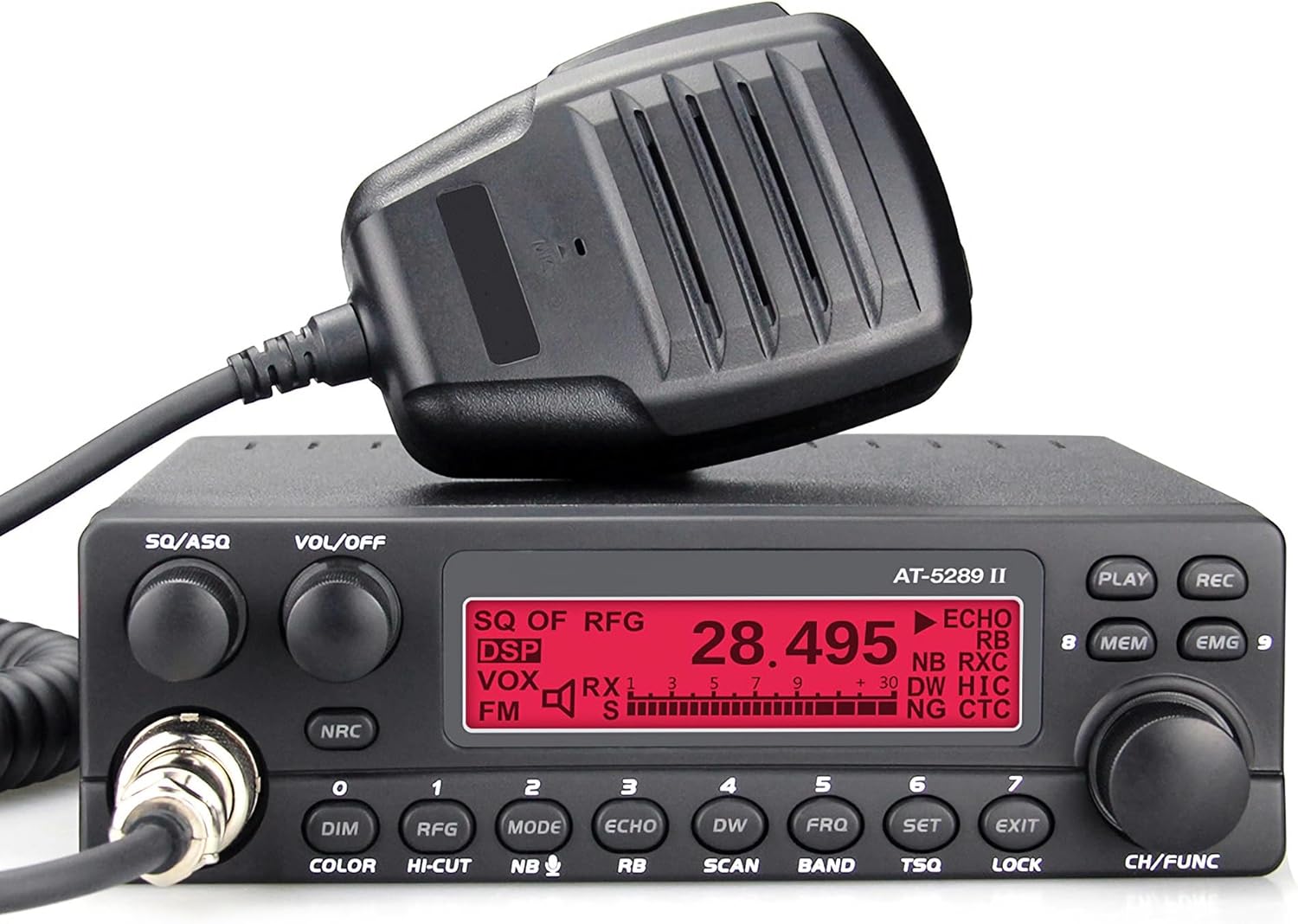
HESENATE AT-5289 II 10 Meter Transceiver Review


The world of 10 meter amateur radio continues to grow in popularity, especially among operators who enjoy long-distance contacts, mobile installations, and powerful AM/FM communication. The HESENATE AT-5289 II enters this market as a feature-packed 50 watt mobile transceiver designed for operators who want strong performance without stepping into the price range of premium export radios. With programmable functions, NRC noise reduction, dual watch capability, recording features, SWR monitoring, and CTCSS/DCS support, this radio offers far more than a basic 10 meter mobile rig.

The AT-5289 II is designed for operators who want flexibility. Whether mounted in a vehicle, installed as a compact base station, or used for highway communications and skip conditions, this radio tries to balance modern digital conveniences with traditional radio operation. It supports both AM and FM modes, offers customizable programming, and includes several audio enhancement tools that improve overall usability.

One of the first things operators notice about the AT-5289 II is its bold appearance. The large front display uses multi-color lighting with adjustable brightness levels, making it easy to read during daytime driving or nighttime operation. The layout feels modern while still maintaining the familiar look of classic mobile radios. Large buttons, a multifunction control knob, and an easy-to-read meter display give the radio a professional appearance.

Build quality is surprisingly solid for a radio in this category. The chassis feels durable and well suited for mobile use. The cooling system is effective, especially during longer transmissions at higher power levels. Heat management is important in a 50 watt radio, and the AT-5289 II handles it fairly well during extended operation.

Performance is where this radio begins to stand out. The 50 watt output provides strong transmit capability across the 10 meter band. Operators using properly tuned antennas will appreciate the extra power when band conditions begin opening up. On AM, the radio delivers loud and clean audio with impressive modulation. FM operation is equally strong and stable, making local contacts easy and enjoyable.

Receiver performance is also quite respectable. Weak signals remain understandable, and the radio handles crowded band conditions reasonably well. One of the major highlights is the NRC noise reduction system. This feature helps reduce background static and road noise, particularly in mobile environments. Operators driving on highways or using the radio near electrical interference sources will likely notice a major improvement in audio clarity.

The NRC system is especially useful during poor band conditions. Instead of constantly fighting static and hiss, operators can engage noise reduction to make incoming signals cleaner and easier to understand. While it will not completely eliminate atmospheric noise, it does improve the listening experience significantly compared to older radios without DSP-style filtering.

Another useful feature is dual watch operation. This allows operators to monitor two frequencies or channels at once. For mobile users, this is extremely helpful because it allows monitoring of local calling frequencies while still keeping track of another active conversation or repeater frequency.

The built-in recording feature is another uncommon addition in this class of radio. Operators can record conversations or voice notes directly from the radio, which can be useful for logging contacts, remembering frequencies, or reviewing important information later. While not every operator will use this daily, it is a feature many radios in this price range simply do not offer.

SWR monitoring and protection are also valuable additions. A poor antenna match can quickly damage high-power radios, especially during extended transmission periods. The AT-5289 II includes SWR display functionality and protection systems that help reduce the risk of damage when antenna conditions are not ideal. This makes the radio friendlier for newer operators who may still be learning antenna tuning and installation.

The radio also includes repeater shift functions and programmable settings, giving advanced users additional flexibility. Operators who enjoy modifying frequencies and customizing operation will appreciate the programmable nature of the radio. The menu system may take some time to learn initially, but most operators become comfortable with it after regular use.

Microphone audio quality is another strong point. The included microphone delivers loud and clear transmit audio with good punch on AM. Many operators report that export-style radios either sound overly compressed or distorted at higher power levels, but the AT-5289 II generally maintains clean communication when adjusted correctly.

The front speaker produces decent audio volume, though external speakers can further improve clarity in noisy vehicles. Like many mobile radios, adding a quality external speaker can greatly enhance the overall listening experience.

The display system deserves additional praise. Multi-color illumination options allow operators to customize the appearance of the radio to match their vehicle dashboard or operating environment. Adjustable dimming also helps reduce eye strain during nighttime driving.

For operators who enjoy customization, the programmable function keys are extremely useful. Frequently used functions can be assigned for quick access, reducing the need to dig through menus while operating mobile. This improves safety and convenience during driving.

One area where some users may experience a learning curve is the menu system itself. Because the radio includes many advanced functions, navigating through all settings can initially feel overwhelming for operators used to simpler radios. However, once familiar with the controls, the radio becomes much easier to operate efficiently.

Another consideration is that 10 meter operation depends heavily on band conditions. During solar peaks and active propagation periods, the radio truly shines with long-distance skip communication. During quieter conditions, operators may rely more heavily on local FM activity. Fortunately, the strong receiver and high transmit power help maximize performance whenever openings occur.

The AT-5289 II is particularly appealing to operators who enjoy export-style radios but want modern features often absent from older designs. Features like NRC noise reduction, recording capability, programmable controls, and SWR protection give the radio a much more current feel compared to traditional analog-only mobiles.

Specifications

AttributeHESENATE AT-5289 II
Power Output50 Watts
ModesAM / FM
Noise ReductionRX/TX NRC
Dual WatchYes
Recording FunctionYes
SWR MeterBuilt-In
CTCSS/DCSSupported
Repeater ShiftYes
DisplayMulti-Color LCD
ProgrammingProgrammable Functions
Mobile FriendlyExcellent

Final Thoughts

Overall, the HESENATE AT-5289 II is an impressive 10 meter transceiver that delivers strong value for operators wanting modern features, high transmit power, and flexible operation. It combines the personality of classic export radios with several updated technologies that improve daily usability. The NRC noise reduction system, recording functions, dual watch operation, and built-in SWR protection make it stand out from many competing radios in its class.

For mobile operators, highway communicators, and 10 meter enthusiasts looking for a powerful and feature-rich transceiver, the AT-5289 II offers an excellent combination of performance, customization, and capability. While the menu system may require some learning, the overall feature set and operating experience make this radio a strong contender in the growing 10 meter mobile market.

See The Hesenate AT-5289 II On Amazon!

Friday, September 5, 2025

In-Depth Review of Programming Amateur Radios with CHIRP: Ham Radio Setups Made Easy by Brian Schell


Amateur radio has always carried an aura of technical challenge, from setting up transceivers to mastering antenna systems. One of the hurdles new and seasoned operators alike often face is the complexity of programming radios, especially when handling frequency lists, repeater offsets, and memory channels. Brian Schell’s Programming Amateur Radios with CHIRP: Ham Radio Setups Made Easy takes on this often intimidating subject and offers readers a practical and approachable guide to mastering CHIRP, the free and widely used programming software.

Making Radio Programming Accessible

This book is crafted with accessibility in mind. Many amateur radio operators, particularly beginners, can be overwhelmed by the technical jargon and procedural details that accompany manual programming of handheld or mobile radios. Schell breaks down the concepts into clear explanations, showing that programming does not need to be a frustrating experience. His writing emphasizes practicality, with a focus on how to use CHIRP to simplify the process rather than burden readers with unnecessary theory.

Coverage of CHIRP Software

At the heart of the book is CHIRP, the open-source software that supports a wide variety of radios across multiple brands. The author provides step-by-step guidance on downloading, installing, and navigating the program’s interface. For those who may not consider themselves technologically inclined, the instructions are laid out in a way that encourages confidence and reduces anxiety about “breaking” the radio. The book explains how to connect radios to a computer using programming cables, how to read from and write to the radio, and how to manage large lists of frequencies effectively.

Practical Applications for Operators

What makes the book stand out is its focus on real-world application. Schell demonstrates how CHIRP can save operators time and effort by allowing them to prepare and organize channels in advance. Whether programming a handheld radio for local repeaters, setting up a mobile unit for a road trip, or preparing radios for an emergency event, the guidance is practical and actionable. The book also emphasizes the convenience of being able to share and import programming files, which makes it easier for clubs and groups to standardize setups across multiple radios.

Beginner-Friendly but Valuable for All Levels

Although the title suggests that the book is aimed at beginners, the content has value for more experienced amateur radio enthusiasts as well. Operators who have long relied on manual programming will appreciate the efficiency that CHIRP offers once they are guided through the process. The book also introduces tips and shortcuts that even seasoned operators might not have explored.

Organization and Clarity

The structure of the book follows a logical flow, starting with the basics and gradually building toward more advanced tasks. Schell’s explanations are straightforward, and he avoids overwhelming the reader with unnecessary technical language. Each section is digestible, making it easy for readers to follow along while working with their own radios. The approachable tone mirrors that of an experienced mentor sitting beside the reader, offering reassurance and encouragement.

Strengths of the Book

One of the greatest strengths of this book is how it bridges the gap between traditional ham radio practices and modern computer-aided conveniences. It transforms what is often seen as a tedious chore into a manageable and even enjoyable task. The focus on CHIRP, which is free and community-supported, ensures that readers are not locked into proprietary systems or software that might not support their particular radios.

Who Should Read This Book

This book is ideal for newcomers to amateur radio who want to avoid the steep learning curve of manual programming. It is also an excellent resource for operators who may have resisted learning CHIRP in the past, assuming it was too technical or unnecessary. Radio clubs and emergency communication groups will also find it useful, as it can streamline programming across multiple units and ensure consistent setups.

Final Thoughts

Programming Amateur Radios with CHIRP: Ham Radio Setups Made Easy is a practical and well-structured guide that demystifies one of the more frustrating aspects of amateur radio. Brian Schell provides readers with not only the knowledge but also the confidence to use CHIRP effectively. By presenting the information in an approachable manner, the book lowers barriers for beginners while still offering value to experienced operators. It is a worthy addition to any amateur radio operator’s bookshelf and an especially useful companion for anyone who wants to make the most of their radios without the hassle of manual programming.

Programming Amateur Radios With Chirp Available On Amazon!

Friday, August 22, 2025

In-Depth Review of the AnyTone AT-5888UV Dual Band Mobile Transceiver


The AnyTone AT-5888UV Dual Band Mobile Transceiver is a versatile VHF/UHF mobile radio designed for both amateur radio operators and those who need a reliable communication tool in their vehicles. It offers a solid combination of transmitting power, wide frequency coverage, and a range of customizable features, making it a popular choice among ham radio enthusiasts who need dependable mobile operation.

Build Quality and Design

At first glance, the AT-5888UV has a professional, rugged design suited for in-vehicle installation. The radio body feels sturdy, with a cooling system that ensures reliable operation even during extended use. Its display is large, backlit, and easy to read in both daylight and nighttime conditions, providing clear visibility of frequency, channel, and other key information. The detachable faceplate adds flexibility, allowing the user to mount the control panel separately for better convenience in compact vehicle interiors.

The buttons and knobs are well-arranged and responsive, giving the operator quick access to essential functions. The microphone is equipped with its own keypad, which allows direct frequency entry and channel navigation without needing to touch the main unit. This is especially helpful when driving, as it keeps operation intuitive and efficient.

Frequency Coverage and Power Output

The AT-5888UV covers both VHF and UHF bands, offering wide frequency coverage to suit a variety of communication needs. On the VHF side, it handles typical amateur frequencies, while on UHF it provides excellent range for local repeaters and short-to-mid-distance communications. Its transmission power is impressive, delivering up to 50 watts on VHF and 40 watts on UHF, giving users strong output to reach distant repeaters or maintain clear simplex communication.

This level of power is ideal for mobile use, especially in rural or hilly areas where terrain can obstruct weaker signals. The adjustable power settings allow the user to scale down transmission when full power is not necessary, conserving energy and reducing heat buildup.

Audio Quality

One of the standout features of the AT-5888UV is its excellent audio performance. The built-in speaker delivers loud, clear audio that can easily be heard even in noisy vehicle environments. Users also have the option of connecting an external speaker for improved clarity if desired. Transmit audio is equally impressive, producing natural, crisp voice quality that ensures the operator is easily understood on the other end.

Features and Functions

The AT-5888UV comes loaded with features that make it a flexible and user-friendly mobile transceiver. Dual-band, dual-display, and dual-receive functionality allow monitoring of two frequencies simultaneously. This is particularly useful for operators who want to keep track of both local repeaters and a simplex frequency at the same time.

Additional features include:

The programming of the radio can be handled either manually or through computer software, with the latter offering more convenience for managing large amounts of channel data.

Vehicle Installation and Use

Installing the AT-5888UV in a vehicle is straightforward, thanks to its compact design and detachable control head. The separation capability allows flexible mounting options, making it suitable for both small cars and larger vehicles. The cooling fan activates automatically during high-power transmissions to prevent overheating, ensuring long-term reliability.

During operation, the radio’s interface is intuitive. The combination of physical buttons, rotary knobs, and microphone controls makes it easy to adjust settings while on the move. The large, bright display provides immediate feedback on the chosen frequencies, power levels, and operating modes.

Performance in the Field

In actual use, the AT-5888UV performs consistently well. Its high output power ensures reliable connections even with distant repeaters, and reception is sensitive enough to pick up weak signals. Operators report stable performance without frequent signal dropouts, making it a dependable choice for both casual conversations and emergency communications.

The dual-receive function allows for seamless monitoring of multiple frequencies, which is highly practical during events, club activities, or while coordinating with groups across different bands. The cross-band repeat function also extends the utility of handheld radios, enabling users to boost communication coverage from portable units.

Final Thoughts

The AnyTone AT-5888UV Dual Band Mobile Transceiver is a feature-rich, powerful, and reliable mobile radio suited for amateur radio operators who want flexibility and robust performance in their vehicles. With strong output power, excellent audio quality, dual-receive capability, and convenient installation options, it offers a high level of functionality at a competitive value.

Whether for everyday mobile operation, long-distance repeater work, or emergency preparedness, the AT-5888UV stands out as a dependable and versatile choice for those who take communication seriously.

See The AnyTone AT-5888UV On Amazon!

Friday, April 18, 2025

In-Depth Review: AnyTone AT-5555N II Upgraded 10 Meter Radio High Power Mobile Transceiver


The AnyTone AT-5555N II is a high-powered, feature-rich mobile transceiver designed specifically for amateur radio operators who want strong performance, versatility, and ease of use in the 10-meter band. This upgraded version builds on the foundation of its predecessor, the AT-5555, and brings a range of improvements that appeal to both seasoned ham operators and newcomers who are stepping into the world of high-frequency mobile communication. In this review, we’ll delve into the capabilities, performance, build quality, and overall user experience of the AnyTone AT-5555N II to help you decide if it’s the right radio for your setup.

Power and Performance

One of the key selling points of the AnyTone AT-5555N II is its impressive power output. It offers 60 watts on AM and SSB modes, and 45 watts on FM. This power level is significant for a mobile 10-meter transceiver, allowing users to reach out further and communicate more reliably even under less-than-ideal propagation conditions. Whether you’re operating in AM, FM, or single sideband (SSB) modes, the radio delivers clear and consistent audio, with minimal distortion even at high output.

The radio covers 28.000 to 29.700 MHz in standard configuration, but it can be expanded for additional frequencies, making it more flexible for different operating preferences. Once expanded, it can serve a wider range of users looking to experiment with CB frequencies or use it as an export radio.

Signal Clarity and Audio Quality

Transmit and receive clarity is another strong suit of the AT-5555N II. Users will appreciate the crisp and natural-sounding audio both from the built-in speaker and when using an external speaker or mic. The microphone itself is robust and ergonomic, with up/down buttons and a channel switch, giving users convenient access to frequent adjustments.

Reception sensitivity is excellent, picking up weak signals with clarity. The squelch and RF gain controls allow for fine-tuning reception, helping to cut through noise and focus on the signals that matter. For those who use SSB frequently, the radio includes clarifier functionality that allows for precise tuning of voice signals, a critical feature for maintaining intelligible communication over long distances.

Build Quality and Display

Physically, the AT-5555N II is solidly built with a rugged chassis designed to endure the demands of mobile operation. The controls have a satisfying feel, and the front panel is logically laid out for intuitive operation. The volume, squelch, RF gain, and clarifier knobs are smooth and responsive, and the push buttons have a quality feel that suggests durability.

One of the standout improvements in the upgraded version is the multi-color LCD display. The screen is bright, readable in various lighting conditions, and can be customized to suit individual preferences. This includes the ability to change backlight colors, which is both a cosmetic and practical feature, especially for night-time operation. The display shows key operating information such as frequency, mode, power level, and signal strength, all in a clean, easily digestible layout.

Features and Functionality

The AT-5555N II comes with a suite of features that enhance its flexibility and usability. These include:

  • Multi-band support (post-expansion) for users who want more than just 10-meter capability

  • Automatic and manual squelch control, helping reduce unwanted noise

  • VOX (voice-operated transmit) for hands-free operation

  • NB/ANL (noise blanker and automatic noise limiter) for improved noise reduction

  • Dual Watch, which allows monitoring of two frequencies at once

  • Scan functions, which are useful for finding active frequencies quickly

  • Adjustable mic gain and RF power output, giving users control over performance

Programming the radio can be done manually via the front panel or with software for those who prefer PC-based control and memory management. This makes it easier to configure and store multiple channels and settings for specific communication needs.

Ease of Use

Despite its professional-grade features, the AnyTone AT-5555N II is surprisingly approachable for new users. The manual operation is straightforward, and those familiar with ham radios will find the menu system intuitive. For newcomers, there might be a slight learning curve, especially with understanding SSB operation and menu navigation, but nothing that a bit of hands-on time can’t overcome.

The user-friendly interface, combined with flexible controls and powerful performance, makes this radio suitable for both mobile and base station use. It’s compact enough to fit in most vehicles, and the front-facing speaker design helps ensure audio is heard clearly even in noisy environments.

Final Thoughts

The AnyTone AT-5555N II stands out as a powerful, dependable, and versatile mobile transceiver for the 10-meter amateur radio band. Its high output power, superior audio clarity, and extensive feature set make it an appealing choice for both hobbyists and serious operators. The ability to expand its frequency range and the inclusion of adjustable parameters offer a high degree of customization to suit different user preferences and conditions.

While it may be more advanced than basic CB radios, the AT-5555N II bridges the gap between entry-level and high-end ham gear by offering excellent value and performance. For those looking for a rugged, high-performance mobile transceiver with modern features and strong output capabilities, the AnyTone AT-5555N II is a solid investment.

Find The Anytone AT-5555N II On Amazon!

Sunday, December 1, 2024

In-Depth Review of the Icom IC-7100 HF/50/144/440 MHz Amateur Radio Transceiver


The Icom IC-7100 is a versatile, feature-rich amateur radio transceiver that combines modern design, robust functionality, and the convenience of digital modes like D-STAR. As a mobile HF/50/144/440 MHz unit, the IC-7100 caters to operators who value flexibility and advanced communication options. This review explores its key features, usability, performance, and overall value.


Key Features

  1. Frequency Coverage

    • Covers HF, 6m (50 MHz), 2m (144 MHz), and 70cm (440 MHz), offering a broad spectrum of operating bands.
    • Supports all major modes, including SSB, CW, AM, FM, RTTY, and D-STAR.
  2. Touch-Screen Interface

    • A monochrome resistive touch screen facilitates intuitive navigation through menus.
    • Includes physical buttons for frequently used functions, balancing touchscreen convenience with tactile feedback.
  3. D-STAR Integration

    • Offers native support for D-STAR digital voice and data communications.
    • Seamless operation on D-STAR repeaters and gateways, with support for features like DR (D-STAR Repeater) mode for quick configuration.
  4. Compact, Remote-Mount Design

    • Features a separate control head and main unit for flexible installation in mobile setups.
    • The control head is slim and angled, making it ideal for mounting in vehicles or small operating spaces.
  5. Built-In DSP

  6. 50 Watts Output Power

    • Delivers up to 100 watts on HF and 50 MHz, and 50 watts on 2m and 70cm.
    • Provides ample power for most mobile and base station operations.
  7. USB Connectivity

    • Built-in USB port supports direct computer connection for digital modes, rig control, and firmware updates.
    • No external sound card interface is required, simplifying digital operation setup.
  8. SD Card Slot

    • Allows for storage of configuration settings, D-STAR repeater information, and logs, enhancing portability and convenience.

Design and Usability

  • Control Head Design

    • The angled control head provides excellent visibility when mounted on a dashboard or desk. The screen is legible, even in bright lighting conditions, but the lack of a color display may feel dated compared to other modern transceivers.
  • User Interface

    • The touch screen simplifies menu navigation, though it requires a firmer press compared to modern capacitive touch screens. This design is robust but may take some getting used to.
  • Portability

    • The separation of the control head and main body allows for discrete installation in vehicles, with only the control head requiring dashboard space.

Performance

  1. Receiver Sensitivity and Selectivity

    • The IC-7100 boasts excellent receiver sensitivity, capable of pulling in weak signals on crowded bands.
    • DSP features like adjustable IF filtering, noise reduction, and twin PBT (Pass Band Tuning) enhance selectivity.
  2. Transmitter Performance

    • Solid transmit audio quality, with the included HM-198 hand microphone providing clear and natural audio.
    • Consistent output power across bands ensures reliable communication.
  3. Digital Modes and D-STAR

    • D-STAR operation is smooth, with DR mode making repeater configuration straightforward. The IC-7100 supports both voice and data communication over D-STAR.
  4. Mobile Operation

    • Performs well as a mobile rig, with minimal signal drift even under vehicle motion.
    • The remote-mount option and ease of powering from a 12V system make it ideal for on-the-go use.

Strengths

  • Broad frequency coverage and multi-mode operation.
  • Built-in DSP and D-STAR support.
  • Touchscreen interface simplifies complex menu navigation.
  • Compact and versatile design for mobile and base use.
  • Integrated USB port reduces the need for additional interfaces.
  • Good value for a radio with such a broad feature set.

Drawbacks

  • Monochrome screen may feel outdated compared to color displays on other transceivers.
  • Resistive touchscreen requires deliberate input, which some users might find less responsive.
  • No built-in antenna tuner; external tuner required for non-resonant antennas.
  • Limited memory slots for saving frequency presets compared to some competitors.

Overall Value

The Icom IC-7100 is an excellent choice for amateur radio operators who prioritize versatility, advanced digital features, and a compact design. While it lacks some modern luxuries like a color display, its performance and functionality outweigh these minor drawbacks. The inclusion of D-STAR, robust DSP, and all-band coverage make it a future-proof investment for both mobile and base station use.

At its price point, the IC-7100 offers tremendous value, making it a strong contender for amateurs seeking a reliable, feature-packed transceiver.


Who Should Buy It?

  • Mobile operators who need a compact, remote-mount transceiver.
  • Amateur radio enthusiasts looking to explore D-STAR and digital modes.
  • Multi-band/multi-mode users who want an all-in-one solution.

Rating: 4.5/5

The IC-7100 is a well-rounded transceiver that balances modern features with a straightforward, reliable design. Despite a few minor shortcomings, it remains a popular and respected choice in the amateur radio community.

Find The Icom 7100 On Amazon!

Wednesday, October 30, 2024

Review: FONGHOO HAM-UV25 Dual Band Mobile Radio Transceiver


Overview

The FONGHOO HAM-UV25 is a dual-band mobile radio transceiver designed for amateur radio enthusiasts, particularly for those who need reliable communication on the go. With its 25W output power and frequency range of 144-148 MHz (VHF) and 420-450 MHz (UHF), it promises robust performance for both casual users and serious operators. In this review, we will delve into its features, performance, ease of use, and overall value.

Design and Build Quality

The FONGHOO HAM-UV25 sports a compact and rugged design, making it suitable for installation in various vehicle types. The radio measures approximately 6.7 x 5.1 x 1.8 inches, which allows for flexible mounting options without taking up excessive space. The front panel features a large, easy-to-read LCD display that shows frequency, channel, and status information.

The build quality feels sturdy, with well-constructed knobs and buttons that provide tactile feedback. The unit includes a detachable microphone with a coiled cord, allowing for easy communication without being tethered directly to the device.

Key Features

  1. Dual-Band Operation: The ability to operate on both VHF and UHF bands allows users to access a wide range of frequencies and communicate with a variety of other amateur radios.

  2. 25W Output Power: The 25W output ensures good signal strength, enabling clear communications over long distances, depending on terrain and conditions.

  3. Wide Frequency Range: Covering 144-148 MHz and 420-450 MHz, this transceiver allows for versatile usage in various amateur radio activities, including local and emergency communications.

  4. CTCSS/DCS Functionality: The inclusion of Continuous Tone-Coded Squelch System (CTCSS) and Digital-Coded Squelch (DCS) adds an extra layer of functionality, allowing for selective calling and reducing unwanted noise.

  5. Memory Channels: The HAM-UV25 can store up to 200 memory channels, allowing users to quickly switch between frequently used frequencies.

  6. Emergency Alarm Function: This feature can be invaluable in emergencies, ensuring that help can be requested promptly.

  7. Wide/Narrow Bandwidth Selection: Users can toggle between wide and narrow bandwidths, providing more control over signal clarity and range.

  8. Included Accessories: The package comes with necessary accessories including a power cable, mounting bracket, and user manual.

Performance

The performance of the FONGHOO HAM-UV25 is commendable, especially for a mobile transceiver in its price range. Users report clear and stable audio quality during transmission and reception, with minimal distortion. The 25W output power proves effective in both urban and rural settings, allowing for good range.

In practical use, the dual-band functionality shines, providing seamless switching between VHF and UHF channels. The CTCSS/DCS features work well in filtering out unwanted communications, allowing for more focused conversations. Users have noted that the radio performs exceptionally well in various conditions, including during adverse weather.

Ease of Use

While the FONGHOO HAM-UV25 is packed with features, it is relatively user-friendly. The user interface is straightforward, with clearly labeled buttons and a menu system that is easy to navigate. New users may take some time to familiarize themselves with all the functions, but the included manual provides clear instructions.

Programming the radio for specific frequencies is simple, and the memory channels can be easily accessed. The backlit display is a thoughtful touch, making it usable in low-light conditions, such as nighttime driving.

Value for Money

Considering its features, performance, and build quality, the FONGHOO HAM-UV25 offers excellent value for amateur radio operators. It provides a robust set of functionalities at a competitive price point, making it accessible for both newcomers and seasoned users.

Pros and Cons

Pros:

  • Dual-band operation for versatile communication
  • Strong 25W output power
  • Clear audio quality
  • Sturdy build and design
  • User-friendly interface
  • Good memory channel capacity

Cons:

  • Initial learning curve for complete beginners
  • Limited advanced features compared to higher-end models

Conclusion

The FONGHOO HAM-UV25 Dual Band Mobile Radio Transceiver is a good choice for amateur radio enthusiasts seeking a reliable and powerful mobile solution. Its blend of robust performance, user-friendly features, and excellent build quality make it a worthy investment for anyone looking to enhance their communication capabilities while on the road. Whether you’re a seasoned ham or a newcomer, the HAM-UV25 is likely to meet or exceed your expectations, making it a commendable addition to your radio equipment.

Check Out The FONGHOO On Amazon!

Monday, October 21, 2024

In-Depth Technical Review of the QYT KT-780PLUS Dual Band Car Radio


Overview

The QYT KT-780PLUS is a dual-band mobile ham radio designed for amateur radio enthusiasts and professionals alike. It operates on the VHF (136-174 MHz) and UHF (400-480 MHz) bands, providing a powerful 75W output, making it suitable for use in both car and truck applications. This review will cover its key features, performance, usability, and potential drawbacks.

Key Features

  1. Dual Band Operation:

    • Covers both VHF and UHF frequencies, allowing for versatile communication options.
    • Suitable for various amateur radio activities and emergency communication.
  2. Output Power:

    • Offers three power levels: 5W, 25W, and 75W, allowing users to select the optimal output based on their needs and conditions.
  3. Channel Capacity:

    • Supports up to 256 channels, which can be programmed for different frequencies, making it suitable for multi-channel communication.
  4. Dual Watch Function:

    • Allows monitoring of two frequencies simultaneously, which is useful for emergency situations or when maintaining communication across multiple channels.
  5. Large LCD Display:

    • Features a clear, backlit LCD display that shows important information, including frequency, channel number, and signal strength.
  6. User-Friendly Interface:

    • Simple controls and programmable keys make it easy to operate, even for beginners.
  7. Wide Frequency Range:

    • The KT-780PLUS is capable of receiving a wide range of frequencies, making it useful for listening to other services beyond ham radio.
  8. Emergency Features:

    • Includes an emergency alarm function that can be activated to alert others in case of an emergency.

Performance

Audio Quality

The KT-780PLUS delivers clear audio quality with minimal distortion, even at higher output power levels. The built-in speaker is loud enough for use in noisy environments like vehicles, ensuring that communications are easily heard.

Range and Reception

The radio performs well in terms of range, thanks to its high output power. Users have reported successful communications over several miles, depending on terrain and conditions. The sensitivity of the receiver is commendable, picking up weak signals effectively.

Heat Management

During extended use at maximum power (75W), the KT-780PLUS remains relatively cool, thanks to its efficient heat dissipation design. This is crucial for maintaining performance and longevity.

Usability

Installation

Installation is straightforward, with a compact design that fits well in most vehicle configurations. The unit includes a mounting bracket and all necessary hardware. Users should ensure proper antenna installation for optimal performance.

Programming and Customization

The radio can be programmed either manually or via PC using software available from the manufacturer. This allows for extensive customization of channels, frequencies, and settings. The ability to save configurations is a significant advantage for users who frequently switch between different setups.

User Manual

The included user manual is detailed, providing clear instructions for setup, operation, and troubleshooting. However, some users may find the programming procedures a bit complex initially.

Drawbacks

  1. Limited Built-in Features:

    • Compared to more expensive models, the KT-780PLUS lacks some advanced features like DTMF, CTCSS, and additional digital modes.
  2. Weight and Size:

    • While compact for a mobile radio, some users may find it slightly heavier and bulkier than expected, which could be a concern for limited dashboard space.
  3. Antenna Requirement:

    • The performance is highly dependent on the quality of the external antenna used. A subpar antenna can significantly affect range and reception.

Conclusion

The QYT KT-780PLUS is a robust and versatile dual-band mobile ham radio that delivers excellent performance and functionality for both novice and experienced operators. Its powerful output, extensive channel capacity, and dual watch functionality make it a valuable tool for communication in various scenarios, from casual use to emergency situations.

While it has some limitations regarding advanced features and size, its audio quality, ease of use, and reliable performance make it a worthy investment for anyone looking to enhance their mobile communication capabilities. For amateur radio enthusiasts seeking a balance of price and features, the KT-780PLUS stands out as a solid choice.

See The QYT KT-780PLUS On Amazon!

Radioddity DB35-UV Dual Band Mobile Radio 35W Review

The Radioddity DB35-UV is a compact dual-band mobile radio designed for amateur radio operators who want more capability than a handheld...

Search This Blog