Friday, February 20, 2026

Retevis Ailunce HS4 10 Meter Radio – In-Depth Review


The Retevis Ailunce HS4 10 Meter Radio is a feature-packed amateur transceiver designed for serious ham radio operators who want robust performance on the 10 meter band. It combines high power output, multiple operating modes, advanced signal-processing features, and protective functions into a solid base-station and mobile platform. In this in-depth review, we’ll explore every facet of this radio — from build quality and features to performance, usability, and who it’s best suited for.


Overview and Purpose

The Ailunce HS4 is a high-power 10 meter amateur radio transceiver engineered for CW, SSB, AM, FM, and PA mode operation. Its versatile mode support makes it suitable for a wide range of communication styles — from contesting and long-distance DXing in SSB and CW to casual contacts on FM and AM. With power ratings up to 100 watts and smart features like noise reduction and SWR protection, the HS4 aims to bridge the gap between entry-level rigs and more expensive base stations.


Build Quality and Design

Right out of the box, the HS4 feels solid and well constructed. The chassis is rugged metal, giving it durability for both base station use and in-vehicle mounting. The front panel is straightforward, with a clear display, tactile buttons, and an intuitive knob layout. The display provides frequency readout, mode indicators, signal strength, and other operational parameters at a glance.

The ergonomics avoid unnecessary complexity. Larger knobs for volume and tuning, coupled with well-spaced buttons, make adjustments easy even in the heat of operation. The menu system is logical, and while there’s a learning curve for beginners, active operators will appreciate the thoughtful control placement.


Operating Modes and Flexibility

One of the strongest points of the HS4 is its broad mode support:

  • CW (Continuous Wave): Excellent for Morse code operators with good stability and responsiveness.

  • SSB (Single Side Band): Clear voice reproduction and good AGC response help make SSB operation enjoyable and effective.

  • AM and FM: While less common on 10 meters, these modes are supported and perform reliably for local contacts or repeater work.

  • PA Mode: Allows the transceiver to function as a linear amplifier driver or interface for other station components.

The inclusion of CW, SSB, AM, and FM in a single radio adds considerable versatility that appeals to those who operate in multiple styles or enjoy experimenting.


Power Output and RF Performance

With up to 100 watts of high-power output, the HS4 is capable of delivering solid signal strength for both casual and serious contacts. This power level is respectable in the 10 meter class and enables effective communication over long distances when band conditions permit.

Receiver sensitivity and selectivity are strong, with noise reduction technology helping to improve intelligibility in crowded or noisy band conditions. Operators will appreciate how the radio handles weak signals with commendable clarity and minimizes background static.

The automatic SWR protection provides a layer of safety, reducing the risk of damage from high reflected power when antenna matching isn’t perfect. This feature is especially helpful for operators who frequently change antennas or operate portable setups.


Advanced Features

The HS4 isn’t just about raw power. It also includes a suite of features designed to improve the experience:

  • Noise Reduction (NR): Helps cut down on static and background noise to make signals easier to hear.

  • ASQ (Automatic Squelch): Ensures that only signals above a certain strength are heard, reducing irritation from weak noise.

  • SWR Protection: Monitors the standing wave ratio and helps protect the transmitter from mismatches.

  • Memory Channels: Easy access to saved frequencies and settings.

  • RIT/XIT (Receiver/Transmitter Incremental Tuning): Enables fine tuning without changing the primary dial frequency — especially useful for SSB and CW work.

These features elevate the HS4 above simple rigs and make it a capable tool for operators who want smart functionality without complexity.


User Experience

For seasoned hams, the learning curve is modest. The radio’s logic and documentation are solid enough that you quickly get comfortable navigating modes, adjusting filters, setting noise reduction levels, and storing memories. For novices, there’s more to learn, but the rewards are worth the effort: a flexible rig with capabilities many base stations lack at a similar price point.

The display is easy to read in various lighting conditions, and the tactile controls give confidence during operation. Audio quality from the internal speaker is adequate for most uses, though many operators will want an external speaker for the richest sound, particularly in SSB.


Pros and Cons

Pros:

Cons:

  • Learning curve for beginner operators

  • Menu system could be more streamlined

  • Internal speaker adequate, but not exceptional


Who Is This Radio For?

The Retevis Ailunce HS4 is ideal for:

It’s less suited for complete beginners without any guidance, simply because the menuboard and settings require familiarity. However, motivated newcomers who are willing to learn will find the radio rewarding.


Conclusion

The Retevis Ailunce HS4 10 Meter Radio delivers a compelling mix of power, features, and usability. From its durable construction to its broad mode support and smart listening aids like noise reduction and ASQ, it punches well above its price. While not perfect, the HS4 represents excellent value for operators who want a capable 10 meter base station or mobile rig without spending top-tier dollars. For ham radio enthusiasts interested in solid performance and flexible operation, this radio is a strong contender.

See The Retevis HS4 On Amazon!

Friday, February 13, 2026

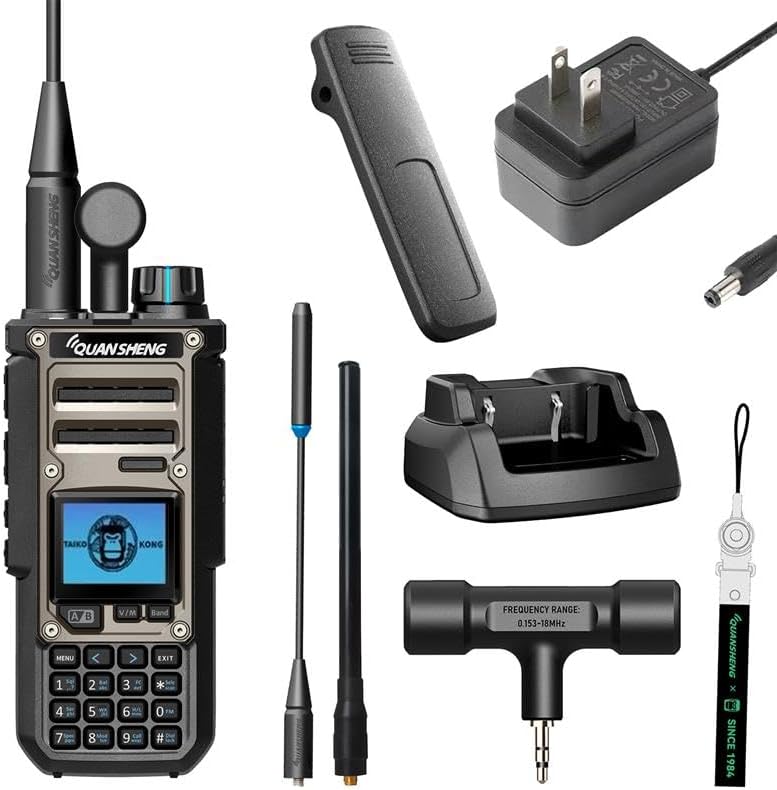
QUANSHENG TK11(8) Taiko Kong Ham Radio — In-Depth Review


The QUANSHENG TK11(8) Taiko Kong is a feature-rich portable multiband transceiver that aims to satisfy both novice and experienced radio enthusiasts. Boasting coverage from HF through VHF and UHF, up to 10 W of power output, and a suite of modern amenities like a built-in spectrum analyzer and weather alert capabilities, this rig stakes its claim as a versatile all-around communications tool. In this review we’ll break down the key aspects of the radio, explore its strengths and weaknesses, and help you decide whether it’s a match for your needs.


Design and Build Quality

Physically, the QUANSHENG TK11(8) has a compact, portable footprint that’s immediately noticeable. The form factor is reminiscent of a scaled-down mobile radio—rugged but not overly bulky. The housing feels solid in hand, with tactile buttons and a rubberized rotary control that give confidence when adjusting settings on the fly. The display is a backlit LCD that’s readable in most lighting conditions, though some users might find the text and graphics a bit crowded given the amount of information presented.

Overall build quality is commendable for the price class. The chassis doesn’t feel flimsy, and the knobs and switches maintain solid feedback. The unit also feels like it would hold up well in a field environment, which is exactly where many portable operators will want to use it.


Frequency Coverage and Modes

One of the most compelling aspects of the TK11(8) is its broad frequency coverage. It spans from 0.153 MHz through 1160 MHz, a range that encompasses HF, VHF, and UHF bands. This means you can listen to (and transmit on, where licensed and permitted) an enormous array of signals, from HF shortwave broadcasts to local VHF/UHF repeaters.

Supported modulation modes include AM, FM, and SSB (single sideband). This trio is essential for serious operators: FM for local voice communications, AM for general HF listening, and SSB for long-range amateur contacts. The inclusion of SSB is particularly noteworthy because it allows access to the heart of HF amateur voice operations, which many handheld or low-cost rigs omit.

Despite the extensive coverage, using all of these bands effectively demands a bit of learning. Frequency ranges this wide mean that some advanced configuration is necessary, but the radio’s menu system and controls make that doable once you get familiar with them.


Power and Performance

With up to 10 W of RF output on capable bands, the TK11(8) delivers respectable power for a portable rig. On HF this level of output, combined with a decent antenna, can often get you heard well beyond local horizons. On VHF and UHF, 10 W is more than sufficient for strong simplex contacts or repeater work.

Receiver performance is generally solid. Sensitivity is good across the supported bands, and despite inevitably encountering strong signal overload in dense RF environments, overall performance stays usable for casual monitoring and active operation. The front-end and filtering are adequate for most situations, though competitive or contest-grade filtering isn’t present. Still, for general amateur use, emergency comms, and exploration, the performance is more than acceptable.


Key Features

What sets the TK11(8) apart from many basic transceivers are its extended features:

Spectrum Analyzer
A built-in spectrum display lets you visually scan the band you’re listening to. This can help you spot active signals, noise levels, and areas of quiet, which is particularly useful on busy HF bands.

NOAA Weather Alert
For those in the United States, automatic NOAA weather alerts keep you abreast of severe conditions. The radio can monitor and warn of emergency broadcasts—a nice safety addition for outdoor operators.

Dual Watch
This feature allows monitoring of two frequencies simultaneously. For example, you can listen to a calling frequency while keeping an eye on an active chat channel. Dual watch enhances situational awareness without the need to switch back and forth manually.

Smart Code Breaker
The “Smart Code Breaker” name refers to the radio’s ability to decode certain digital or tone sequences automatically—helpful for accessing repeaters or identifying digital transmissions without manual tone entry.


Usability and Interface

Operating a multiband radio with this level of capability inevitably comes with a learning curve. The menu structure and button layout are logical, but not instantly intuitive—especially for newcomers to radios that extend beyond basic handheld functions. The user interface isn’t as polished as mid-tier commercial rigs, but it gets the job done with practice.

The display conveys a lot of information, which is both a strength and a potential source of confusion at first. Users report that spending some time with the manual pays dividends quickly, especially as you begin to navigate band changes, mode selections, and feature activation.


Accessories and Expandability

The radio typically comes with essential accessories like a power cable and a basic antenna. Many operators will choose to invest in higher-quality, resonant antennas to get the most from HF performance. The power input is designed for portable setups (often 12 V DC), and the radio works well with battery packs or vehicle systems.

Expandability via external accessories is straightforward. You can connect to external speakers, tuners, or even computers for digital modes, though some interfacing gear may be required depending on your configuration.


Who Is This Radio For?

The QUANSHENG TK11(8) is ideal for:

  • Radio hobbyists seeking versatile, wide-range capability without investing in multiple rigs.

  • Portable operators and field communicators who want to cover HF through UHF in one package.

  • Amateur operators who appreciate extra features like spectrum analysis and dual watch.

  • Emergency prep enthusiasts who find value in weather alerts and broad listening options.

It might be less ideal for absolute beginners seeking plug-and-play simplicity or for advanced contest operators who demand high-end filtering and top-tier ergonomics. However, intermediate users and experimenters will likely find a lot to enjoy.


Pros and Cons Summary

Pros:
• Broad frequency coverage (HF through UHF)
• Multiple modulation modes (AM, FM, SSB)
Useful extras like spectrum analyzer and weather alerts
• Dual watch capability
• Compact and portable design
• Up to 10 W output for solid communications

Cons:
• Learning curve for first-time multiband operators
• UI and display information density can be overwhelming at first
• Performance is good but not professional contest grade
Antenna quality included may limit HF performance until upgraded


Conclusion

The QUANSHENG TK11(8) Taiko Kong multiband transceiver represents a compelling blend of features, performance, and portability at its price point. It isn’t just a radio that covers many bands—it packs useful operational tools that enhance real-world usability. While not a polished flagship model, this rig offers serious value for amateur radio enthusiasts who want to explore the spectrum without juggling multiple devices.

If you’re ready to invest a little time learning its interface and enhancing its antenna setup, the TK11(8) can become a central piece of a flexible and capable amateur station—whether at home, in the field, or on the go.

See The Quansheng TK11 On Amazon!

Friday, February 6, 2026

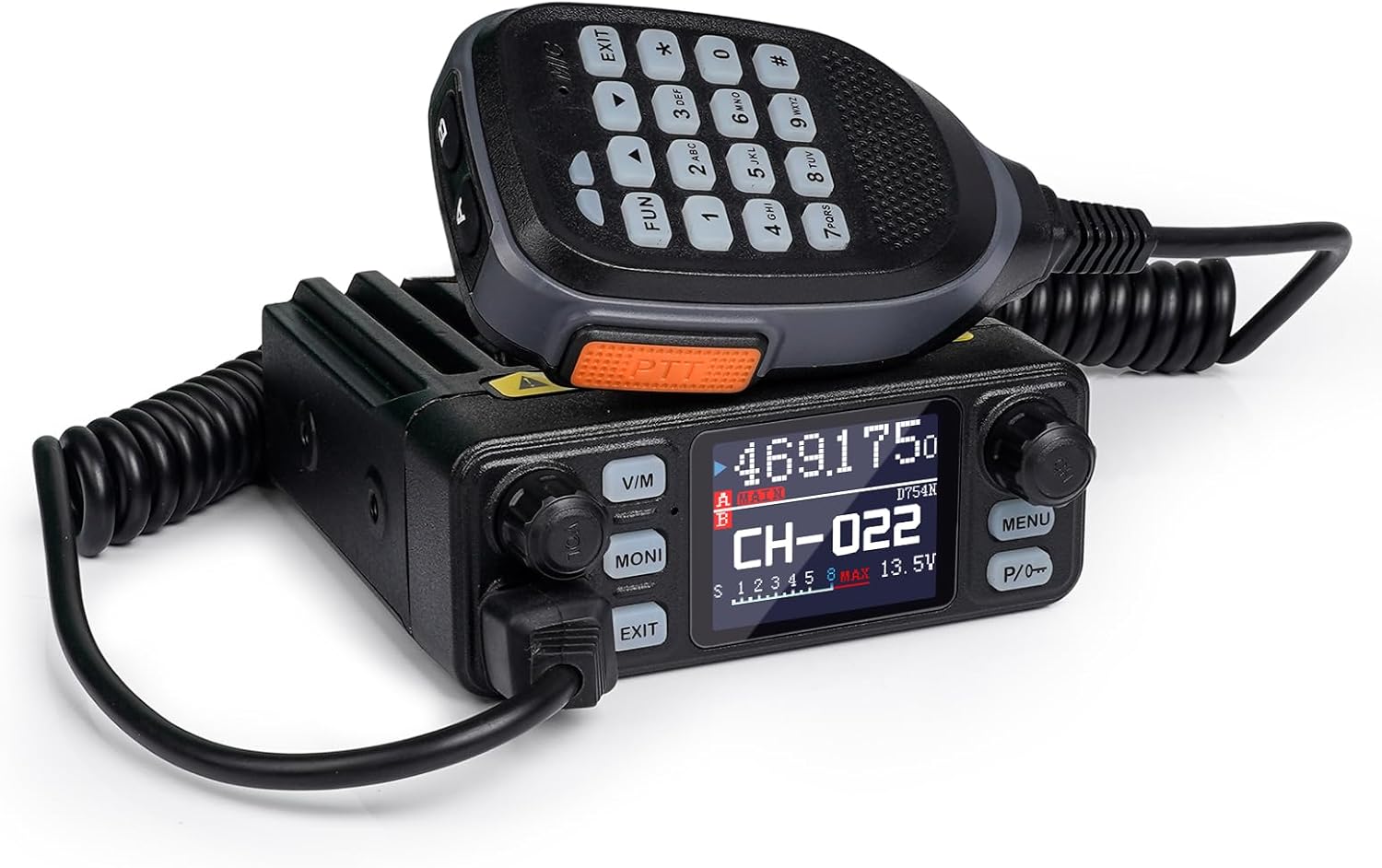
KSUN UV5200D Dual Band Mobile Amateur Radio Transceiver Review


The KSUN UV5200D is a dual band mobile amateur radio transceiver designed for operators who want an affordable entry into mobile VHF and UHF communications. It targets users who need more power and better performance than a handheld radio, but who are not looking to spend the money required for higher-end commercial or Japanese-brand mobile rigs. As a budget mobile radio, it focuses on core functionality, simplicity, and practical performance.

Design and Build Quality

The UV5200D features a compact mobile form factor that fits well in most vehicles. Its small chassis makes it easy to mount under a dashboard, on a center console, or in tight spaces where larger radios may be impractical. The housing is primarily plastic, which helps keep weight down, though it does not feel as rugged as premium metal-cased radios. That said, it is sturdy enough for normal mobile use and casual base station operation.

One of the standout features is the color display. The screen is clear, bright, and easy to read, showing frequency information, channel names, signal strength, and operating status. The backlit keypad and buttons are useful for night driving or low-light environments. The included microphone feels basic but functional, with clear audio pickup for typical mobile operation.

The radio comes with essential installation accessories such as a mounting bracket and power cable. An antenna is not included, which is common in this category, so users should plan on purchasing a suitable external VHF/UHF antenna to get the best performance.

Frequency Coverage and Operating Capabilities

The KSUN UV5200D operates on the standard amateur 2-meter and 70-centimeter bands, covering VHF and UHF frequencies commonly used for local simplex communication and repeater access. This makes it suitable for daily ham radio use, emergency communication, and monitoring local activity.

The radio supports dual band operation with the ability to monitor two frequencies, allowing users to listen to traffic on both VHF and UHF without constantly switching bands. This is especially useful when monitoring a local repeater while keeping an ear on a simplex or emergency frequency.

It offers a respectable number of programmable memory channels, making it easy to store repeaters, simplex frequencies, and commonly used channels. Both narrowband and wideband operation are supported, which is important for compatibility with different systems and local regulations.

Transmit Power and Range

One of the biggest advantages of the UV5200D over handheld radios is its higher transmit power. With output levels reaching up to around 25 watts, it provides significantly better range and signal penetration when paired with a good mobile antenna. In real-world conditions, this extra power can make the difference between a marginal signal and a solid, readable contact.

Actual communication range depends heavily on terrain, antenna quality, mounting location, and local interference. In flat or elevated areas with a properly installed antenna, the radio can comfortably reach repeaters and simplex contacts many miles away. For urban or hilly environments, the added power still provides a noticeable improvement over low-power handheld units.

The radio operates from a standard 13.8-volt DC power source, making it compatible with vehicle electrical systems and most amateur radio power supplies for home use. An internal cooling fan helps manage heat during longer transmissions and higher power operation.

Audio Quality and Squelch Performance

Audio output from the built-in speaker is loud and clear enough for mobile environments, even with road noise present. Voice clarity is generally good, and incoming transmissions are easy to understand. The microphone provides acceptable transmit audio, though it does not offer the rich, broadcast-style sound found on higher-end radios.

The squelch system works reliably and includes support for CTCSS and DCS tones. These features are essential for repeater operation and for filtering out unwanted signals or noise. Once properly adjusted, the squelch keeps the radio quiet when no valid signal is present while opening quickly on incoming transmissions.

User Interface and Ease of Use

The UV5200D is relatively straightforward to operate, especially for users already familiar with basic amateur radio concepts. The color display and menu system are easy to follow, and most common functions can be accessed without excessive menu diving. The buttons are small but responsive, and the backlighting helps prevent mistakes during nighttime use.

Manual programming from the front panel is possible, though it can be time-consuming if many channels need to be entered. As with many budget radios, programming software support may be limited or unofficial, which could be a drawback for users who prefer computer-based configuration.

Strengths and Weaknesses

The main strengths of the KSUN UV5200D include its affordable price, dual band operation, relatively high transmit power, and easy-to-read color display. It delivers solid performance for everyday mobile use and provides good value for operators who need a simple, capable VHF/UHF radio.

On the downside, the overall build quality is clearly aimed at the budget market, and it lacks advanced features such as digital voice modes, cross-band repeat capability, or sophisticated scanning options. Community support and documentation may also be limited compared to more established brands.

Who This Radio Is Best For

The KSUN UV5200D is well suited for new amateur radio operators setting up their first mobile station, as well as experienced hams looking for an inexpensive secondary radio. It works well for local communications, repeater use, and basic emergency preparedness setups.

Operators who need advanced features, rugged construction, or long-term heavy use may want to look at higher-end options. However, for casual operation and budget-conscious users, this radio covers the essentials effectively.

Final Thoughts

The KSUN UV5200D is a practical and affordable dual band mobile amateur radio that focuses on the fundamentals. It offers enough power, clear audio, and useful features to handle most VHF and UHF communication needs without unnecessary complexity. While it does not compete with premium radios in terms of features or build quality, it succeeds in delivering solid performance at a price point that makes mobile amateur radio accessible to more operators.

For those seeking a simple, budget-friendly mobile transceiver for everyday use, the KSUN UV5200D is a reasonable and capable choice when paired with a quality antenna and proper installation.

See The KSUN UV5200D On Amazon!

Retevis Ailunce HS4 10 Meter Radio – In-Depth Review

The Retevis Ailunce HS4 10 Meter Radio is a feature-packed amateur transceiver designed for serious ham radio operators who want robust p...

Search This Blog