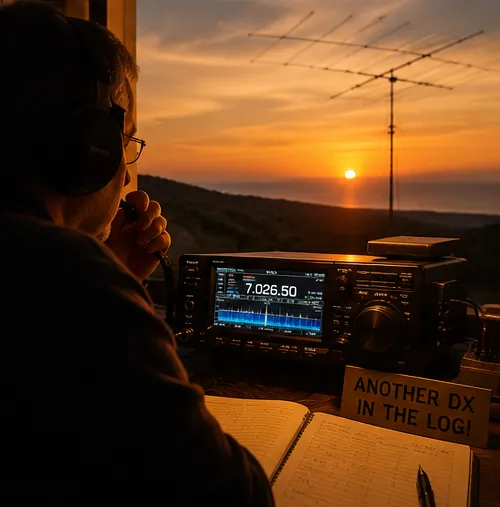
Amateur radio is a fascinating hobby that combines communications, electronics, science, technology, public service, and the opportunity to connect with people around the world. It can be enjoyed by people who want to talk to other radio operators, experiment with antennas, communicate through satellites, participate in emergency communications, or explore the technical side of radio.
However, there is one obstacle that prevents many people from getting started: obtaining an amateur radio license. For someone who has never used a radio before, the licensing process can seem intimidating. There are unfamiliar terms to learn, radio regulations to understand, technical subjects to study, and an examination to pass.
This is where Ham Radio Prep enters the picture.
Ham Radio Prep is an online education company dedicated to helping people prepare for their amateur radio licensing examinations and learn more about the hobby. Its training programs are designed to make studying more accessible through structured lessons, videos, quizzes, practice examinations, and other learning tools.
The company serves two important audiences. The first is people who have never held a ham radio license and want to enter the hobby. The second is licensed operators who want to expand their privileges by upgrading from Technician to General or from General to Amateur Extra.
In this review, we will examine what Ham Radio Prep offers, how its training programs work, why its mission matters to the amateur radio community, and what prospective students should consider before purchasing a course.
What Is Ham Radio Prep?
Ham Radio Prep is an online training provider specializing in amateur radio licensing education and operating instruction. Its website, HamRadioPrep.com, offers courses designed to help students prepare for the three United States amateur radio license classes: Technician, General, and Amateur Extra.
Rather than requiring students to attend a traditional classroom course at a particular time and location, Ham Radio Prep provides online educational materials that can be studied at an individual's own pace.
This approach is particularly useful for people who work full-time, have family responsibilities, live far from an amateur radio club, or simply prefer learning at home.
The company's training system combines several educational formats, including video instruction, written lessons, quizzes, interactive learning activities, and practice tests. This gives students more than one way to review the material and reinforce what they have learned.
A person who struggles to understand a technical concept from a written explanation may find that a video makes it easier to understand. Someone who learns best by answering questions can spend more time working through quizzes and practice examinations.
The goal is to make the licensing process less confusing and help students approach the examination with greater confidence.
The Mission Behind Ham Radio Prep
One of the most important aspects of Ham Radio Prep is its stated mission to advance amateur radio and help preserve its history while encouraging a stronger future for the hobby.
This mission addresses an important issue facing amateur radio: the need to introduce new generations to a service that has been around for more than a century.
Ham radio has changed enormously over the decades. Early operators experimented with spark-gap transmitters, Morse code, and rudimentary antennas. Modern operators can communicate through satellites, use digital communication modes, operate software-defined radios, experiment with computer-controlled stations, and make contacts across continents using the internet-free radio spectrum.
Despite these technological advances, amateur radio still depends on people who are willing to learn the fundamentals, obtain their licenses, build stations, make contacts, and share their knowledge with others.
Every new licensee represents another person who can participate in this community.
Ham Radio Prep attempts to make the educational portion of that journey easier. By providing organized courses and convenient online study options, the company offers a pathway for people who might otherwise postpone getting licensed because they do not know where to begin.
Its mission is particularly relevant to prospective operators who have an interest in radio but feel that the technical material is beyond their abilities.
You do not need to be an engineer, an electronics expert, or an experienced radio enthusiast to begin studying for an amateur radio license. You need a willingness to learn, a suitable study plan, and a way to prepare for the examination.
A company that helps people overcome that initial barrier can contribute meaningfully to the growth of the hobby.
Why Getting Started in Ham Radio Can Seem Difficult
Imagine someone who has just purchased a handheld radio or watched a video of an operator communicating with another country.
The possibilities sound exciting, but questions quickly arise.
What frequencies can be used? What is a repeater? What is the difference between VHF, UHF, and HF? How do antennas work? What are call signs? Why does the Federal Communications Commission regulate amateur radio? What is the difference between the Technician, General, and Amateur Extra licenses?
For a beginner, the number of unfamiliar terms can be overwhelming.
There is also the licensing examination itself. Students must learn rules, operating procedures, technical concepts, and other information covered by the applicable examination question pool.
Some people attempt to memorize questions without fully understanding the concepts. Others purchase books but struggle to develop a consistent study routine. Some begin studying enthusiastically and gradually lose momentum because they do not know how to measure their progress.
Ham Radio Prep addresses these challenges by organizing the learning process into lessons and providing tools that help students review the material.
Instead of approaching the examination as one enormous collection of unfamiliar information, a student can work through smaller sections, complete quizzes, identify weak areas, and continue practicing until the material becomes more familiar.
That structure can be especially valuable for someone who has never studied radio technology before.
The Three Amateur Radio License Levels
To understand the company's course offerings, it helps to understand the United States amateur radio licensing system.
The FCC currently provides three license classes, each offering different operating privileges.
Technician Class: The Starting Point
The Technician license is the entry-level amateur radio license in the United States.
It is an excellent starting point for someone who wants to explore ham radio without immediately diving into every aspect of high-frequency communications.
Technician license holders have substantial privileges on VHF and UHF frequencies, including access to many local repeater systems and opportunities for simplex communications. They also have limited privileges on certain HF bands.
With a Technician license, a new operator can learn to program a handheld radio, communicate through local repeaters, participate in club activities, explore amateur radio digital systems, and begin learning about antennas and radio equipment.
Some operators use their first license to support hiking, camping, emergency preparedness, community events, or other activities that benefit from reliable radio communications.
For a newcomer, the Technician examination is the first major step toward becoming a licensed operator.
Ham Radio Prep's Technician License Course is designed specifically for this starting point. It provides a structured way to prepare for the examination without requiring previous amateur radio experience.
General Class: Expanding Your Horizons
The General license is the next level for operators who want access to substantially more amateur radio frequencies and activities.
One of the biggest attractions of upgrading to General is the expanded access to HF communications. These frequencies can make it possible to communicate over much greater distances than are typical of ordinary local VHF and UHF operations.
Depending on propagation conditions, equipment, antenna performance, and the frequencies used, an HF operator may communicate with stations hundreds or thousands of miles away.
General license holders can explore worldwide contacts, participate in long-distance contests, experiment with digital modes, pursue awards, and develop skills in HF station construction and operation.
General privileges are also useful for operators interested in emergency communications. HF radio can support communications over long distances when conventional communication infrastructure is damaged or unavailable, although successful operation depends on equipment, power, propagation, training, and other conditions.
The General examination introduces more advanced subjects than the Technician examination. It requires additional study, but it opens the door to a much broader portion of amateur radio.
Ham Radio Prep offers a dedicated General License Course for operators who have already earned their Technician license and want to move forward.
Amateur Extra Class: Reaching the Highest License Level
The Amateur Extra license is the highest United States amateur radio license class.
Some operators pursue Extra because they want the broadest available amateur radio operating privileges. Others enjoy the challenge of mastering additional technical and regulatory knowledge.
Extra license holders receive access to additional frequency segments within certain amateur bands. These privileges can be valuable for operators interested in DXing, contesting, operating in crowded portions of the bands, and participating in specialized radio activities.
Earning Extra can also represent a personal accomplishment. It demonstrates that an operator has studied a substantial body of material and passed the most advanced of the three United States amateur radio license examinations.
The Extra examination is more demanding than the Technician examination and generally requires additional preparation.
Ham Radio Prep offers an Amateur Extra License Course for operators who are ready to pursue this final licensing level.
For someone who enjoys continuous learning, upgrading to Extra can be a rewarding way to deepen their understanding of amateur radio.
Ham Radio Prep's Technician License Course
For someone completely new to amateur radio, the Technician course is likely to be the most relevant offering.
The course is intended to help beginners prepare for the FCC Technician examination through organized online lessons and practice activities.
Its educational features include video lessons, written explanations, quizzes, learning games, and practice examinations. Students can study on supported devices rather than being tied to a physical classroom.
This flexibility is important because people learn at different speeds. One student may be comfortable progressing through several lessons in an evening, while another may prefer to study for fifteen or twenty minutes at a time.
The ability to return to previous lessons can also help when a particular subject is difficult to understand.
A student might initially struggle with radio wave characteristics, electrical principles, or antenna terminology. Instead of abandoning the subject, that person can review the explanation, take another quiz, and continue practicing.
The Technician course can be useful for adults who have been away from school for years, younger students interested in electronics, retirees looking for a new hobby, and anyone who wants a guided introduction to amateur radio licensing.
It is also relevant to people who have already purchased a radio but have not yet earned a license.
However, purchasing a radio does not authorize someone to transmit on amateur radio frequencies. In the United States, a person generally must receive the appropriate amateur radio license before transmitting, subject to limited exceptions under FCC rules.
Studying first helps a new operator understand both the opportunities and responsibilities that come with using the amateur radio spectrum.
Ham Radio Prep's General License Course
The General course is intended for licensed Technicians who want to expand their operating privileges.
One advantage of having a separate course for General is that it allows students to concentrate on the additional material required for that examination.
Rather than treating the entire licensing process as one continuous study project, students can work toward a clearly defined upgrade.
The course combines video instruction, text lessons, quizzes, interactive activities, and practice examinations. Its curriculum covers subjects related to General operating privileges, radio regulations, HF operation, and technical knowledge included in the examination question pool.
For a Technician who has never used HF radio, this additional study can help establish a foundation for understanding long-distance communications.
Students can begin learning about the relationship between frequency and propagation, the importance of antenna systems, operating procedures, and the different ways amateur radio operators communicate.
It is important to remember that passing the General examination does not automatically make someone an experienced HF operator. Licensing education provides the necessary examination preparation and foundational knowledge, while practical operating experience develops over time.
Nevertheless, a structured General course can make the transition from local VHF and UHF activity to broader HF operating much easier to approach.
For anyone who has been holding a Technician license for several years and is ready to explore more of the hobby, this course deserves consideration.
Ham Radio Prep's Amateur Extra License Course
The Amateur Extra course is designed for General license holders who want to earn the highest United States amateur radio license.
At this stage, a student already understands the basics of amateur radio licensing and has some familiarity with operating privileges. The next challenge is mastering the additional knowledge required for the Extra examination.
Ham Radio Prep's course provides structured lessons and practice resources to help students work through the examination material.
The ability to study at home is particularly useful for experienced operators who have jobs, families, and other responsibilities. Instead of attending scheduled classes, they can fit their study sessions into their existing routines.
Extra preparation may also appeal to operators who enjoy the technical side of amateur radio and want to challenge themselves with more advanced material.
An operator does not need an Extra license to enjoy most aspects of the hobby. General license holders already have extensive operating privileges, and many amateurs remain happy at that level for their entire radio careers.
However, for those who want the broadest privileges available, Extra is a logical next step.
The course gives those operators a structured way to pursue that goal.
Training Packages: Choosing the Right Course
Ham Radio Prep offers individual courses and bundled packages intended to accommodate different stages of a student's amateur radio journey.
The company has advertised the following types of packages on its website. Prices and promotions can change, so the current checkout price and course terms should be confirmed before purchasing.
Technician License Course
This package is intended for someone who wants to earn their first amateur radio license.
It is the most direct choice for a complete beginner who does not yet hold an amateur radio license and wants to concentrate on passing the Technician examination.
The advertised features include lessons, videos, learning games, quizzes, and unlimited practice examinations, along with lifetime access under the listed purchase terms.
Technician and General Bundle
This package combines the first two licensing courses.
It may be a good choice for someone who wants to earn a Technician license and then work toward General without purchasing the two courses separately.
It can also appeal to a beginner who already knows that local repeater communications are only the beginning of what they want to explore.
The General course provides a path toward expanded HF privileges after the student earns the Technician license and satisfies the applicable licensing requirements.
General and Extra Bundle
For someone who already holds a Technician license, the General and Extra package may be worth considering if it is available under the current course offerings.
This approach allows a student to plan for both upgrades while working through the licensing levels in the proper order.
Before purchasing, check the current package description to make sure it includes both courses and the access terms you want.
All Access Pass
Ham Radio Prep has also advertised an All Access Pass covering the Technician, General, and Amateur Extra licensing courses.
Some promotions have included a bonus beginner operating course, along with additional student support.
For a person starting from scratch who intends to pursue all three license classes, a bundle can offer convenience and potentially lower the overall cost compared with purchasing courses separately.
It is not necessary to earn all three licenses, however. A new operator can start with Technician and decide later whether an upgrade makes sense.
The right package depends on your present license class, your goals, your available study time, and how much you want to spend.
Additional Training Beyond Licensing
Ham Radio Prep's offerings extend beyond examinations. The company has also advertised courses covering practical operating subjects, including beginner radio operation, Parks on the Air, emergency communications, HF operation, and satellite and space communications.
These subjects address a common problem among new licensees: passing the examination is only the beginning.
A person may earn a license and then discover that operating a radio is more complicated than expected. They may not know how to program a handheld, make their first contact, choose an antenna, operate through a repeater, or build a useful HF station.
Additional training can help bridge the gap between knowing the examination material and becoming comfortable with the hobby.
Course availability, names, contents, and prices may change, so prospective students should review the current catalog before deciding which training options meet their needs.
What Makes the Learning System Appealing?
Several aspects of Ham Radio Prep's educational approach may make it attractive to prospective licensees.
Self-Paced Study
Not everyone can attend an amateur radio class at a scheduled time.
Online study allows people to learn around work, family responsibilities, travel, and other commitments. Students can progress quickly through familiar subjects and spend additional time on material they find challenging.
This flexibility can make the licensing process more manageable for adults who have limited free time.
Multiple Learning Formats
People absorb information in different ways.
Videos provide explanations and demonstrations. Written lessons offer material that students can revisit. Quizzes encourage active recall, while practice examinations help students determine whether they are ready for the real test.
Combining these methods can be more useful than relying on a single study format.
Practice Examinations
Practice tests are an important part of exam preparation.
They help students become familiar with the question format, identify weak subjects, and learn how well they can recall information without looking at their notes.
Repeated practice can also reduce anxiety by making the examination format less unfamiliar.
However, students should avoid relying entirely on memorizing answers. Understanding why an answer is correct is more valuable than simply recognizing a familiar question.
Learning Games and Interactive Activities
Learning games and interactive quizzes can make studying feel less repetitive.
They may be especially useful for people who find conventional textbook study difficult to sustain over long periods.
These activities should be viewed as supplements to learning rather than replacements for understanding the underlying material.
Study Across Supported Devices
The company advertises the ability to study on supported devices, making it possible to use a computer, tablet, or phone where the course supports it.
This can be convenient for reviewing a short lesson during a break or taking a practice quiz when time permits.
Students should still choose a study environment that allows them to concentrate, particularly when working through difficult technical concepts.
The Ham Radio Prep Guarantee
Another feature that may interest prospective students is the company's advertised pass guarantee.
Ham Radio Prep has stated that eligible students who complete the course and meet the specified practice-examination requirement, but fail the licensing examination on their first attempt, can receive a refund and reimbursement of the examination fee.
The published course terms have included completing the course chapters and earning at least 84% on one practice examination.
Because guarantees can have conditions and may be updated, prospective customers should read the current written terms before purchasing. Confirm the required completion steps, eligibility rules, claim deadlines, and what expenses are covered.
A guarantee can provide additional reassurance, but it should not replace a sensible study plan.
Students still need to devote enough time to the material, work through the lessons, review their mistakes, and confirm that they understand the concepts.
The most useful way to approach any guarantee is to treat it as a safety net rather than a reason to rush through the course.
Who Can Benefit From Ham Radio Prep?
Ham Radio Prep may be useful to several different groups of people.
People Who Have Never Used a Ham Radio
Complete beginners may find the organized lessons helpful because they do not have to figure out the entire licensing process on their own.
The course structure provides a starting point and a sequence of subjects to work through.
People Interested in Emergency Communications
Some people investigate amateur radio because they want another way to communicate during storms, power outages, natural disasters, or other emergencies.
A license is an important first step toward using amateur radio legally, but effective emergency communication requires additional preparation.
Operators need to learn how their equipment works, understand local repeater systems, practice operating procedures, manage power supplies, and develop realistic communication plans.
Ham Radio Prep's licensing courses, together with its separately advertised emergency communications training, may help interested students begin developing the necessary knowledge.
Amateur radio is not a guarantee of communication during every emergency. Equipment failures, antenna limitations, interference, terrain, and propagation conditions can all affect results.
People Who Want to Communicate Over Longer Distances
Technicians who want to explore HF radio may find the General course particularly relevant.
HF operation offers opportunities to contact stations outside the local area and, under favorable conditions, communicate internationally.
Students who are attracted to DXing, contesting, digital modes, or portable HF operation may see a General upgrade as an important milestone.
Licensed Operators Who Want to Upgrade
Ham Radio Prep is not exclusively for newcomers.
An operator who has held a Technician license for years can use the General course to prepare for an upgrade. A General license holder can use the Extra course to pursue the highest license class.
Online courses may be especially appealing to people who want to study independently rather than attend a club class.
Clubs, Families, and Groups
Structured training can also be useful for amateur radio clubs, families learning together, and groups introducing people to radio.
Ham Radio Prep has advertised bulk pricing for qualifying groups, as well as educational resources intended for schools and other learning environments.
Clubs should compare the available options with their own teaching methods and verify current group-pricing terms before making a purchase.
How Ham Radio Prep Can Help Grow the Amateur Radio Community
The amateur radio community benefits when more people discover the hobby and have an accessible way to become licensed.
New operators bring different interests and skills. One may enjoy building antennas, another may focus on digital communications, and another may be interested in public service or emergency preparedness.
A newcomer who becomes active may eventually join a local club, help with a public event, mentor another student, participate in a radio contest, or introduce family members to the hobby.
These activities help keep amateur radio active and encourage knowledge to pass from one generation to the next.
Online education can be especially helpful for people who live in areas where regular amateur radio classes are difficult to find. It also gives students an alternative if they prefer a more independent learning environment.
Ham Radio Prep's mission of advancing amateur radio is therefore relevant beyond simply helping individuals pass examinations. By reducing some of the barriers to learning, the company can help interested people take the first step toward participation.
That said, a healthy amateur radio community requires more than examination preparation. New licensees also benefit from experienced mentors, friendly local operators, clubs, on-air practice, public-service activities, and opportunities to experiment.
Online training works best when it becomes the beginning of a longer journey into the hobby.
Things to Consider Before Buying a Course
Although Ham Radio Prep offers several appealing features, prospective students should consider their individual needs before purchasing.
Compare the Course With Your Learning Style
Some people learn well from videos and interactive lessons. Others prefer printed textbooks, classroom instruction, or direct help from an experienced operator.
If you learn best through structured online material, Ham Radio Prep may be a good fit. If you prefer a traditional classroom, investigate whether a local club offers an examination-preparation course.
There is no single learning method that works equally well for everyone.
Check the Current Question Pool
Amateur radio examination question pools are periodically updated.
Make sure the course you purchase covers the question pool applicable to the examination you intend to take. This is especially important when studying for the Technician examination, because the new 2026–2030 Technician question pool took effect on July 1, 2026.
Students preparing for General or Amateur Extra should also verify the applicable question-pool version and course coverage.
Understand What Is Included
Read the package description carefully.
Check whether the course includes lifetime access, unlimited practice tests, student support, bonus operating lessons, and any other features that matter to you.
If you are buying a bundle, confirm that it contains the licensing courses you actually need.
Remember That Licensing Is Only the Beginning
A passing examination establishes your qualification for the relevant license class, subject to the FCC's licensing process. It does not automatically teach every practical skill needed to operate a station effectively.
After earning your license, make time to learn how to use your radio, program frequencies correctly, choose suitable antennas, follow operating etiquette, and communicate with other operators.
Joining a club or finding an experienced mentor can be extremely helpful.
Compare the Total Cost
The cost of a course is only one part of getting started in amateur radio.
You may also need to pay an examination fee and eventually purchase a radio, antenna, feed line, power supply, or accessories.
You do not need to buy expensive equipment immediately. Many new operators begin with modest equipment and expand their stations as their knowledge and interests develop.
Choose a course that fits your budget without sacrificing the time and attention needed to learn the material.
Is Ham Radio Prep Worth Considering?
For someone who wants a structured, self-paced way to prepare for an amateur radio examination, Ham Radio Prep is a company worth investigating.
Its combination of video instruction, written lessons, quizzes, learning activities, practice tests, and bundled course options provides a convenient alternative to studying entirely from a book.
Beginners can focus on earning their first license, while existing operators can pursue General or Amateur Extra. Students interested in going beyond the examination can also investigate the company's separate operating courses.
The advertised lifetime-access arrangements may appeal to people who want to revisit material later, and the published pass guarantee may provide additional reassurance for eligible students.
However, no course can guarantee that every student will pass without sufficient preparation. The value of the training depends on how consistently someone studies, how well the material suits their learning style, and whether they take time to understand the concepts.
Prospective students should also review the current course catalog, applicable question pools, pricing, and guarantee terms before making a purchase.
Overall, Ham Radio Prep offers an organized approach to an important part of the amateur radio experience: helping people move from being interested in radio to becoming licensed operators.
Final Thoughts: Helping More People Get on the Air
Amateur radio is a hobby with an extraordinary range of possibilities. It can involve simple handheld radios, local repeaters, worldwide HF contacts, satellite communications, digital experimentation, antenna construction, contesting, and public service.
Yet every new operator must first overcome the learning and licensing process.
Ham Radio Prep seeks to make that process more approachable by offering online courses for all three United States amateur radio license classes, along with additional training for people who want to develop practical operating skills.
For newcomers, it provides a structured starting point. For Technicians, it offers a pathway toward General and expanded HF privileges. For General license holders, it offers a way to prepare for the Amateur Extra examination.
Its broader mission of advancing amateur radio and helping preserve the hobby's future is a worthwhile goal. The more people who discover radio, earn their licenses, and become active members of the community, the more opportunities there are for amateur radio to continue growing.
If you have been thinking about becoming a ham radio operator but have not known where to begin, a structured course may help you take that first step. If you are already licensed and want to expand your privileges, an upgrade course may help you work toward your next goal.
Ham radio does not have to begin with an expensive station or years of technical experience. It can begin with curiosity, a willingness to study, and the decision to get started.
Ham Radio Prep is one option for making that journey more organized and accessible. Whether you are working toward your first Technician license or preparing for Amateur Extra, the most important step is to keep learning and eventually put that knowledge to use on the air.
See Ham Radio Prep at HamRadioPrep.com


No comments:
Post a Comment