Friday, March 27, 2026

Sparks to Shortwaves: A Journey Through the Birth of Amateur Radio


Sparks to Shortwaves: The First Fifty Years of Amateur Radio by Terry W. Platt (NN4Y) and Terry Platt is a passionate and accessible deep dive into one of the most fascinating eras in communications history. Covering the formative decades of amateur radio—from the crude spark-gap transmitters of the early 1900s to the emergence of more refined shortwave communication—the book captures both the technical evolution and the human spirit that shaped the hobby into what it is today.

From the outset, the authors establish a clear mission: to tell the story of amateur radio not just as a technological progression, but as a movement driven by curiosity, experimentation, and a sense of community. This is where the book shines most. Rather than reading like a dry historical record, it feels alive with the voices of early operators—experimenters who pushed boundaries with limited tools but unlimited imagination.

The narrative begins in the era of spark transmitters, when radio was more art than science. Early amateurs operated in a chaotic spectrum filled with noise, interference, and rudimentary equipment. The book does an excellent job of illustrating just how primitive and unpredictable these early systems were, while also emphasizing the excitement of making even the simplest contact. You can almost feel the thrill of those first successful transmissions, when distances that once seemed impossible suddenly became reachable.

As the story progresses, the transition from spark to continuous wave (CW) operation is explored in detail. This shift marks one of the most important turning points in amateur radio history, and the authors handle it with clarity and enthusiasm. They explain how advancements in vacuum tube technology and improved understanding of radio theory allowed operators to move into the shortwave spectrum, dramatically increasing range and reliability. This period represents the true birth of modern amateur radio, and the book captures its significance well.

One of the strongest aspects of Sparks to Shortwaves is its ability to balance technical explanation with readability. While there are plenty of discussions about early equipment, operating practices, and propagation, the writing never becomes overwhelming. Concepts are explained in a way that makes sense to newcomers while still offering enough depth to satisfy experienced operators. This makes the book particularly valuable for readers who want to understand not just what happened, but why it mattered.

The authors also highlight the role of amateur radio operators during key historical moments. The early 20th century was a time of rapid global change, and radio played an increasingly important role in communication. Amateur operators often found themselves at the forefront of innovation, experimenting with new techniques and proving what was possible long before commercial or military systems caught up. This sense of contribution and relevance adds an extra layer of meaning to the historical narrative.

Another notable strength is the tone of the book. There is a clear affection for the hobby throughout, and that enthusiasm is contagious. The writing often feels like it comes from experienced operators who genuinely want to share their appreciation for amateur radio’s roots. This “Elmer-like” quality—guiding, encouraging, and storytelling—makes the book especially engaging for readers who are already part of the hobby or considering getting involved.

In terms of structure, the book follows a logical chronological progression, making it easy to follow the evolution of technology and operating practices. Each chapter builds on the last, gradually painting a complete picture of how amateur radio developed over its first fifty years. While the book is not overly long, it manages to cover a significant amount of ground without feeling rushed.

There are, however, a few minor limitations. Readers looking for extremely detailed technical schematics or in-depth engineering analysis may find the coverage somewhat broad rather than deeply technical. The focus is more on storytelling and historical understanding than on step-by-step technical breakdowns. Additionally, because the book centers on the first fifty years, it naturally leaves out later developments that many modern operators might be curious about. That said, this is more a matter of scope than a flaw.

Overall, Sparks to Shortwaves is an excellent tribute to the pioneers of amateur radio and the early days of wireless communication. It succeeds in making history engaging, approachable, and meaningful, while still providing enough technical context to deepen the reader’s understanding of the hobby.

For seasoned operators, the book offers a chance to reconnect with the roots of amateur radio and gain a greater appreciation for how far the hobby has come. For newcomers, it serves as an inspiring introduction to the spirit of experimentation and discovery that defines ham radio. And for anyone interested in the history of technology, it provides a compelling look at a time when the airwaves were still a frontier waiting to be explored.

In the end, this is more than just a history book—it is a celebration of curiosity, ingenuity, and the enduring appeal of communicating across the invisible pathways of the air.

Find Sparks To Shortwaves On Amazon!

Friday, March 20, 2026

ABBREE Mobile Ham Radio 30W GPS Dual Band Base Station Review


Introduction

The ABBREE 30W GPS Dual Band Mobile Ham Radio represents a growing category of compact, high-power mobile/base hybrid radios aimed at amateur operators who want strong output, modern features, and affordability in one package. With support for VHF and UHF operation, NOAA weather channels, air band reception, and a long list of convenience features, this radio tries to bridge the gap between entry-level gear and more advanced mobile rigs.

This review takes a deep look at performance, usability, features, and real-world practicality to help determine whether this radio is actually worth adding to your shack or vehicle.


Product Overview

The ABBREE 30W mobile radio is designed as a compact transceiver that can be used in a vehicle or as a small base station. It offers significantly higher output power than handheld radios while remaining far more portable than traditional full-size mobile rigs.

Typical specifications include:

  • Frequency range: 136–174 MHz (VHF) and 400–480 MHz (UHF)
  • Power output: up to 30 watts
  • Channel capacity: around 500 channels
  • Air band receive (108–136 MHz AM)
  • NOAA weather reception
  • GPS functionality
  • Dual PTT and dual display
  • DTMF and scanning features

Design and Build Quality

The first thing you notice about this radio is its compact, almost “mini mobile” form factor. It is much smaller than traditional mobile rigs, making it ideal for tight installations in vehicles or portable setups.

The chassis is typically metal, giving it decent durability and heat dissipation. The included speaker microphone is a major part of the design philosophy. Instead of interacting with the base unit directly while driving, most controls can be accessed through the mic, which improves usability and safety.

However, the compact design comes with trade-offs. Buttons and menus can feel cramped, and the overall ergonomics are not as refined as higher-end brands. This is a radio clearly designed with cost efficiency in mind.


Power and Performance

One of the biggest selling points is the advertised 30-watt output. This is a major step up from handheld radios, which typically operate at 5–8 watts.

In real-world use:

  • The radio provides strong local and regional coverage when paired with a proper antenna
  • It performs well for repeater access and mobile operation
  • Audio output is clear and loud, especially through the external mic

That said, actual range depends heavily on antenna quality, terrain, and installation. The radio itself is capable, but it is not a miracle performer without proper setup.


Feature Set

Dual Band Operation

The radio supports simultaneous VHF and UHF operation with dual display and standby. This allows monitoring two frequencies at once, which is especially useful for:


Air Band Reception

A standout feature is the ability to receive aviation frequencies in AM mode. This adds a whole new dimension of listening capability, especially for users near airports or interested in aviation monitoring.


NOAA Weather Channels

Built-in NOAA weather reception makes this radio useful for emergency preparedness. You can monitor weather alerts without needing a separate receiver.


GPS Functionality

The inclusion of GPS is a modern touch. While not as advanced as APRS systems on higher-end radios, it still provides location awareness that can be useful in:


Dual PTT System

The dual PTT design allows quick switching between two frequencies or bands. This is especially useful in mobile scenarios where fast communication changes are needed.


DTMF and Advanced Functions

The radio includes DTMF signaling, scanning, and various programmable features. These are standard for many modern radios but still valuable for:


User Interface and Programming

This is one of the weaker areas of the radio.

The color display is a nice addition, but menu navigation can be unintuitive. Like many budget radios, advanced configuration often requires PC programming rather than being easily done from the front panel.

Users familiar with programming software will have a much better experience than those trying to program everything manually.


Audio Quality

Audio performance is generally solid:

It may not match premium brands, but it is more than adequate for everyday amateur radio use.


Real-World Use Cases

This radio is particularly well-suited for:

Mobile operation
Its compact size and mic-based controls make it ideal for vehicles.

Portable base station
With a power supply and external antenna, it works well as a lightweight base setup.

Emergency preparedness
NOAA, GPS, and dual-band capability make it a strong backup communication tool.

Outdoor and off-grid communication
The power output and feature set make it useful for camping, overlanding, and field operations.


Pros and Cons

Pros

High 30W output for strong signal performance
Compact and portable design
Dual band with dual standby
Air band and NOAA reception
GPS included
Dual PTT for flexible operation
Good value for the feature set

Cons

Menu system can be difficult to navigate
Programming often requires a computer
Build quality is decent but not premium
May lack regulatory certification depending on region
Not as refined as major brand radios


Overall Verdict

The ABBREE 30W GPS Dual Band Mobile Ham Radio is a feature-packed, budget-friendly option that offers impressive capability for its price. It delivers strong transmit power, a wide range of features, and flexibility for both mobile and base station use.

However, it is not without compromises. The user interface, programming experience, and overall refinement fall short of higher-end radios from established amateur radio manufacturers.

For beginners or intermediate users looking for an affordable, high-power mobile solution, this radio is a compelling choice. For experienced operators who demand top-tier performance and polish, it may feel like a secondary or backup rig rather than a primary one.

In short, this is a powerful and versatile radio that punches above its price—but you will need a bit of patience to unlock its full potential.

See The Abbree Mobile Radio On Amazon!

Friday, March 13, 2026

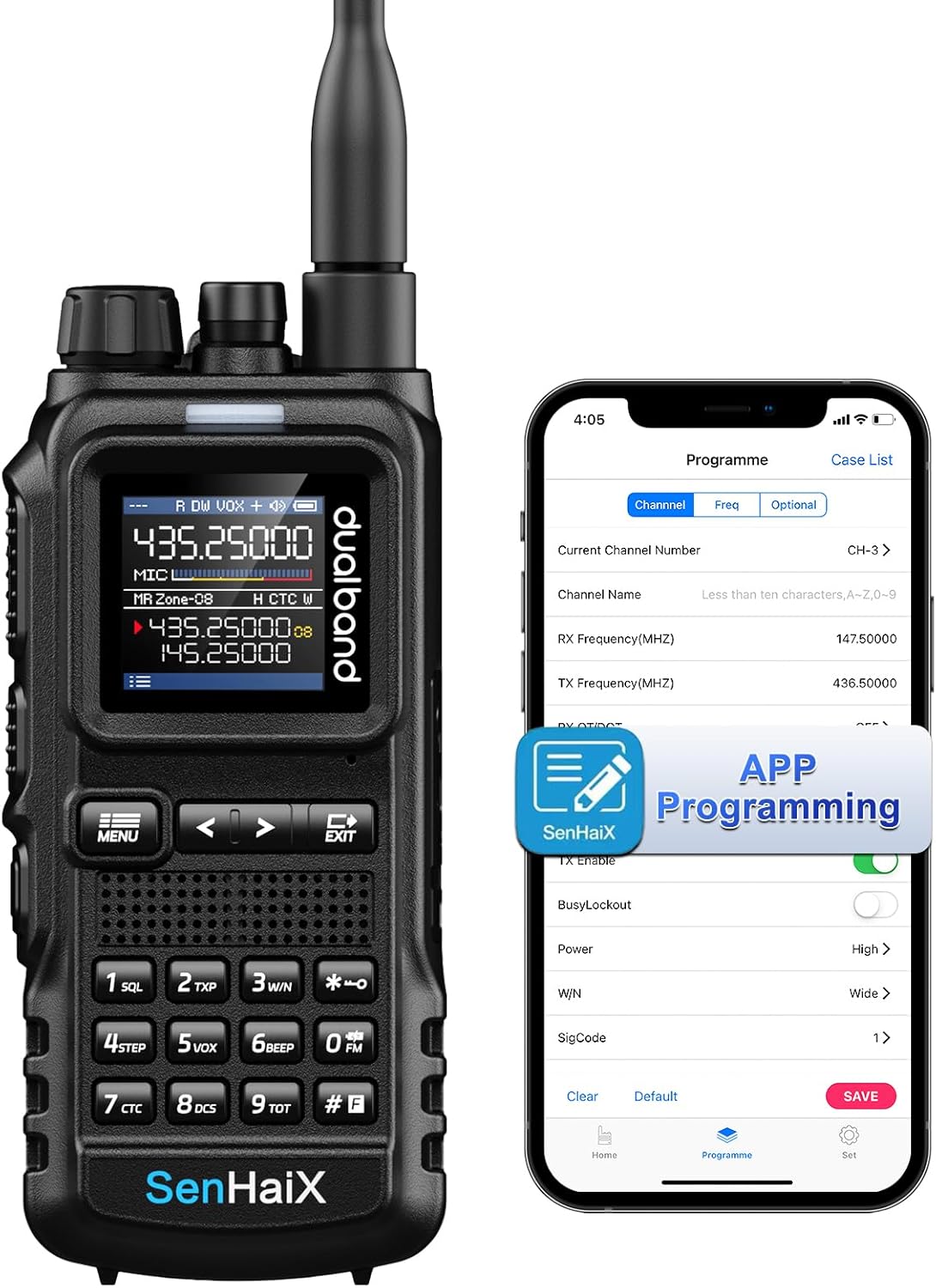
SenhaiX SHX-8650 8W Multi-Band Ham Radio Handheld Review


The SenhaiX SHX-8650 is one of the more unusual handheld radios to appear in the amateur radio market in recent years. While many handheld transceivers focus solely on VHF and UHF communication, this radio attempts to combine a traditional two-way ham radio with a wide-coverage shortwave receiver and modern digital conveniences like Bluetooth programming and a built-in spectrum analyzer.

At first glance the SHX-8650 appears to be a typical rugged handheld radio, but its feature set goes far beyond the usual entry-level handheld. It combines high transmit power, multiple receive modes including single sideband, and a variety of monitoring features that make it appealing to both amateur operators and shortwave listening enthusiasts.

This review takes an in-depth look at the radio’s design, performance, features, and overall value.

Design and Build Quality

The SenhaiX SHX-8650 has a modern handheld design that feels sturdy and well built. The body is compact but solid, with textured plastic that helps improve grip during outdoor use. The size places it comfortably within the range of typical handheld radios, making it easy to carry on a belt clip, in a pack, or during field operations.

The controls are laid out in a familiar format for anyone who has used a handheld radio before. The front panel includes a display, keypad buttons, and function keys for navigation and menu access. The top of the radio houses the antenna connector, volume and power knob, and channel selector.

One interesting feature is the presence of dual PTT buttons. These allow the operator to quickly transmit on different programmed channels or bands without needing to manually switch settings.

The radio also includes a weather-resistant design with an IP56 rating, meaning it can withstand dust exposure and water spray. This adds durability for outdoor operation, hiking, emergency use, and field communication.

Multi-Band Receive Capabilities

One of the most unique aspects of the SHX-8650 is its wide range of receive modes.

While the radio transmits primarily on the VHF and UHF amateur bands, its receiver supports multiple listening modes including:

AM
FM
Shortwave reception
Single sideband (USB and LSB)
CW reception for Morse code

This means the radio can be used not only as a communication device but also as a compact shortwave receiver.

For example, operators can listen to shortwave broadcast stations, international amateur HF activity, aviation communications, and other signals across the radio spectrum.

This type of multi-mode receive capability is rarely found in handheld radios. Most VHF and UHF portables only offer FM reception, so the addition of SSB and CW reception makes this radio particularly interesting for hobbyists who enjoy exploring the radio spectrum.

Transmit Performance

The SHX-8650 provides up to 8 watts of transmit power, which is higher than many common handheld radios that typically operate in the 4 to 5 watt range.

Higher transmit power can be useful when operating in challenging environments such as dense urban areas, mountainous terrain, or rural locations far from repeaters.

The radio supports standard dual-band amateur frequencies on VHF and UHF, allowing operators to access local repeaters and simplex channels.

Channel capacity is organized into zones with multiple programmable channels available for storage and scanning. This makes it easy to organize repeaters, local frequencies, and monitoring channels.

While handheld power levels are still limited compared to mobile radios, the additional wattage can provide a slight improvement in communication range under the right conditions.

Spectrum Analyzer and Scanning Features

Another standout feature of the SHX-8650 is the built-in spectrum display.

This feature allows the radio to visually show activity across a range of frequencies, making it easier to locate active signals without slowly scanning one channel at a time.

The spectrum display is especially useful for finding active repeaters, locating unknown signals, exploring new frequency ranges, and quickly identifying interference.

Combined with rapid scanning functions, the radio becomes a capable monitoring tool for amateur radio operators and radio hobbyists.

For operators who enjoy spectrum exploration or signal hunting, this feature adds a layer of functionality rarely seen in handheld radios.

Bluetooth Programming and Mobile App

Modern programming convenience is another area where the SHX-8650 stands out.

Instead of relying only on a programming cable and computer software, the radio can be configured using a smartphone application via Bluetooth.

This allows operators to program channels, adjust radio settings, organize frequency lists, and manage scanning groups directly from their phone.

Wireless programming is particularly convenient during field operations when carrying a laptop is impractical.

Bluetooth support can also allow the use of compatible wireless accessories such as headsets.

For many users this modern approach to programming makes radio configuration significantly easier.

Battery Life and Power System

The radio uses a lithium battery pack that provides solid operating time for typical handheld use.

Battery life depends heavily on operating conditions, including transmit power level, scanning activity, and use of the spectrum analyzer display.

Under normal mixed-use conditions the radio can provide several hours of reliable operation.

Power saving modes help extend operating time when the radio is idle.

Because the SHX-8650 includes advanced features like spectrum display and wideband reception, battery consumption may be slightly higher than simpler handheld radios when these features are used extensively.

However, spare batteries are compact and easy to carry during extended operations.

Audio Quality

Audio quality on the SHX-8650 is clear and loud enough for most outdoor environments.

The built-in speaker provides solid volume and clarity during both communication and monitoring. Strong signals sound crisp, while weaker signals remain understandable thanks to good receiver sensitivity.

External microphones or headsets can further improve audio performance when operating in noisy environments.

For a handheld radio, the overall audio performance is very respectable.

Field Use and Practical Applications

Because of its wide feature set, the SHX-8650 can serve several roles within the amateur radio hobby.

Emergency preparedness is one of its strongest applications. The combination of two-way communication, wideband reception, and portability makes it useful for emergency kits and disaster response scenarios.

Outdoor operators such as hikers, campers, and off-road enthusiasts can use the radio for both communication and monitoring activity across different radio services.

Shortwave listening enthusiasts may also appreciate the radio because it provides a portable way to explore HF signals without carrying a separate shortwave receiver.

For amateur operators who enjoy experimenting with radio technology, the SHX-8650 offers a versatile platform that encourages exploration of the radio spectrum.

Advantages

The SenhaiX SHX-8650 offers several advantages that make it stand out among handheld radios.

Its wide receive coverage with SSB and CW capability is extremely rare in handheld units. The built-in spectrum analyzer provides a visual way to monitor signals, and Bluetooth programming adds modern convenience.

The 8 watt transmit power also provides stronger output than many comparable handheld radios.

Together these features make the radio feel like a hybrid between a traditional handheld transceiver and a portable monitoring receiver.

Potential Drawbacks

Despite its impressive list of features, the SHX-8650 does have a few limitations.

The complexity of the radio may feel overwhelming for beginners who are unfamiliar with advanced radio settings.

Battery life can also be reduced when frequently using the spectrum analyzer or performing wideband scanning.

Additionally, while the radio supports HF reception modes, it is still a handheld device with a small antenna. This means shortwave performance will not match a dedicated HF receiver connected to a large external antenna.

However, for casual listening and portable operation the results can still be enjoyable.

Final Verdict

The SenhaiX SHX-8650 stands out as an innovative handheld radio that blends multiple radio technologies into a compact device.

With dual-band transmit capability, wideband reception including SSB and CW, Bluetooth programming, and a built-in spectrum display, it offers far more functionality than a typical handheld transceiver.

For amateur radio operators who enjoy experimenting with signals across different bands, this radio provides a unique and versatile tool.

While it may not replace specialized equipment for serious HF operation, the SHX-8650 delivers an impressive range of features in a portable format that encourages exploration of the radio spectrum.

See The SenhaiX SHX-8650 On Amazon!

Friday, March 6, 2026

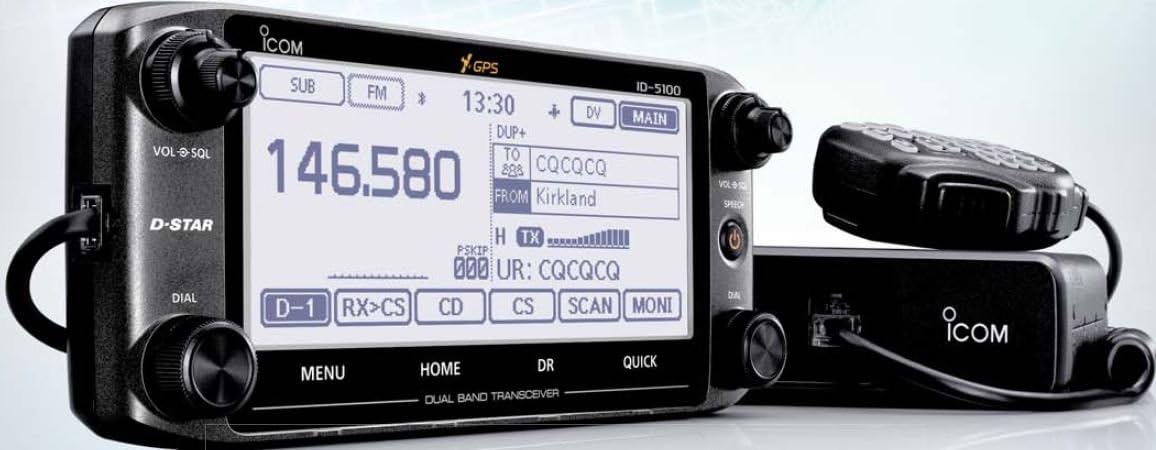
Icom ID-5100A Deluxe Dual Band Mobile Transceiver Review – A Modern D-STAR Radio with Touchscreen and GPS


The Icom ID-5100A Deluxe is a powerful and feature-rich dual band mobile transceiver designed for amateur radio operators who want both traditional analog FM capability and modern digital communication features. Operating on the 2 meter and 70 centimeter amateur radio bands, this radio delivers strong transmit power, an intuitive touchscreen interface, built-in GPS functionality, and full support for D-STAR digital voice and data communication.

Icom has long been known for producing high quality amateur radio equipment, and the ID-5100A Deluxe continues that tradition by combining durability, advanced features, and a user-friendly design. Whether installed in a vehicle or used as a base station, this radio offers impressive flexibility and performance for both everyday operation and emergency communications.

Overall Design and Build Quality

The ID-5100A Deluxe is designed as a mobile radio with a detachable control head. The main radio body contains the transmitter and receiver components, while the control head houses the display and controls. This configuration allows operators to mount the radio body in a hidden location such as under a seat while placing the control head in an easily accessible position on the dashboard.

The radio has a solid and rugged construction that feels durable and well built. Icom equipment is known for reliability, and the ID-5100A continues that reputation with a design that can withstand long-term mobile use.

The control head features a large display along with several physical buttons and a tuning knob. The combination of touchscreen operation and traditional controls gives operators the flexibility to operate the radio in whatever way feels most comfortable.

Large Touchscreen Display

One of the most distinctive features of the ID-5100A Deluxe is its large touchscreen display. The screen measures approximately 5.5 inches, making it significantly larger than most mobile radio displays.

This large display makes the radio easy to read while driving and greatly simplifies navigation through the menu system. Frequencies, signal strength indicators, operating modes, and other information are clearly displayed.

The touchscreen allows operators to quickly enter frequencies, select memory channels, and access radio functions without needing to scroll through complicated menus. A virtual keypad appears on the screen for entering frequencies or text information, which makes programming and D-STAR operation much easier than on radios that rely entirely on buttons.

Despite being a monochrome display rather than a color screen, the visibility is excellent and the interface remains clean and easy to understand.

Dual Band Operation

The ID-5100A Deluxe operates on both the VHF 144 MHz band and the UHF 440 MHz band. This allows the radio to access a wide range of amateur radio repeaters and simplex frequencies.

One of the major advantages of this radio is its ability to monitor two frequencies at the same time. This dual watch capability allows operators to listen to activity on both bands simultaneously. For example, an operator could monitor a local repeater on one band while scanning another frequency on the second receiver.

This feature is especially useful during public service events, emergency communications operations, or busy nets where multiple channels must be monitored.

The radio also has wideband receive capability, allowing it to monitor frequencies outside the amateur bands, including aviation communications.

Transmit Power and RF Performance

The ID-5100A Deluxe provides strong transmit performance with up to 50 watts of output power on both VHF and UHF bands. This level of power is ideal for mobile communication and allows operators to easily access distant repeaters or maintain strong simplex communication.

Multiple power settings are available, allowing users to select lower power levels when operating close to repeaters or when conserving energy in portable setups.

Receiver performance is excellent, with strong sensitivity that allows the radio to hear weak signals clearly. The receiver handles crowded band conditions well and provides clean audio even in challenging environments.

D-STAR Digital Communication

One of the main reasons many operators choose the ID-5100A is its built-in support for D-STAR digital communication.

D-STAR is a digital voice and data protocol used in amateur radio networks around the world. It allows operators to communicate through digital repeaters and internet linked reflector systems, enabling contacts across cities, countries, and even continents.

The ID-5100A makes D-STAR operation relatively simple through its DR mode, which streamlines the process of connecting to repeaters and linking to reflectors. Instead of manually programming complicated routing commands, operators can select the desired repeater or reflector directly from the radio interface.

Digital voice quality is generally very clear, and the system also allows for text messaging and data transmission alongside voice communication.

Built-In GPS Receiver

Another important feature of the ID-5100A Deluxe is its integrated GPS receiver. This built-in GPS allows the radio to determine the operator's position and use that information in several useful ways.

One of the most practical features is automatic repeater location. The radio can use GPS data to identify nearby D-STAR repeaters and make it easier for operators to connect to local systems when traveling.

The GPS also enables position reporting and tracking functions that are used in various digital communication applications. This can be useful for mobile operators, emergency communications teams, and public service event coordination.

Memory Channels and Scanning

The ID-5100A Deluxe includes a large number of memory channels that allow operators to store frequently used frequencies, repeaters, and digital communication settings.

Channels can be organized into groups for easy access and efficient scanning. The radio offers several scanning modes, allowing users to search for activity across stored channels or frequency ranges.

Programming memory channels can be done directly through the touchscreen interface, but many operators prefer to program the radio using computer software for faster setup and easier data management.

Bluetooth and Smartphone Integration

The radio supports optional Bluetooth connectivity through an additional module. When installed, this allows the radio to connect to wireless headsets or other compatible devices.

Bluetooth capability also enables integration with smartphone applications that can control certain radio functions remotely. This feature can be especially useful for mobile operators who want hands-free operation or remote control capability.

Audio Quality

Audio performance is strong on both transmit and receive. Received signals sound clear and natural through the radio's speaker, even when signals are somewhat weak.

The included hand microphone provides good audio clarity and includes several programmable buttons that can be assigned to frequently used functions.

For operators working in noisy vehicle environments, optional noise cancelling microphones are available to improve transmitted audio quality.

Installation and Power Requirements

The ID-5100A Deluxe is designed primarily for mobile installation in vehicles, but it can also function effectively as a base station radio.

The detachable control head allows flexible mounting options. The radio body can be installed in a hidden location while the control head remains accessible to the operator.

The radio operates on a standard 13.8 volt DC power supply, which is typical for mobile amateur radio equipment. When used as a base station, an external power supply is required.

Advantages

Large easy to read touchscreen display
Full D-STAR digital voice and data capability
Integrated GPS for repeater lookup and position reporting
Strong 50 watt transmit power on both bands
Dual band simultaneous receive capability
Extensive memory channel storage
Solid Icom build quality and reliability

Potential Drawbacks

The radio does have a few minor limitations. The menu system and digital configuration may require some time to learn, especially for operators who are new to D-STAR operation.

The display, while large and easy to read, is monochrome rather than color. Some newer radios now feature full color screens.

Additionally, Bluetooth functionality requires an optional module rather than being included by default.

Who This Radio Is Best For

The ID-5100A Deluxe is an excellent choice for amateur radio operators who want a powerful mobile radio with modern digital communication capabilities.

It is particularly well suited for mobile operators, D-STAR users, emergency communication groups, and amateur radio enthusiasts who travel frequently and benefit from GPS based repeater lookup.

Final Verdict

The Icom ID-5100A Deluxe remains one of the most capable and popular dual band mobile radios available for amateur radio operators. Its large touchscreen display, built-in GPS receiver, strong transmit power, and advanced D-STAR features make it a versatile communication tool for both analog and digital operation.

While it may take some time to fully learn all of its features, the radio rewards operators with excellent performance and a powerful set of capabilities. For anyone looking for a modern mobile transceiver that combines traditional amateur radio operation with advanced digital networking, the ID-5100A Deluxe is a highly impressive and reliable choice.

See The Icom ID-5100A On Amazon!

Sparks to Shortwaves: A Journey Through the Birth of Amateur Radio

Sparks to Shortwaves: The First Fifty Years of Amateur Radio by Terry W. Platt (NN4Y) and Terry Platt is a passionate and accessible deep...

Search This Blog